Physical Address
304 North Cardinal St.
Dorchester Center, MA 02124
Physical Address
304 North Cardinal St.
Dorchester Center, MA 02124

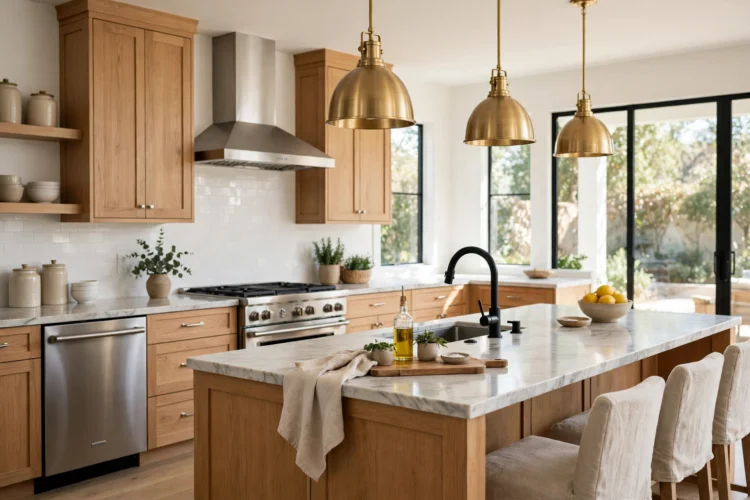
Mixing metals in the kitchen works when one finish leads, one accents, and the rest stay quiet. Here is the formula that keeps it calm.
Matching metals used to be the rule. Faucet, pulls, and lights all in chrome, or all in brass, or the kitchen looked wrong. That rule is gone, and when you mix metals in the kitchen with a plan, the room feels layered instead of flat. A mixed metal kitchen feels collected, not chaotic, as long as one finish leads. The trick is not to mix at random. A simple formula keeps brass, black, and chrome from fighting each other: one dominant finish, one accent finish, and a clear rule for where each one goes.
Pick one finish to lead the room, and give it about 70 percent of the metal in the kitchen. The dominant finish usually lives on the biggest metal surfaces: the faucet, the range hood, and the pendant lights. When one finish covers most of the room, the eye reads it as the scheme, and everything else reads as an accent.
Warm kitchens suit brass or bronze as the dominant finish. Cool kitchens suit chrome or nickel. Matte black works as a dominant finish in a modern kitchen, but it needs a light room around it or the space feels heavy. Once you pick the dominant finish, write it down and check every new piece against it. A second faucet in a different finish, or a hood that does not match the lights, breaks the scheme faster than any small accent ever will. The dominant finish is the one you see from the doorway, so choose the one you want to notice first.
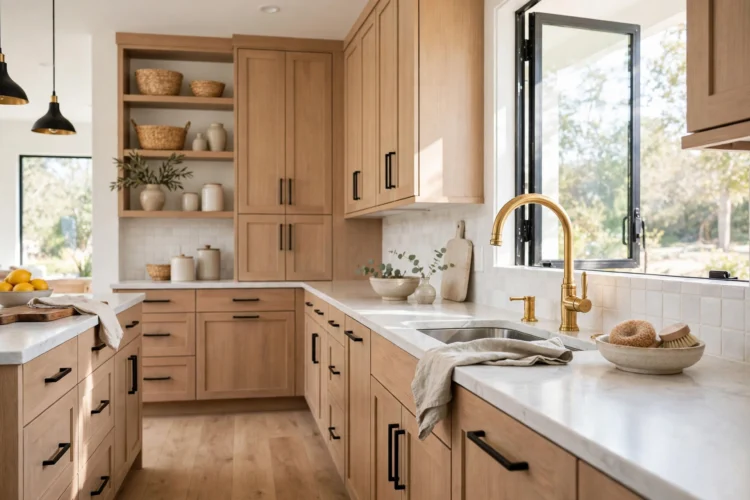
The accent finish gets about 30 percent of the metal, and it needs a clear job. Cabinet pulls are the classic accent spot: brass pulls on white cabinets while the faucet stays chrome, or matte black pulls while the lights stay brass. The accent finish repeats in at least two places, so it looks deliberate instead of accidental.
Two places is the minimum. One brass pull among chrome hardware looks like a mistake; brass pulls plus a brass picture light looks like a plan. Good accent pairs include chrome with brass, nickel with matte black, and brass with matte black. Avoid pairing two warm finishes, such as brass and copper, in the same sightline, since they compete instead of complementing each other. The accent finish should also show up in a small piece, like a soap dispenser or a towel ring, so the scheme reaches the details.
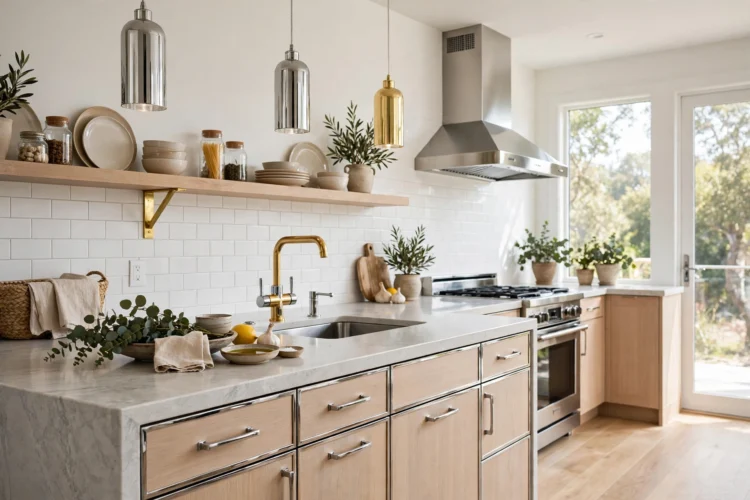
The faucet is the most-used metal in the kitchen, so it sets the tone. A brass faucet says warm and classic. A chrome faucet says clean and modern. A matte black faucet says bold and graphic. Pick the faucet finish first, then match the dominant finish to it, instead of the other way around.
If the faucet is brass, let brass lead on the hood and the lights, and use black or chrome for the pulls. A brass chrome kitchen pairs those two finishes with a wood or stone buffer between them. If the faucet is chrome, chrome leads and brass accents the pulls and the light fixtures. A bridge faucet in brass over a farmhouse sink is a strong look, but it needs the rest of the room to stay quiet, or the faucet fights the hardware for attention. These kitchen faucet ideas from brass to matte black show how one faucet choice shapes the whole metal scheme.
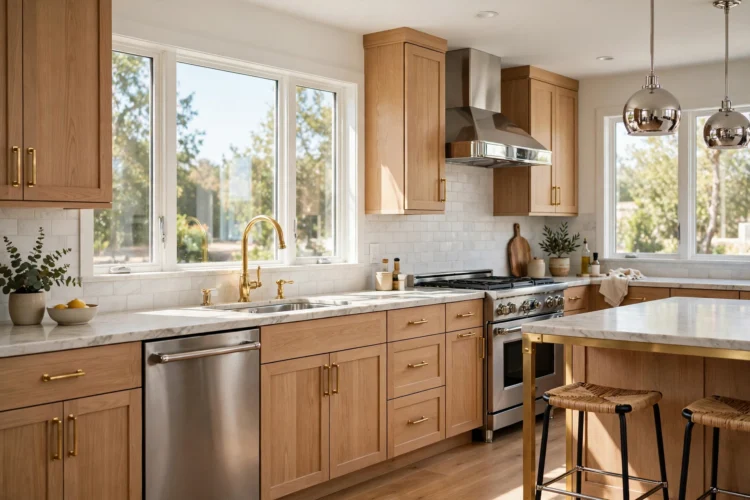
Cabinet pulls sit at hand height and get touched dozens of times a day, so they should be easy to grip and easy to clean. They should also match the accent finish, not the faucet. When pulls match the accent, the room gains a second metal that the eye can follow from cabinet to cabinet, and the scheme feels layered.
Brass pulls on a white or green cabinet look warm and classic. Matte black pulls on a wood cabinet look modern and sharp. Chrome pulls on a gray cabinet disappear into the room, which is fine if the faucet and lights carry the metal story. Keep all the pulls in one finish, even if the knobs on the drawers differ in shape. Mixed pull shapes in one finish look collected; mixed finishes on the pulls look unfinished. If you want to test a finish before committing, swap the pulls on one bank of cabinets first and live with them for a week. These kitchen cabinet hardware ideas show how a pull swap alone can refresh a kitchen without a remodel.
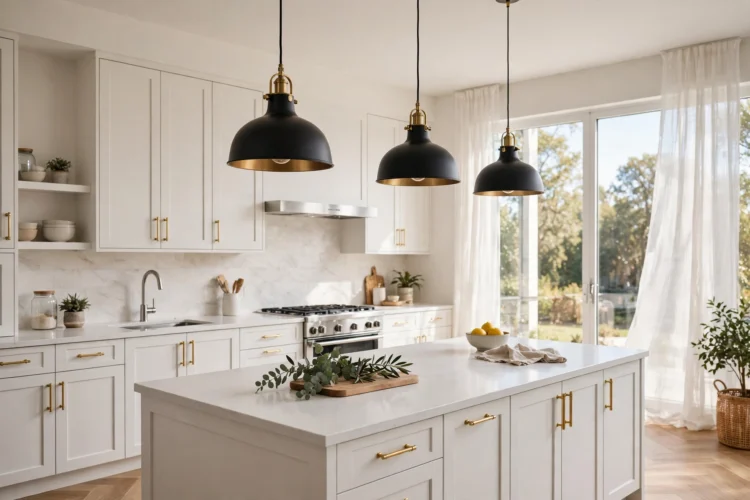
Pendant lights hang at eye level and catch the light, so they carry a lot of visual weight. Keep them in the dominant finish, and the room stays calm. A brass pendant over the island with a brass faucet reads as one decision. A black pendant with a black faucet does the same. Mixing the pendant finish with the faucet finish splits the room in two.
The exception is a single statement light in a different finish, hung where it stands alone. A black chandelier over a dining table in a brass and black kitchen works because the table is its own zone, separated from the work area. The rule is distance: the accent light needs its own space, away from the dominant metal. If the pendants and the faucet sit within a few feet of each other, match them. If the dining light hangs ten feet away, it can go its own way. These pendant light kitchen ideas for islands and peninsulas show how the island lights set the tone for the whole room.
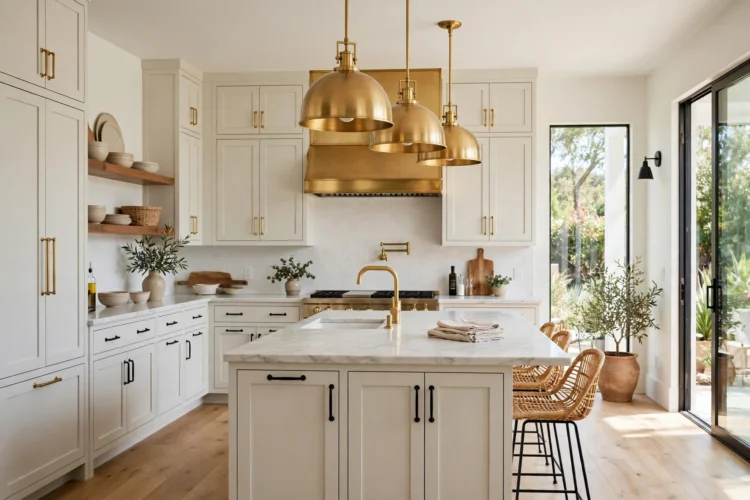
Stainless steel appliances are in most kitchens, and they are not part of the metal scheme. Treat them as a neutral background, like a white wall, and do not try to match your finishes to them. Stainless steel has a cool, gray tone that sits quietly beside brass, black, or chrome, and it never clashes because it never competes.
The mistake is adding a third decorative finish to match the appliances. A chrome faucet, a stainless fridge, and nickel pulls are all cool metals, but three of them in one room look indecisive. Pick one cool metal as the dominant finish and let the appliances stay neutral. The same logic applies to a stainless steel range hood: it reads as an appliance, not as a finish choice, so it does not need to match the faucet. If the hood is brass or black, that is a finish choice, and it should match the dominant finish.
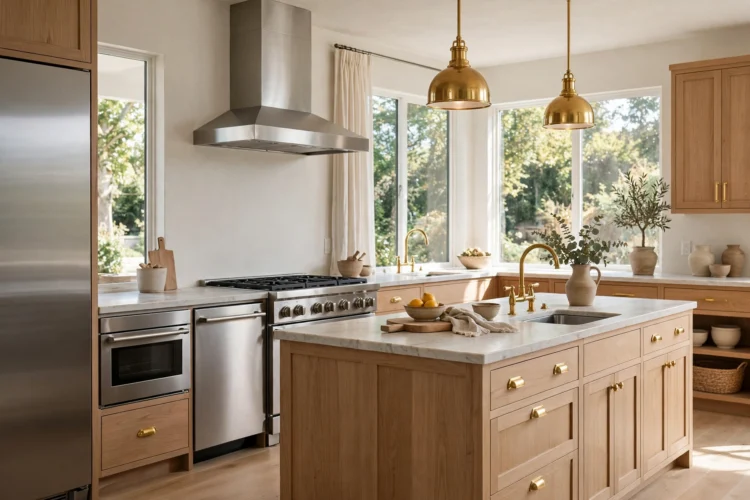
A finish that appears once looks like a mistake. A finish that appears twice looks like a choice. This is the simplest rule when you mix metals in the kitchen, and it catches most clashes before they happen. Brass pulls plus a brass faucet is a scheme. Brass pulls alone is a stray piece.
Walk the kitchen and count. The dominant finish should appear in three or more places: faucet, lights, hood. The accent finish should appear in two: pulls and one small piece, such as a towel ring, a soap dispenser, or a picture light. If a finish appears only once, either add a second piece in that finish or swap the lone piece to match the rest. This rule also stops the slow drift that happens when you replace one piece at a time: a new faucet in a different finish breaks the count, and the room starts to look patched together. Check the count again after every change.
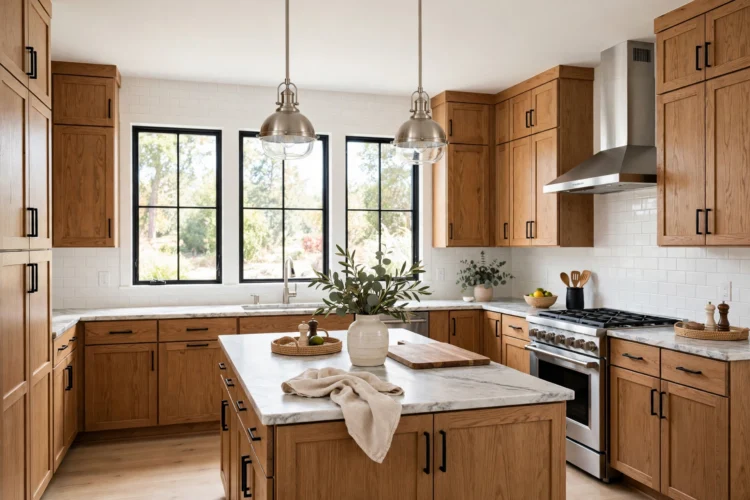
Warm metals like brass, copper, and bronze sit beside cool metals like chrome, nickel, and stainless steel in most mixed kitchens. The two families work together when something sits between them. Wood, stone, and painted cabinets act as a buffer, so the warm and cool metals never touch directly.
A brass faucet beside a chrome pull looks fine when a wooden cabinet door sits between them. A brass light over a chrome sink looks fine when a stone counter separates them. The buffer gives the eye a rest and stops the two metals from competing at close range. Matte black works as a buffer too, since it reads as neither warm nor cool, and a black pull between a brass faucet and a chrome knob ties the two together. If two metals must touch, such as a brass faucet mounted on a chrome sink, keep one of them small so the clash stays quiet. In a bathroom, the same buffer logic applies, and these brass fixture bathroom ideas show how warm metal works against cool tile and stone.
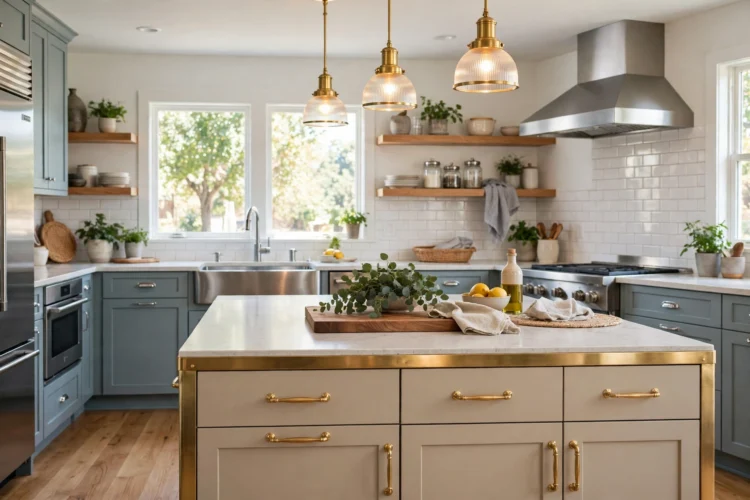
Start by naming your dominant finish and your accent finish, then check every metal piece in the room against those two names. When you mix metals in the kitchen with this formula, the count does the work for you. Kitchen metal finishes only clash when nothing repeats, so check the count after every change: one dominant finish, one accent, each repeated, and a buffer wherever warm meets cool.