Physical Address
304 North Cardinal St.
Dorchester Center, MA 02124
Physical Address
304 North Cardinal St.
Dorchester Center, MA 02124

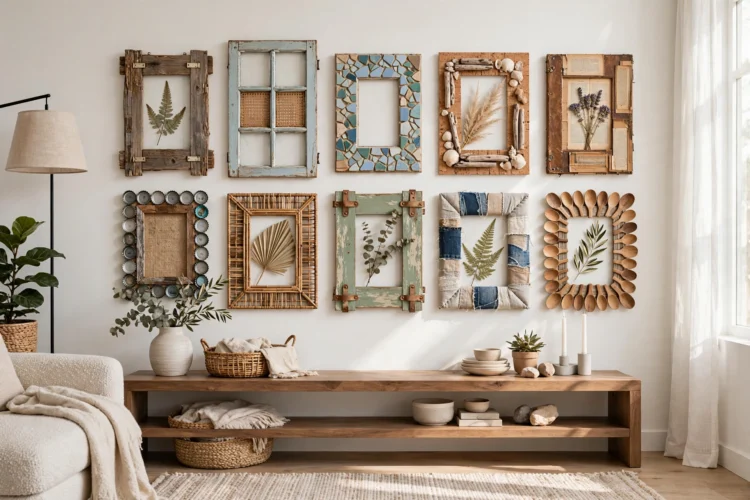
A gallery wall does not need matching frames from one store. Mismatched thrift frames, unified with paint and matting, look collected and cost very little.
Gallery walls look expensive, but the frames are the cheapest part when you buy them secondhand. Thrift stores sell wooden frames for a few dollars each, and the mix of shapes is exactly what makes a wall look collected instead of bought in one trip. Upcycled picture frame ideas all share one trick: unify the mismatch. Paint ties the frames together, matting gives the art breathing room, and a planned layout keeps the wall from looking random. These ten ideas use frames you can find this weekend.
Start at the thrift store with a tape measure and a rough size in mind. Look for solid wood frames with intact corners and glass without deep scratches. Ignore the art inside, since you will replace it. Gold, black, and natural wood frames all work, because paint will unify them later. Buy more frames than you need so you can lay out the wall at home and drop the ones that do not fit. Check the backs for hanging hardware, and skip any frame with a warped corner, since it will never hang flat. A good haul costs less than one new frame from a home store. For more secondhand finds, these thrift store furniture flips worth the effort show the same buy-low, fix-up approach on bigger pieces.
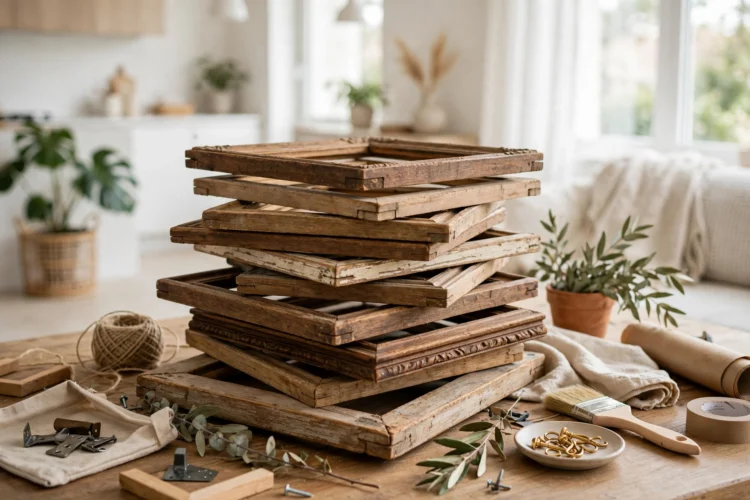
Paint is the fastest unifier. Choose one color, such as matte black, soft white, or warm brass, and paint every frame the same shade. Clean the frames, sand lightly, and use a spray primer first so the paint sticks to old varnish. Two light coats beat one heavy coat, which drips in the corners. Painted picture frames in a single color let the art do the talking while the frames quietly match. If one frame has carved detail, paint brings it out instead of hiding it. Keep the paint finish consistent across the set, since a mix of gloss and matte reads as accidental.
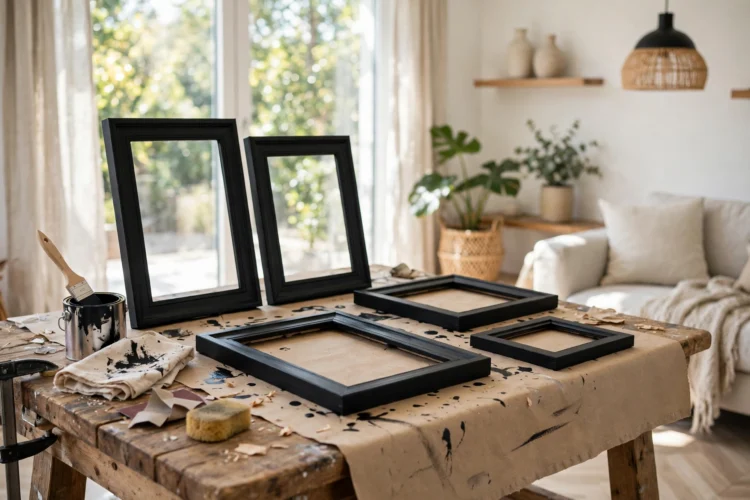
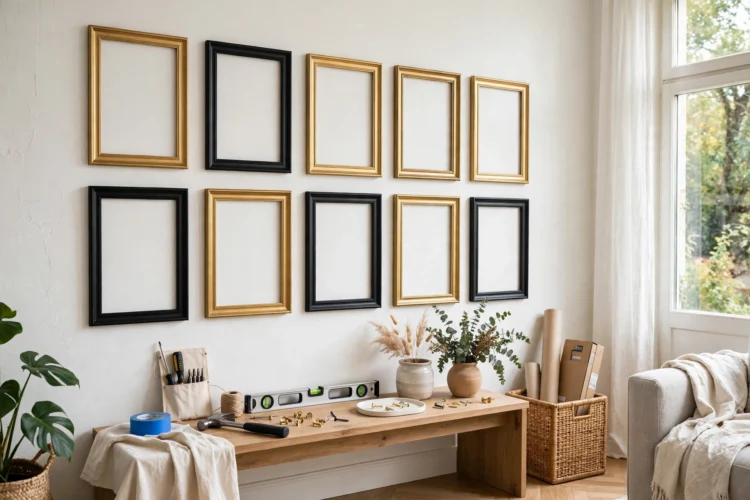
Two finishes can work if you use them with intent. Paint half the frames matte black and the other half antique gold, then alternate them across the wall so neither color clusters in one corner. The contrast suits black and white photos, line drawings, and vintage prints. Keep the split close to even, since a single gold frame among ten black ones looks like a mistake rather than a choice. This pairing fits living rooms with dark furniture and bedrooms with brass lamps, where the gold picks up the metal already in the room. Lay the frames on the floor first and shuffle them until the balance feels right.
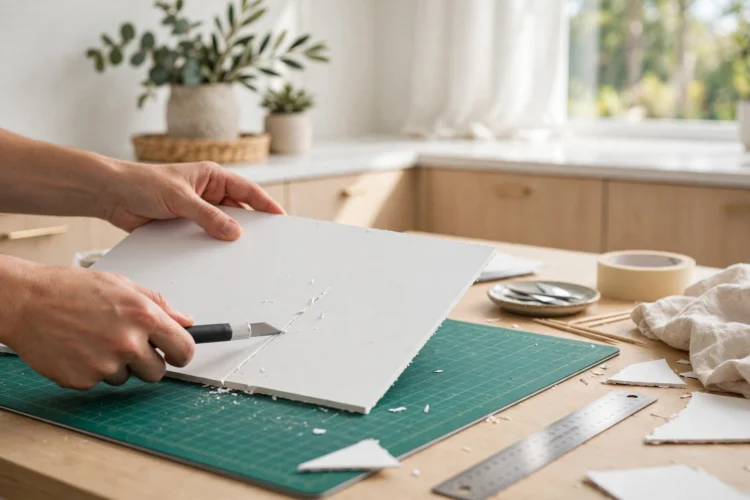
Matting is what separates a framed print from a poster taped to the wall. A mat board, a craft knife, and a metal ruler are all you need. Cut the window slightly smaller than the art so the edges hide behind the mat, and keep the bottom border a touch wider than the top, which is the classic gallery proportion. White mats suit most art, while a soft cream warms up black and white photos. Frame matting ideas work best when the mat color repeats across the wall, even if the art changes. A stack of cut mats costs little and turns small prints into pieces that hold a large wall.
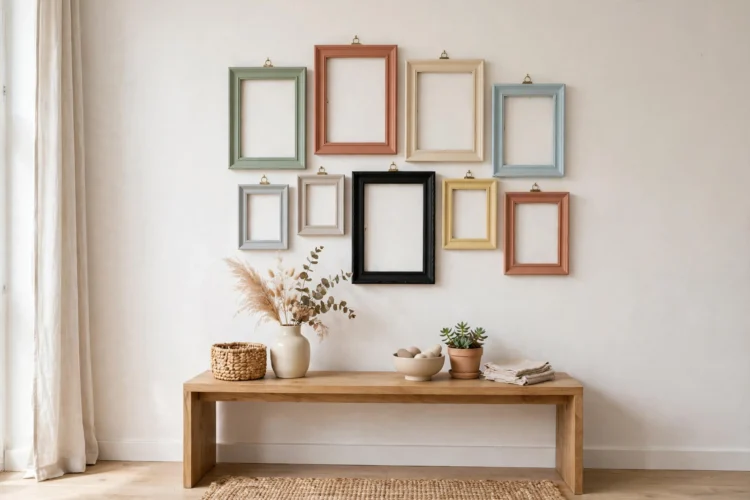
Frames do not need art inside them. A cluster of empty frames in different sizes reads as sculpture on a plain wall, and it costs nothing beyond the frames themselves. Hang them tight together in one corner of a living room or above a console table. Paint them one color so the shapes, not the finishes, carry the design. Add a small plant or a dried stem behind one frame for depth. This works well in a hallway where art would get bumped, and it fills a wall while you collect prints you actually like. If you want art later, these DIY wall art ideas that look gallery-worthy fill empty frames on a small budget.
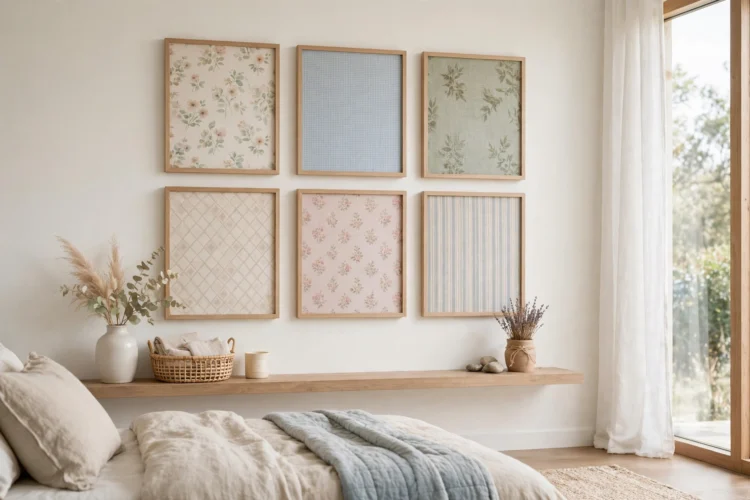
Art does not have to come from a print shop. A piece of patterned fabric, a wallpaper offcut, or a page from an old book fills a frame with color and texture. Stretch fabric over a piece of cardboard so it stays flat, and tape the back. Wallpaper samples from a home store are often free and sized close to a standard frame. This idea suits gallery wall frames in a bedroom or a nursery, where soft patterns beat bold posters. Keep the palette tight across the wall, with two or three colors repeating, so the mixed materials still feel like one set.
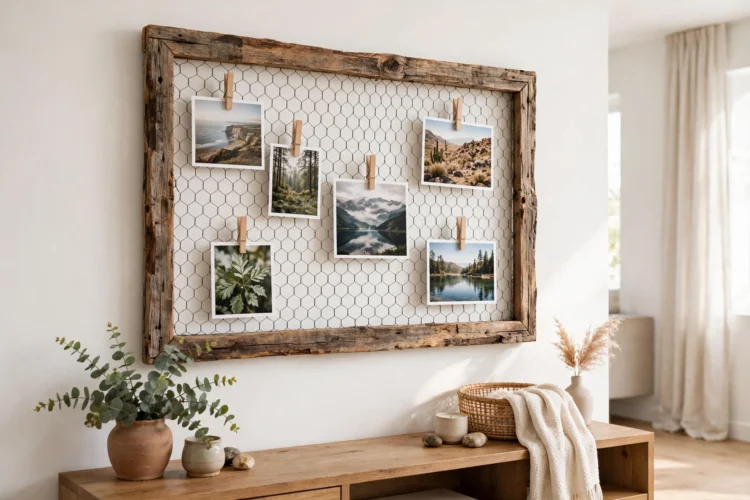
A frame with chicken wire instead of glass becomes a display board for photos, notes, and small clips. Staple the wire to the back of the frame, trim the edges, and hang photos with wooden pegs. The look suits a kitchen, a home office, or a kids room where the display changes often. Paint the frame a soft white or sage green and let the wire stay silver. Keep the wire taut so photos do not sag. This is one of the easiest upcycled picture frame ideas because the frame does the work and the contents change with the season.
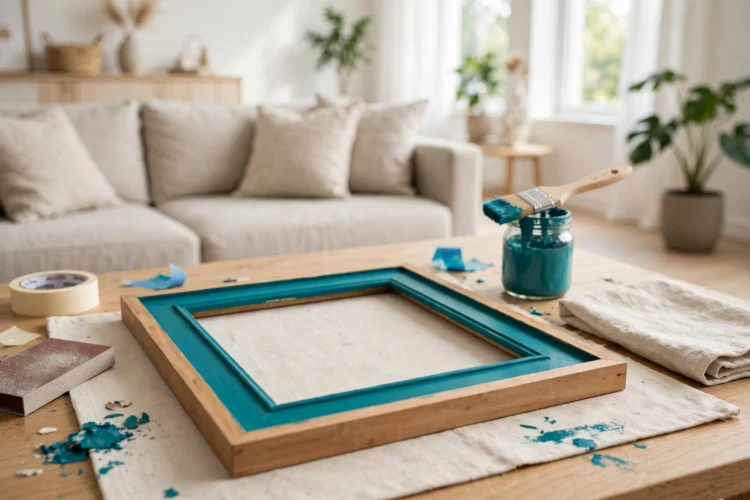
A thin line of color inside the frame adds surprise without overwhelming the art. Paint just the inner lip of the frame in a bold shade, such as mustard, teal, or coral, and leave the outside neutral. The color reads as a second mat and draws the eye toward the print. This works best on wide frames with a deep profile, where the inner edge is visible from across the room. Use a small brush and painter tape to keep the line clean. Repeat the accent color in one other object in the room, such as a cushion or a vase, so the detail feels deliberate. For more ways to add character to plain walls, see these bedroom wall molding ideas for instant character.
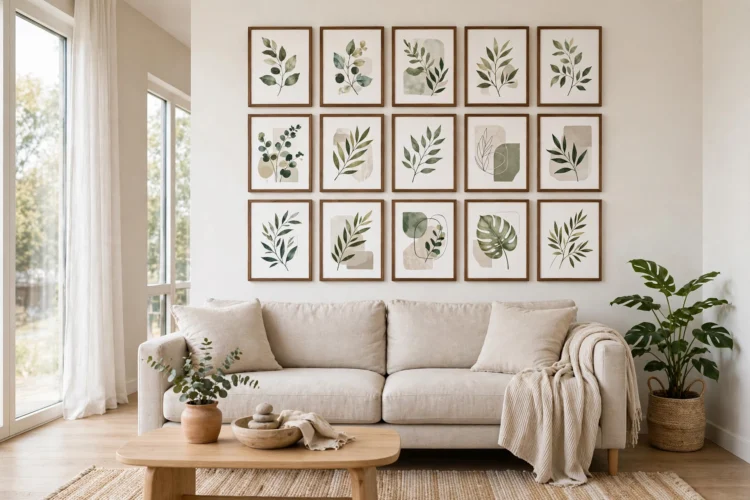
A grid layout tames a mismatched collection. Choose frames of the same size, or cut mats so different frames hold the same size art, then hang them in even rows with equal gaps. A grid suits a hallway, a stairwell, or the wall above a sofa. Measure the full grid on the floor with painter tape before you drill, and use a level on every row. The grid looks calm and intentional, which is why it works in rooms that already have a lot of pattern elsewhere. Keep the gap between frames at two inches so the grid reads as one piece rather than separate pictures.
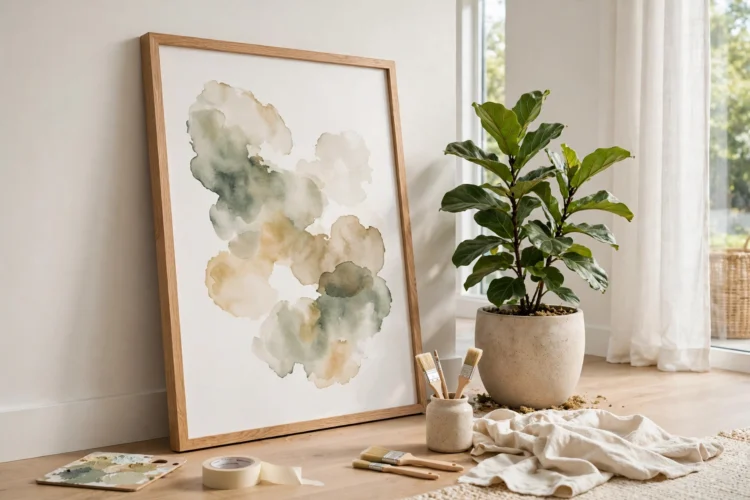
Not every frame needs a nail. A large thrift store frame leaned against the wall behind a console or beside a bookshelf adds height without drilling. The lean works best with frames at least 24 inches tall, painted one color, and filled with a simple print or a mirror. Anchor the top with a small adhesive strip so it cannot slide forward, and keep it out of a walkway where it could get knocked. A leaned frame suits a living room corner or a bedroom, where it fills vertical space that a small frame cannot. Pair it with a plant at the base so the arrangement looks finished rather than temporary. For styling the shelf or console beside it, these living room bookshelf styling ideas that look collected help the whole corner read as one display.
Collect the frames first, paint them second, and plan the layout on the floor before a single nail goes in. A gallery wall built this way costs little, changes easily, and looks like it grew over time instead of arriving in one box.