Physical Address
304 North Cardinal St.
Dorchester Center, MA 02124
Physical Address
304 North Cardinal St.
Dorchester Center, MA 02124


A bench at the foot of the bed turns an empty strip of floor into useful space. These 10 ideas cover seating, storage, and style for every bedroom size.
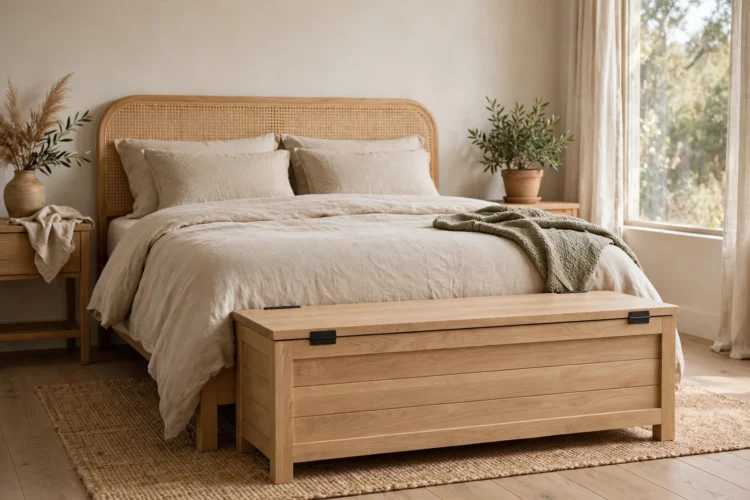
Bedroom bench ideas earn their floor space when they do more than look good. A bench with storage inside hides spare blankets, off-season bedding, and the throw pillows that come off the bed at night, so the room stays tidy with little effort.
A bench with a hinged top opens to one deep compartment for bulky items like quilts and spare duvets. Look for slow-close hinges so the lid does not slam, and a top thick enough to sit on comfortably. Place it flush with the bed width so it reads as part of the bed setup rather than a stray piece.
Open cubbies under a bench seat suit shoes, slippers, and small baskets for chargers or reading material. The open front keeps things reachable, and baskets keep the look calm. This works well in rooms where a closed bench would feel heavy, and it pairs nicely with bedroom rug placement ideas that anchor the bed zone.
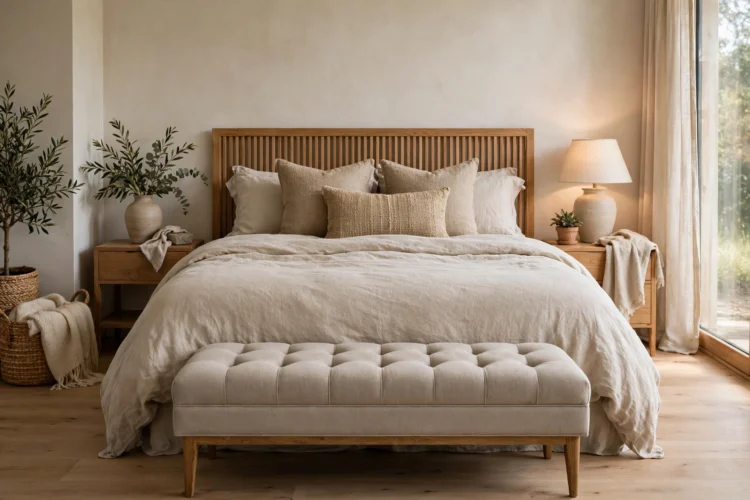
An upholstered bench invites you to sit while you put on shoes or lay out tomorrow’s clothes. Padding also softens the hard lines of a bed frame and adds a layer of texture to the room.
Button tufting adds detail without pattern, so the bench fits both calm and colorful rooms. A performance fabric in beige, gray, or cream resists stains and fading, which matters when the bench sits in sunlight. Keep the cushion firm enough that it does not sag after a few months of daily sitting. For a matching soft look, upholstered headboard ideas for a soft statement show how padding changes a whole wall.
A bench that sits a few inches below mattress height keeps sight lines open and suits platform beds. Measure from the floor to the top of your mattress, then pick a bench two to four inches lower so it tucks neatly at the foot without blocking the bedding.
A wooden bench brings warmth and structure, and it suits rooms where fabric would feel too soft or where pets and kids make upholstery a risk.
Reclaimed or rough-sawn wood shows grain, knots, and small marks that make the bench feel collected rather than bought as a set. Sand the top smooth and seal it so splinters are not an issue, and keep the finish matte so it does not fight with a glossy bed frame.
Rattan and cane benches read light because you can see through them, so they suit small bedrooms where a solid bench would crowd the walkway. Leave at least 24 inches between the bench and the wall or door so you can pass without turning sideways.
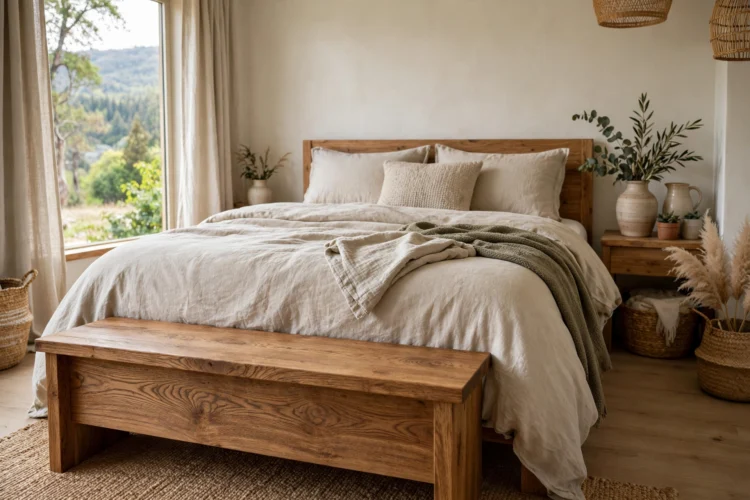
In a guest room or a studio, a bench that doubles as a surface saves you from buying two pieces of furniture for one small room.
A flat-topped bench with a tray holds a carafe, a book, and a phone charger for guests, which is friendlier than an empty seat. When guests leave, lift the tray off and the bench goes back to being a seat. Choose a tray with raised edges so glasses do not slide when someone bumps the bench.
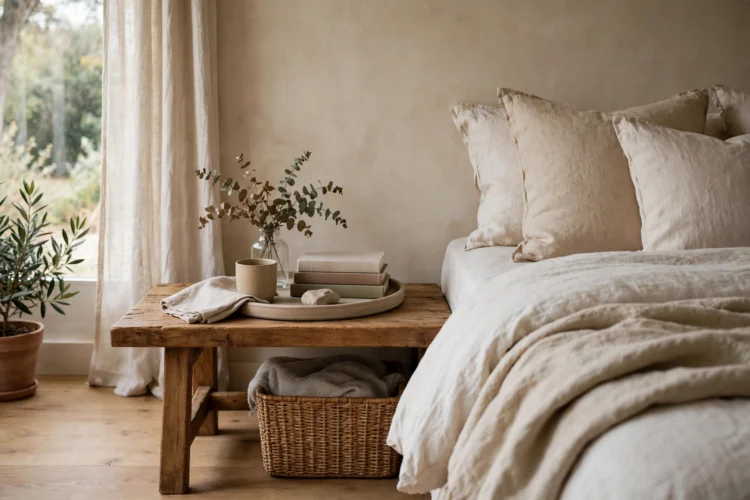
A bench that clashes with the bed frame pulls the eye in the wrong direction. Matching one element, such as material, leg shape, or color family, is enough to tie the pair together.
If your headboard is upholstered, an upholstered bench in a related fabric ties the room together. If the headboard is wood or metal, echo that material in the bench legs or frame. You do not need an exact match, and a close cousin often looks more collected than a perfect set.
Tall beds with high frames need benches with slim legs so the pair does not look bottom-heavy. Tapered wood legs or slim metal legs keep the bench airy, while chunky legs suit low, heavy frames better.
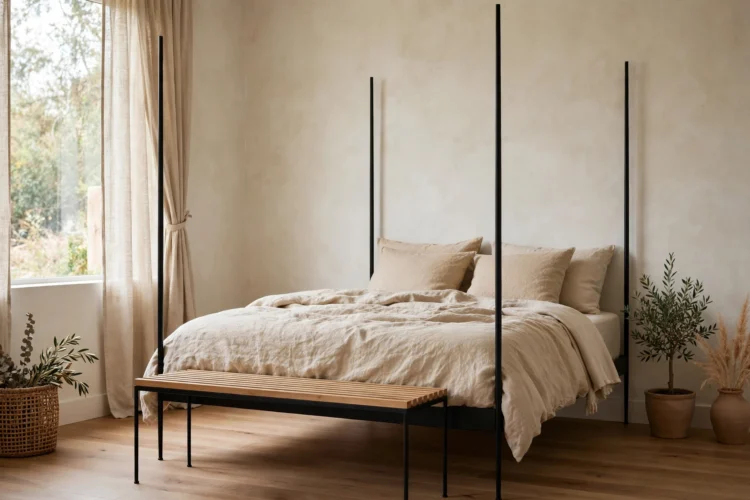
A bench that looks right online can still fail in your room if the measurements are off. Measure the width of your bed first, then the clear floor between the foot of the bed and the nearest wall or door. A bench should sit within a few inches of the bed width so it looks like it belongs, and you need enough walkway left to pass without squeezing sideways. Write both numbers down before you shop, and bring a tape measure to the store if you buy in person.
Weight and height matter as much as width. Check the weight limit if two people or a large dog will sit on the bench, and compare the seat height with your mattress height so the bench does not tower over the bed or disappear below it. If you order online, read the return policy before you buy, since a bench is bulky to send back. A quick check of these numbers prevents the most common bench regret, which is a piece that is beautiful but slightly wrong for the room.
Once the numbers check out, the style choice gets easier. You are no longer guessing whether the bench fits, so you can pick the material and color you actually like and trust that it will sit well in the room for years. A bench that clears the door swing also avoids daily bumps and scuffs on the frame.
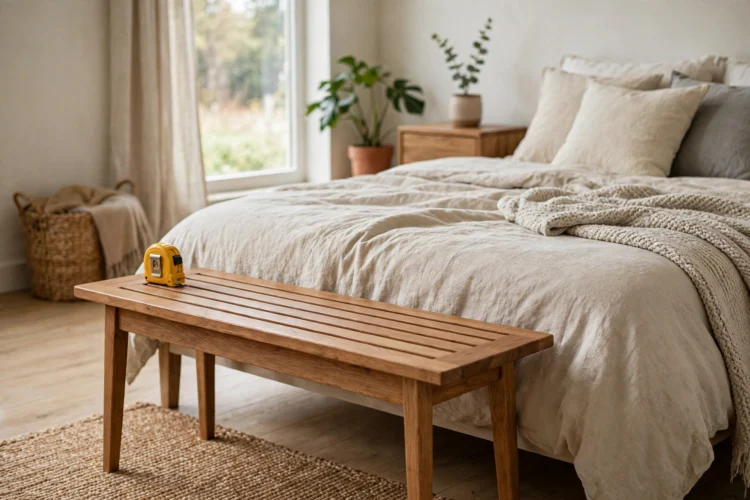
The bench, the bedding, and the rug form one visual group at the foot of the bed. When they share a color or texture, the whole arrangement looks planned.
A folded throw across one end of the bench adds color and gives you a blanket within reach on cold nights. Pick a throw that picks up a color already in the bedding or art, and fold it in thirds so it looks neat rather than tossed. This small touch connects the bench to the rest of the bed, much like bedding layering ideas for a cozy, finished bed connect pillows, duvets, and throws into one look. A neutral bedroom idea palette keeps the bench flexible if you change bedding colors later.
Start by deciding what the bench must do: store, seat, or simply fill the space. Once the job is clear, the style picks itself.