Physical Address
304 North Cardinal St.
Dorchester Center, MA 02124
Physical Address
304 North Cardinal St.
Dorchester Center, MA 02124

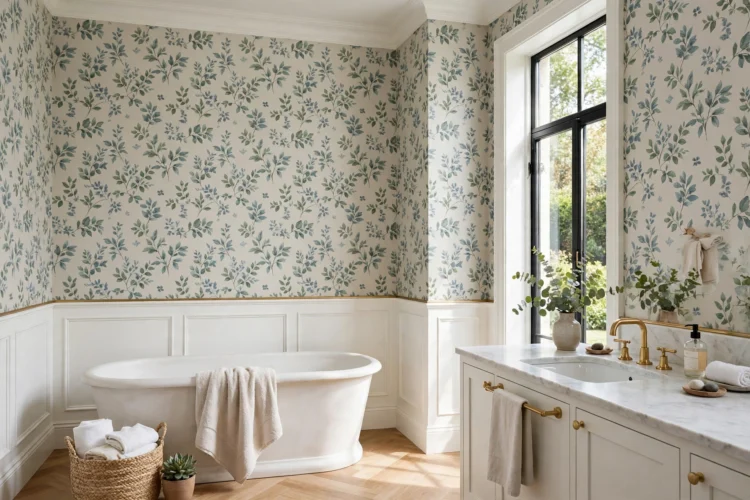
Wallpaper can work in a damp bathroom when you pick the right material and give steam somewhere to go. These 12 ideas pair pattern inspiration with practical choices that keep paper looking good.
Bathroom wallpaper ideas often fail for one boring reason: steam. A pattern you love in the store can peel at the seams within months if the material and the airflow are wrong. The good news is that modern bathroom wallpaper ideas include vinyl, coated papers, and peel and stick options built for damp rooms, so you do not have to settle for plain painted walls. This guide pairs pattern ideas with the practical picks that keep them looking good: which materials handle humidity, where to hang paper safely, and which small ventilation habits protect your work.
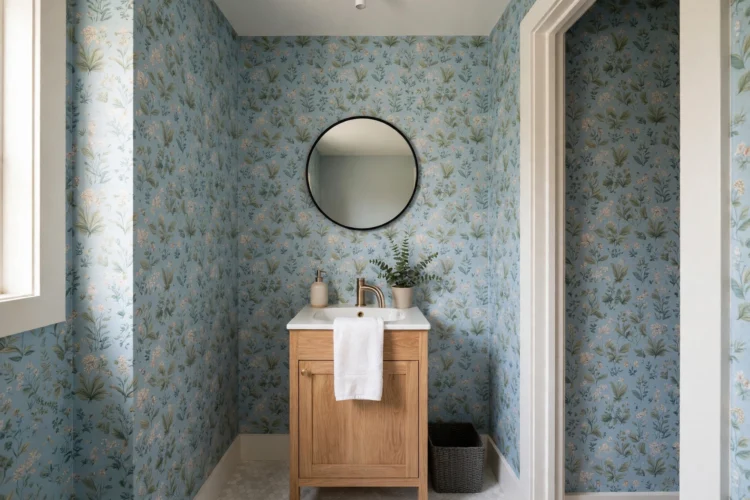
Powder rooms are the easiest place to start because they have no shower filling the air with steam. That means you can use a wider range of papers, including prints you would avoid in a full bath. A small scale floral, a fine stripe, or a subtle geometric pattern can make a tiny room feel finished instead of forgotten. Because the room is small, one or two rolls usually cover the walls, so this is also a low cost way to test a bold pattern.
Keep the rest of the room calm so the paper can lead. A simple mirror, a plain faucet, and one towel color are enough. If you want more inspiration for tiny washrooms, browse these powder room ideas for layouts that make a small footprint feel generous. Choose a paste or peel and stick product rated for bathrooms even here, since hand washing still adds moisture to the air.
Vinyl bathroom wallpaper is the workhorse choice for a full bathroom. Solid vinyl and vinyl coated papers resist moisture far better than uncoated paper, and most can be wiped clean with a damp cloth. That matters in a room where toothpaste splatter, hairspray, and steam are daily facts of life. Look for products labeled washable or scrubbable, and check that the maker rates them for kitchens and bathrooms rather than dry rooms only.
Installation matters as much as material. Seams should be tight and fully pasted, and edges near the ceiling and trim deserve extra attention so steam cannot creep underneath. A bathroom rated adhesive helps, and some installers seal the seams with a clear seam sealer in the dampest spots. Vinyl comes in nearly every look now, from grasscloth textures to marble effects, so choosing a tough material does not mean settling for a shiny plastic look.
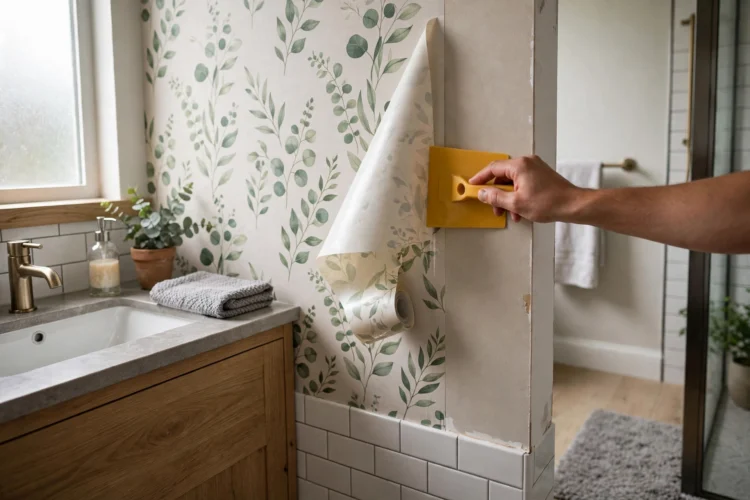
Peel and stick wallpaper suits renters and anyone who likes to change a room without a long commitment. Modern peel and stick papers use a stronger adhesive than the early versions, and several brands now offer bathroom rated options. The appeal is clear: no paste, no steamer for removal, and a weekend project instead of a contractor visit. Humidity resistant wallpaper in peel and stick form works best in well ventilated baths and powder rooms.
Prep the wall well before you stick anything up. Clean off soap residue, let the wall dry fully, and avoid hanging paper on freshly painted walls that have not cured. Smooth each strip from the center outward to push out air bubbles, and press seams firmly with a plastic smoother. If a corner starts to lift after a few steamy showers, a little extra adhesive or a replacement strip fixes it without redoing the whole wall.
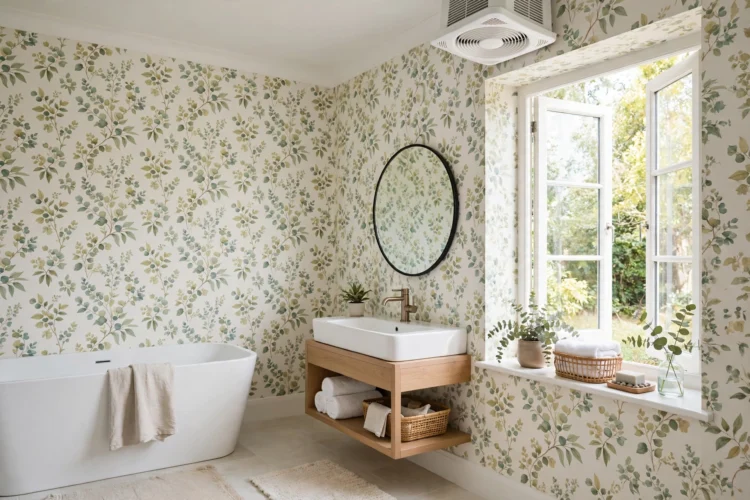
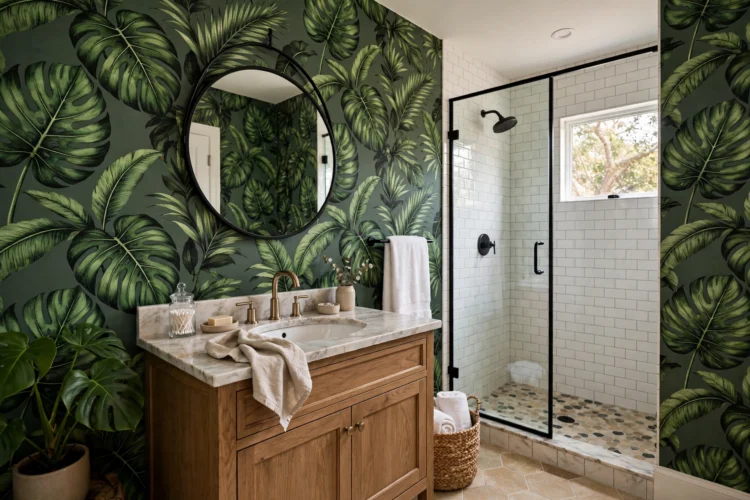
Large leaf and botanical prints do more than look lush. Their busy pattern hides small splashes and water marks better than a flat solid color, which is useful on the wall beside a sink or across from a shower. Deep green leaves on a dark ground create a moody, spa-like feel, while lighter palm prints keep a small bath bright. Either way, the pattern becomes the focal point, so keep towels and accessories simple.
Scale matters with botanicals. In a compact bath, choose a medium scale print rather than oversized leaves that get chopped up by the mirror and door frame. In a larger bath, go bigger and let one feature wall carry the pattern while the other walls stay painted. Pair botanical bathroom wallpaper patterns with natural wood accents and plants that tolerate humidity, such as pothos, to complete the look without adding clutter.
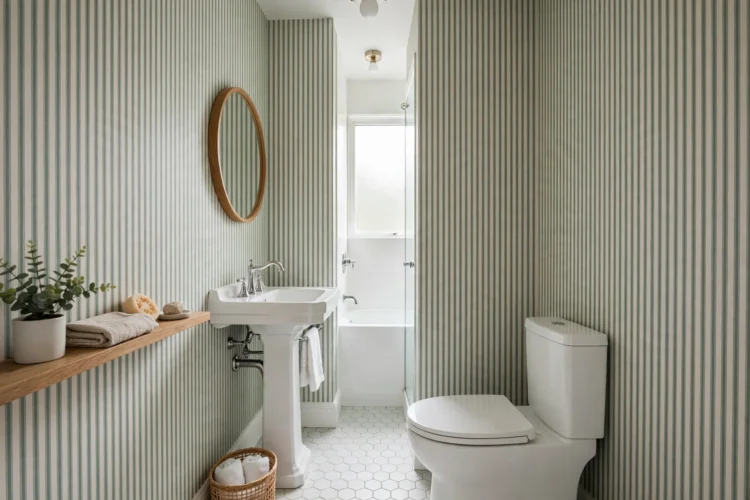
Stripes are a classic trick for awkward proportions, and they work just as well in bathrooms as in hallways. Vertical stripes draw the eye upward and make a low ceiling feel taller. Horizontal stripes can make a narrow room feel wider, though they also make a short wall feel shorter, so use them on the longest wall. Thin, tone on tone stripes add texture without shouting, while wider stripes in two close colors read more graphic.
For a damp room, choose a vinyl stripe rather than a paper one, and keep stripes off the wall directly inside the shower zone. A striped accent wall behind the vanity gives you the effect where you see it most, in the mirror, without exposing the paper to constant spray. If stripes feel too formal, a ticking stripe or a hand drawn line pattern softens the look and suits cottage and coastal baths.
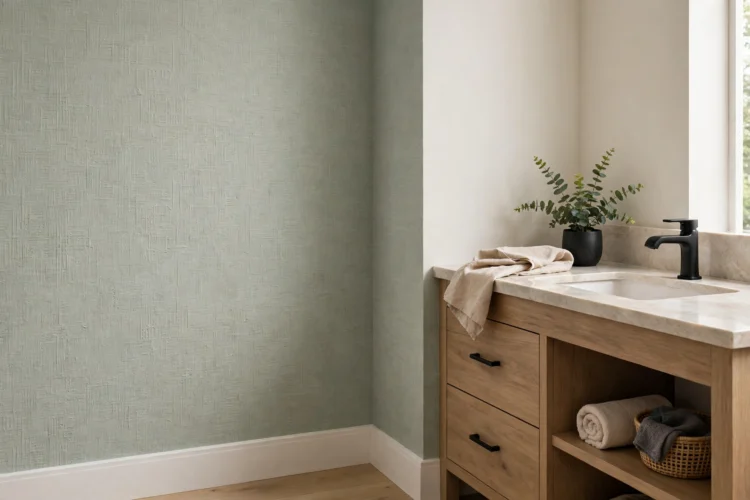
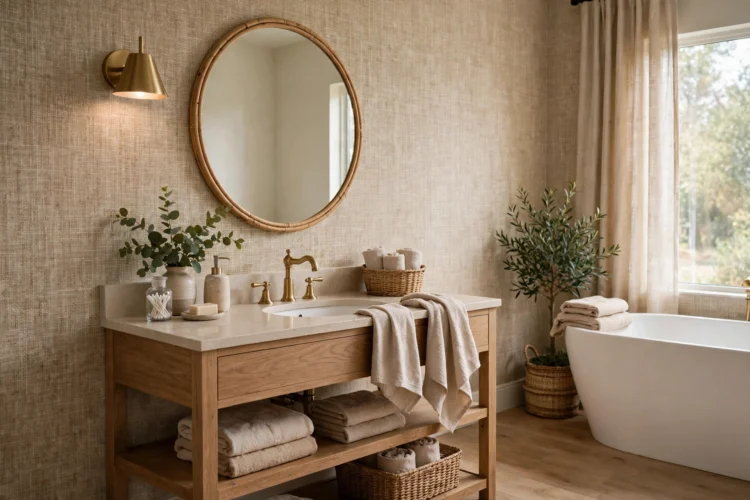
Real grasscloth is beautiful and a poor fit for a steamy bath, since natural fibers absorb moisture and stain. The workaround is a vinyl or coated paper printed to mimic grasscloth texture. You get the woven look and the warm, organic feel with a wipeable surface that handles humidity. These faux grasscloth papers work well in warm neutrals, soft grays, and muted greens that suit a calm bathroom palette.
Use faux grasscloth on a single wall to add warmth without overwhelming the room. It pairs well with wood vanities, stone counters, and matte black or brass fixtures. Because the texture is subtle, it also forgives minor wall imperfections better than a flat paper. Check the product details before buying, since some textured vinyls are embossed rather than printed, and deeper embossing can trap dust in a room that already needs regular wiping.
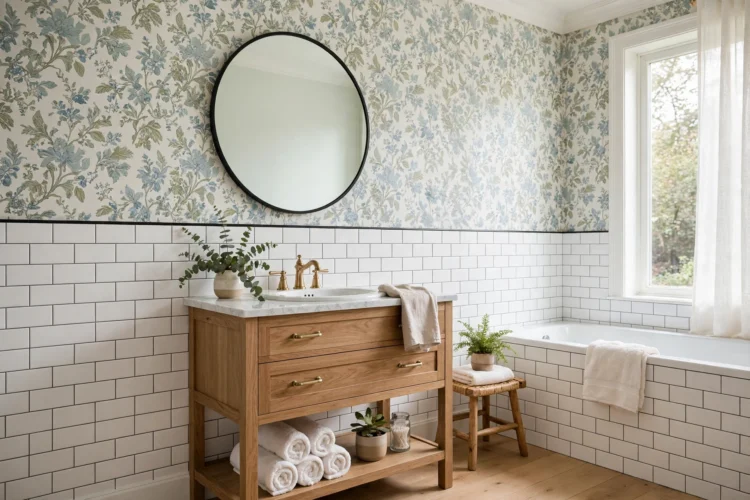
One of the smartest placements in a bathroom is tile below and wallpaper above. A tile wainscot or a full tile surround handles direct splashes, while paper on the upper wall adds color and pattern where water rarely reaches. This split also solves the hardest part of bathroom wallpapering, which is keeping seams dry near sinks and tubs. The chair rail or tile edge gives the paper a clean stopping point.
This approach opens up pattern choices. A paper that would be risky at sink height becomes perfectly fine above tile, including some coated non-woven options. Match the grout color to a tone in the paper to tie the two halves together. For more tile inspiration, look at these subway tile bathroom ideas that show how classic tile pairs with almost any wall treatment above it.
No material survives a bathroom with no airflow, so ventilation is part of the design, not an afterthought. Run the exhaust fan during showers and for at least 20 minutes after, and leave the bathroom door ajar afterward so damp air can escape. If your fan is old or noisy, replacing it is cheaper than replacing wallpaper, and a humidity sensing fan switch removes the guesswork by running until moisture drops.
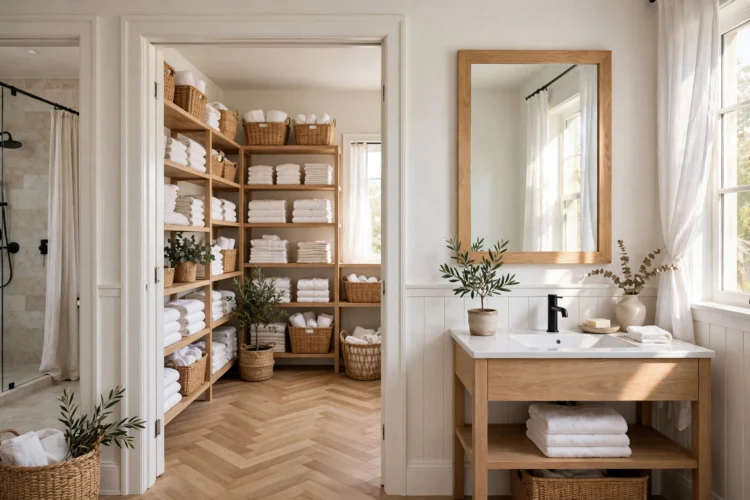
Small habits add up. Wipe down the wall nearest the shower if it collects condensation, keep towels off papered walls, and fix slow drips that keep one spot damp. Store spare rolls flat in a dry place so future repairs match the original batch. With the right paper and steady airflow, your bathroom wallpaper can look good for years, and the room gains the warmth and personality that plain paint rarely delivers. For the finishing touches, explore bathroom storage ideas and spa-like bathroom ideas to round out a calm, well organized space.