Physical Address
304 North Cardinal St.
Dorchester Center, MA 02124
Physical Address
304 North Cardinal St.
Dorchester Center, MA 02124

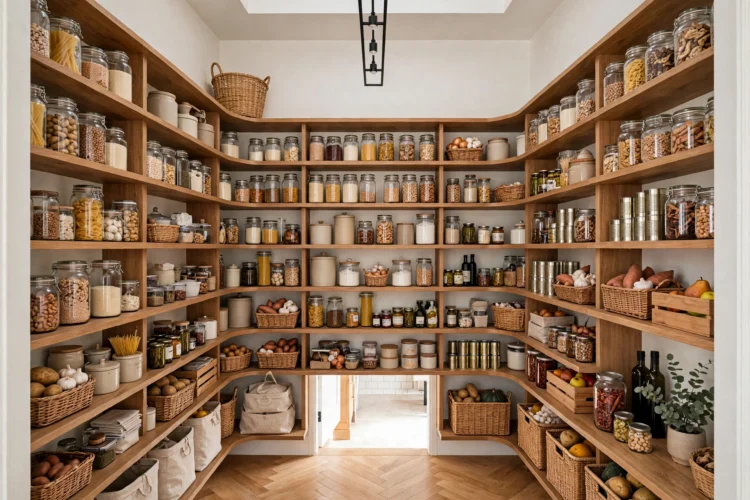
Turn a spare closet into a mini kitchen with U-shaped shelving, a prep counter, and a home for every appliance. These twelve walk in pantry ideas show how.
A walk in pantry ideas search usually ends in pretty pictures of shelves full of matching jars. Pretty helps, but a pantry that stores food for a serious cook needs more than matching jars. It needs a layout that works like a small kitchen, with a place to prep, a place to park appliances, and shelves you can actually reach. The twelve ideas below build that kind of pantry, one decision at a time.
Start with the shape of the room, then work through storage, counters, and the small details that keep it tidy. Every idea here works on its own, and together they turn a spare closet or a spare corner into the hardest working room in the house.
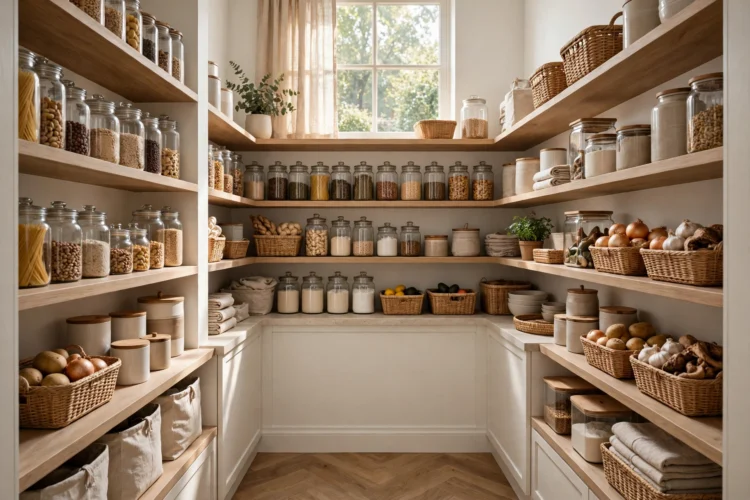
A U-shaped walk-in gives you three walls of storage and one open side to move through. That shape matters more than square metres, because it keeps every shelf within reach and leaves a clear working aisle in the middle. Leave at least 90 cm of clear floor between facing shelves so two people can pass with a shopping bag in each hand, and keep the tallest shelves on the back wall where they never block the door.
The logic matches U-shaped kitchen ideas for the main kitchen: three sides of storage, one open side to move through, and no dead corner where food goes to expire. If the room is long and narrow instead, run shelves down both long walls and treat the short back wall as the home for bulk goods and appliances.
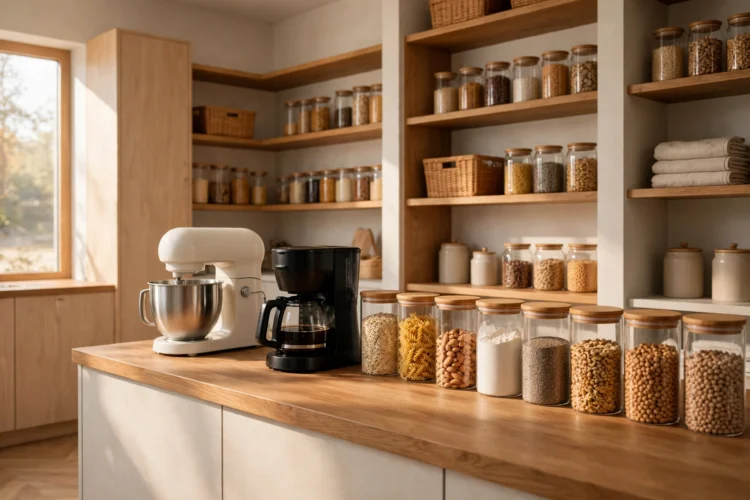
A pantry without a counter is just a cupboard you can walk into. One run of counter along a single wall changes how the room works: you can decant flour into jars, sort a grocery delivery, or leave a stand mixer out without giving up kitchen counter space. Pantry counter space earns its keep fastest at the height of your kitchen counters, so moving between the two rooms feels natural.
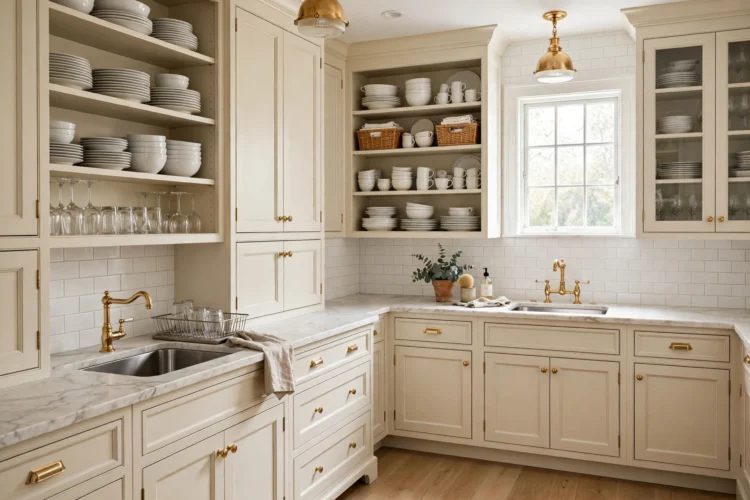
Borrow the counter tricks from small kitchen ideas and you get a prep surface that doubles as a landing spot for grocery bags. Keep the run clear on purpose. One coffee station or one mixing zone is enough. The moment the counter fills with clutter, the whole pantry starts to feel like a storage room again.
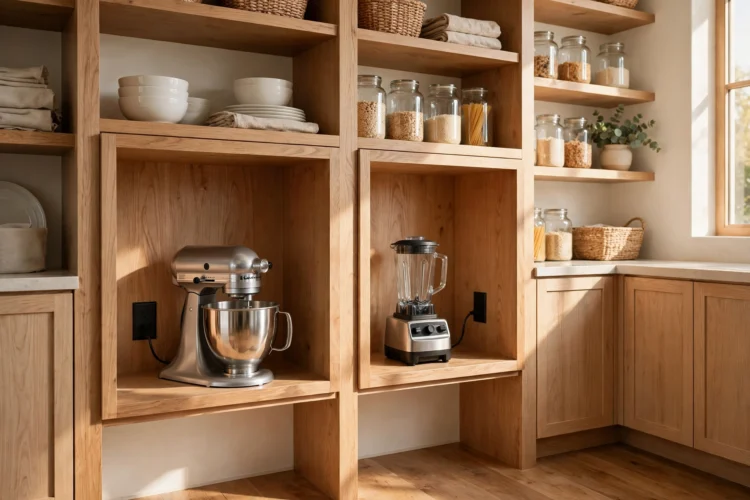
A stand mixer, a blender, and a food processor all need homes, and the kitchen counter is the worst place for them. Give each appliance its own cubby with an outlet inside, sized to the appliance plus a little breathing room. An appliance garage pantry setup like this means the mixer never has to be lifted from a high shelf, and the blender never lives behind the cereal boxes.
Put the heaviest appliance at counter height or just below it, and keep lighter ones higher. Good kitchen storage ideas give every appliance a home instead of a pile on the counter, and the same rule works inside a walk-in. Add a small shelf above each cubby for the attachments, so the whisk and the dough hook never wander off.
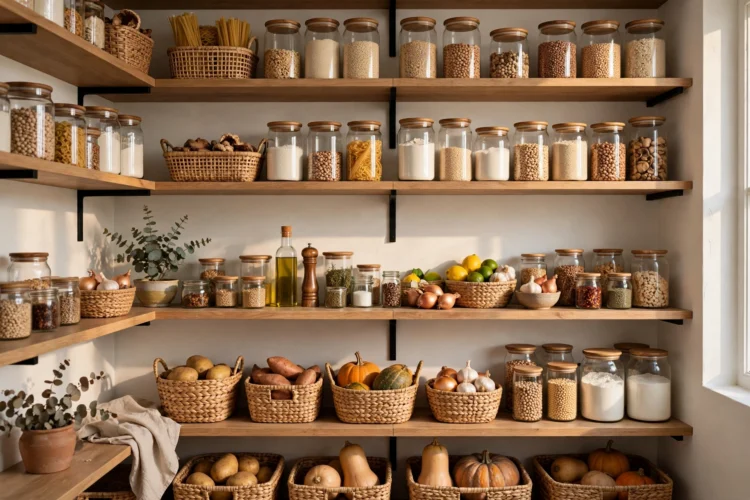
Sort the pantry by frequency, not by food type. Daily goods sit at eye level and within arm’s reach: coffee, tea, breakfast cereal, cooking oil, and the salt you grab every night. Weekly goods go one shelf up or one shelf down: pasta, rice, tinned tomatoes, and baking supplies. Seasonal and bulk goods live on the highest and lowest shelves, where you only reach them once a month or less.
Most walk in pantry ideas sort food by type, but sorting by frequency saves more time, because your hand goes to the same spot every time. It also keeps the shelves honest: when the daily zone starts to overflow, you know it is time to cook through what you already have before buying more.
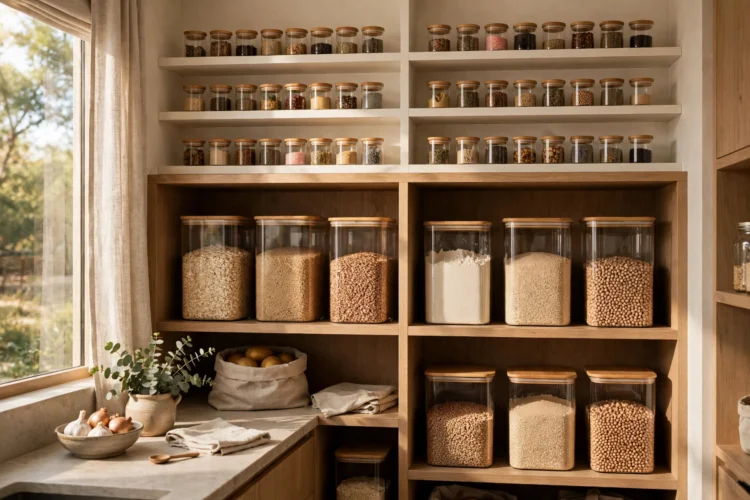
One shelf depth for the whole pantry wastes space, because jars and bulk packs need very different depths. Use deep shelves, about 40 to 45 cm, for bulk goods, large pots, and multipacks on the lower levels. Use shallow shelves, about 25 to 30 cm, for jars, tins, and packets at eye level, so nothing can hide two rows deep. Walk in pantry shelving works best when the depth matches what actually sits on it.
If your shelves are already fixed at one depth, add a shallow riser or a narrow basket at the front so small jars stay visible. The fix costs little and stops the classic pantry problem: buying a third jar of paprika because the first two hid behind the oats.
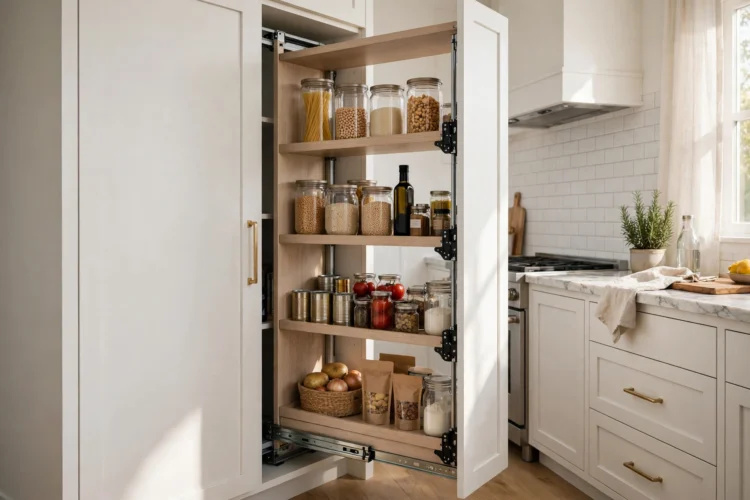
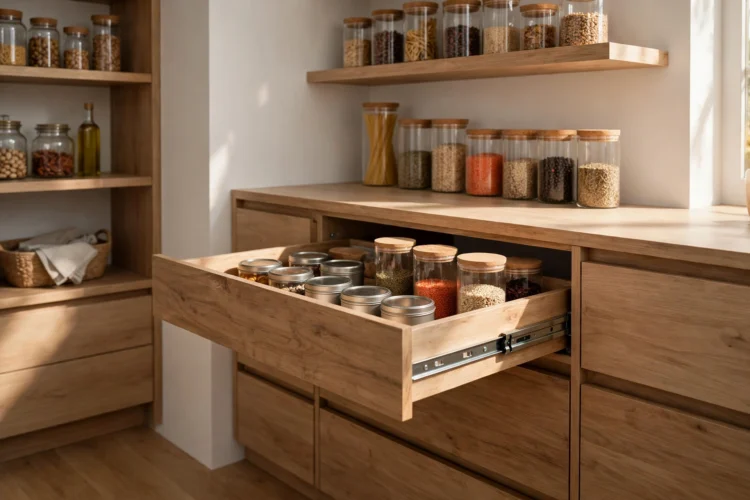
Fixed shelves hide food. A pull-out drawer or a basket on rails brings the whole shelf to you, so the jar at the back is as easy to reach as the one at the front. Fit pull-outs on the lowest two shelves first, where heavy tins and bulk packs live, and use them for potatoes, onions, tinned goods, and anything you buy in multiples.
The same pull-out kitchen storage ideas that rescue deep kitchen cabinets work even better in a walk-in, because the drawer can run the full depth of the shelf. Label the front of each drawer with its category, and the pantry starts to run itself.
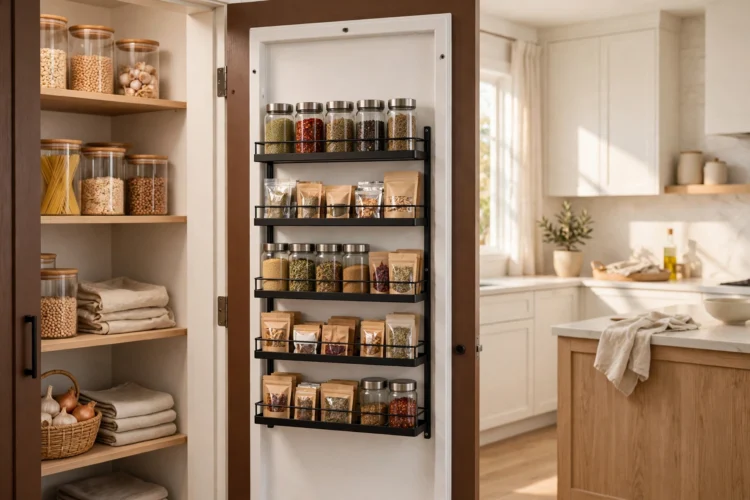
The back of the pantry door is free storage. A slim rack there holds spices, small jars, and packets that would otherwise crowd the main shelves, and it keeps them visible every time you open the door. The narrow ends of a shelf run work the same way: a slim rack or a row of hooks holds aprons, measuring cups, and the shopping list.
Keep door storage shallow, no more than about 10 cm deep, so the door still closes easily and nothing falls off when it swings. Hooks on the side of a shelf unit hold scissors, a small dustpan, and the reusable bags, which keeps them out of the kitchen drawers.
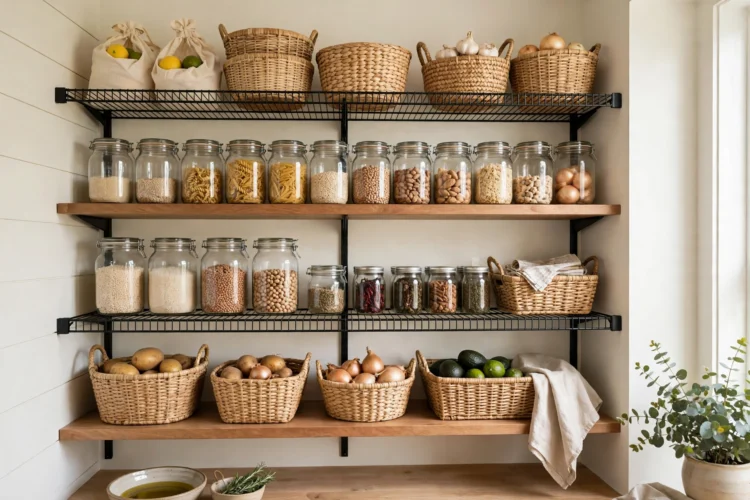
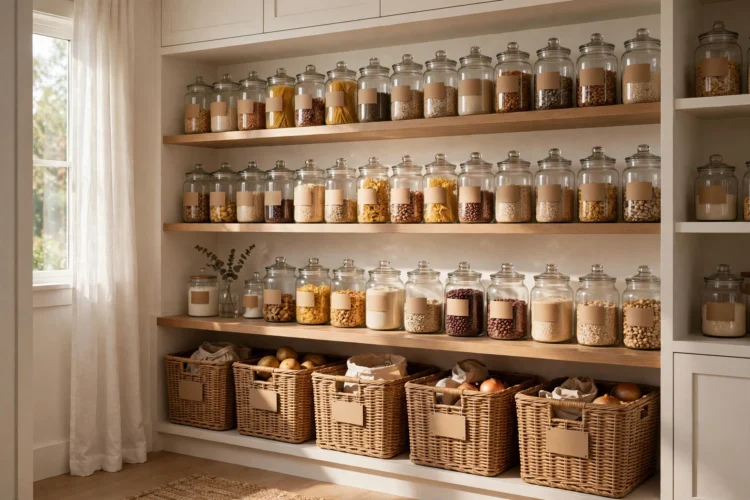
Decanting is not about pretty jars. It is about seeing how much you have left. Clear containers show the level of flour, rice, and pasta at a glance, and they keep weevils and damp out better than open packets. One bin per category, pasta in one, baking in another, snacks in a third, stops the shelves from turning into a mixed pile.
Label the front of every bin and jar with what is inside and the date you opened it, and put the label where you can read it without pulling the bin out. When every container has a fixed spot, putting the shopping away takes minutes, and anyone in the house can find the right thing without asking.
Baking sheets, chopping boards, and trays stack badly and slide everywhere. Stand them upright in a narrow slot or a file divider, and each one slides out without moving the rest. A slot about 8 to 10 cm wide holds most trays, and the same trick works for muffin tins and cooling racks.
A pantry with one ceiling light always has dark shelves. A slim LED strip under each shelf lights the row below it, so labels are readable and nothing hides in shadow. Battery strips work in a pantry without wiring, and a door sensor that switches them on when the door opens means you never fumble for a switch with full hands.
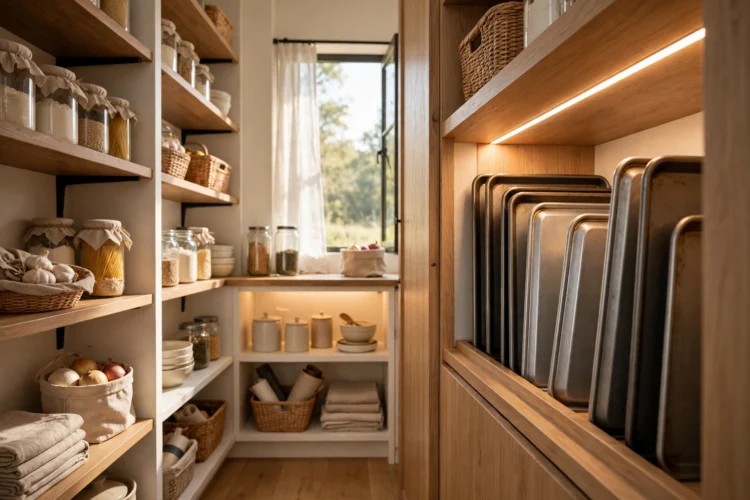
Food keeps longest in a cool, dry, dark place, so keep the pantry away from the oven wall and the sunny side of the house if you can. A small vent or a gap under the door lets air move, and a moisture absorber on the top shelf helps in a damp climate. Skip the heater and the sunny window: both shorten the life of everything on the shelves.
Restocking works best when groceries have a place to land. Keep one shelf near the door clear as a landing zone, drop the bags there, then sort everything into its home in one pass. The same shelf holds the shopping list and a pen, so the next list starts itself while you unpack.
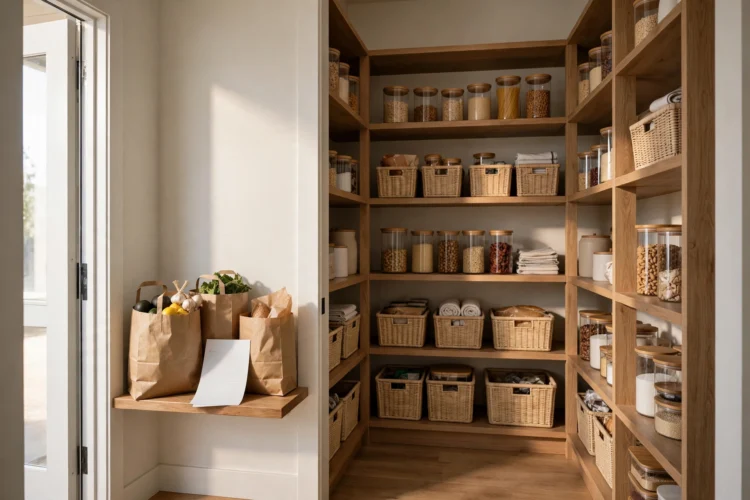
These walk in pantry ideas add up to a room that holds more food, wastes less of it, and makes weeknight cooking faster, because everything you need is already in reach and already in sight.