Physical Address
304 North Cardinal St.
Dorchester Center, MA 02124
Physical Address
304 North Cardinal St.
Dorchester Center, MA 02124

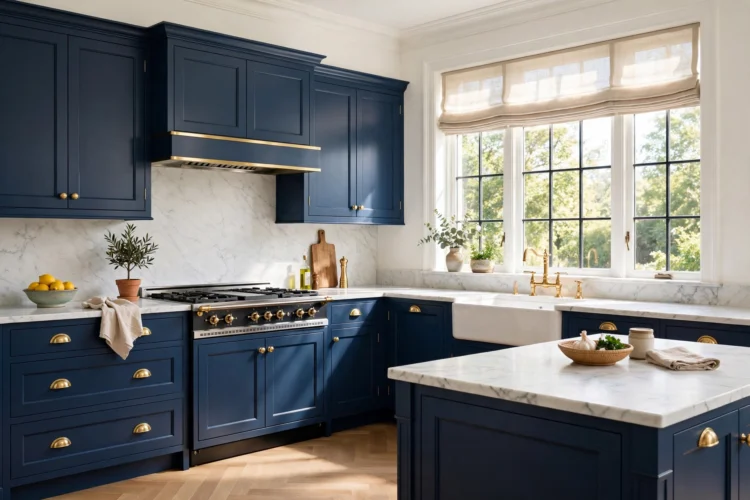
Ten navy blue kitchen cabinet ideas showing how navy creates classic contrast across coastal, traditional, and modern kitchen styles.
Navy blue kitchen cabinets earn their classic status the honest way: they look good with almost everything. Navy sits between bold and neutral, giving a kitchen clear color and contrast while pairing as easily as white with marble, wood, brass, and stainless. It works in a salty coastal cottage, a tailored traditional kitchen, and a sharp modern space with equal confidence.
The eight ideas below show navy across those styles, with notes on what to pair it with in each one. Whether you paint every cabinet navy or use it as a single strong accent, the contrast it creates against light counters and walls is what makes the room feel designed.
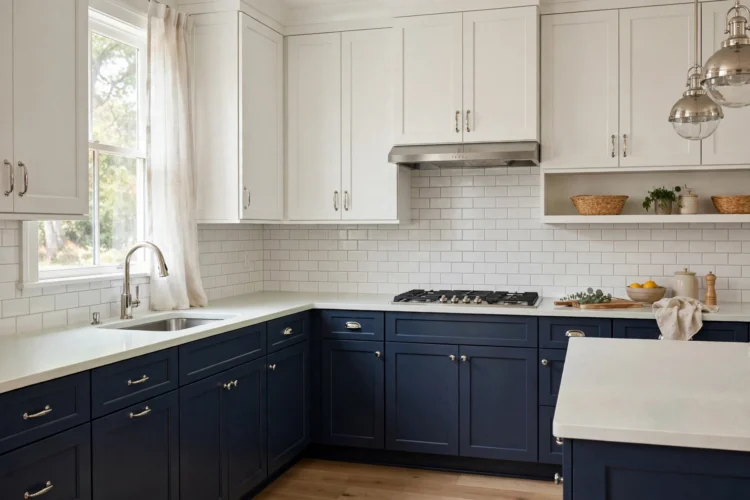
The two-tone split is navy’s most forgiving application: deep navy on the base cabinets, crisp white on the uppers. The dark lowers ground the room and hide scuffs where feet and pets hit, while the white uppers keep the walls feeling light and open. A white or pale gray counter bridges the two tones.
This split suits kitchens with limited natural light, since the white uppers bounce what light there is. Use the same door style top and bottom so the two colors read as one intentional design. Polished nickel hardware ties to the white uppers; brass ties to the navy lowers. Either metal works, so choose the one that matches your faucet. A slim stripe of the navy carried onto the toe kick makes the lowers look custom and hides scuffs even better.
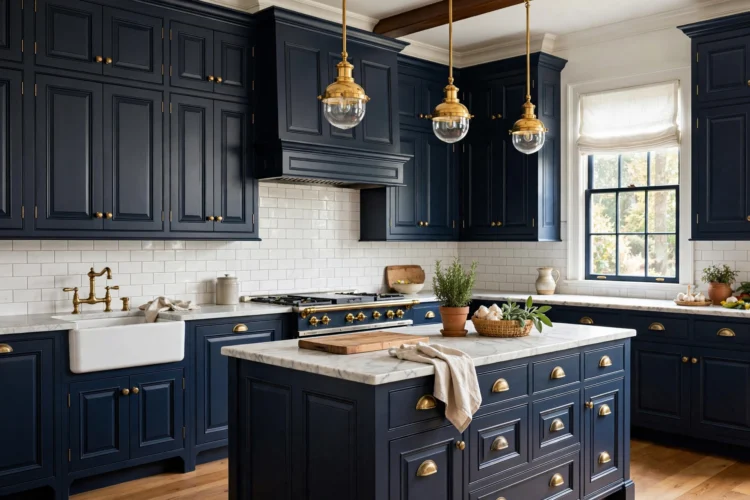
Navy and unlacquered brass are a traditional pairing for a reason: the warm metal lights up the cool blue like candlelight. Choose cup pulls and knobs in unlacquered brass, which develops a soft patina, and echo it in the faucet and a pair of picture lights over open shelves. The combination feels collected rather than decorated.
Support the pairing with honed Carrara-look marble counters and a handmade white backsplash. Raised-panel or shaker doors in navy carry the traditional detailing best. This is the look for kitchens with crown molding, a farmhouse sink, and floors in warm oak. A Persian-style runner in navy, cream, and rust ties the cabinet color to the floor and softens the room’s acoustics.
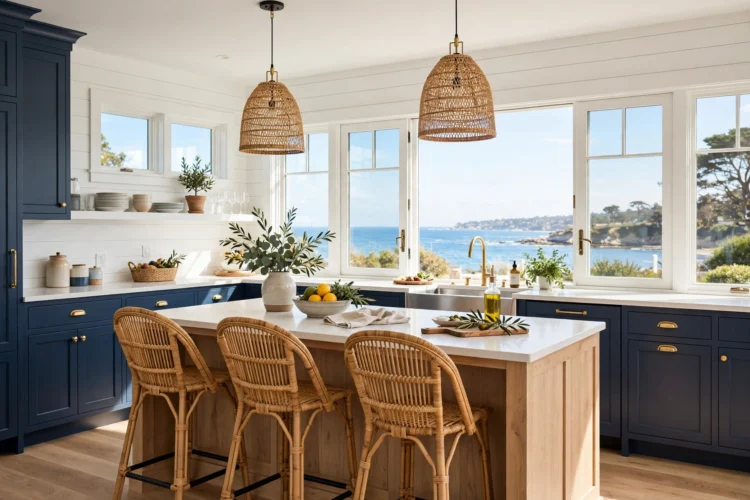
In a coastal kitchen, navy reads as a deep sea blue against crisp white shiplap walls. Paint the shiplap a clean bright white and the cabinets a navy with a hint of teal, and the room feels like a New England cottage even miles from the water. Rope or rattan details in barstools and pendants complete the story.
Keep counters light: white quartz or pale butcher block. Brushed nickel hardware keeps the palette cool and breezy. This style forgives a lot, since the high contrast between navy and white looks intentional even when the styling is simple. Glass-front uppers on one wall show off white dishware and keep the navy from overwhelming a small coastal kitchen.
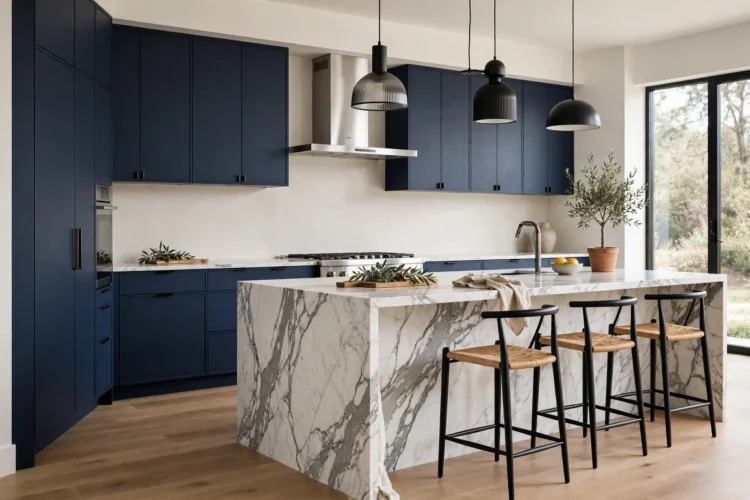
Flat-panel navy cabinets with a waterfall marble island read as quietly luxurious and thoroughly modern. The marble’s dramatic veining becomes the artwork of the room, and the flat navy doors recede into a calm, dark background. Handleless push-to-open doors or slim black bar pulls keep the lines clean.
Choose a marble or marble-look quartz with strong gray veining on a white ground for maximum contrast against the navy. Keep the backsplash minimal, a single slab of the same stone or plain plaster-look tile, so nothing competes with the island. Under-cabinet lighting in a warm white keeps the dark cabinets from feeling cold. A single floating wood shelf against the navy wall adds one warm line that keeps the modern scheme from feeling stark.
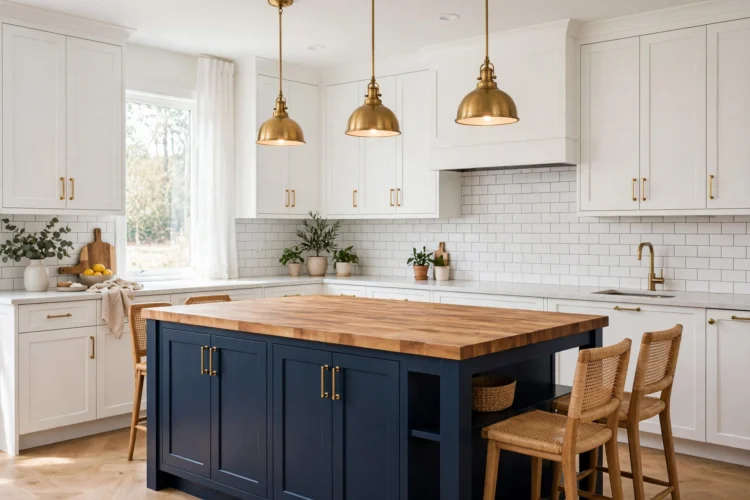
When full navy feels like too much commitment, paint only the island. A navy island in an otherwise white or light gray kitchen becomes the clear focal point, anchoring the room the way a rug anchors a living room. Everything else stays calm, which makes the one strong color choice feel deliberate.
Top the navy island in butcher block or white marble to show off the contrast, and hang two pendants above it in brass or black. Because the island is freestanding furniture in visual terms, repainting it later is a weekend project, which makes this the lowest-risk way to try navy. Corbel brackets or a furniture-style toe kick make the island read as a distinct piece rather than leftover cabinetry.
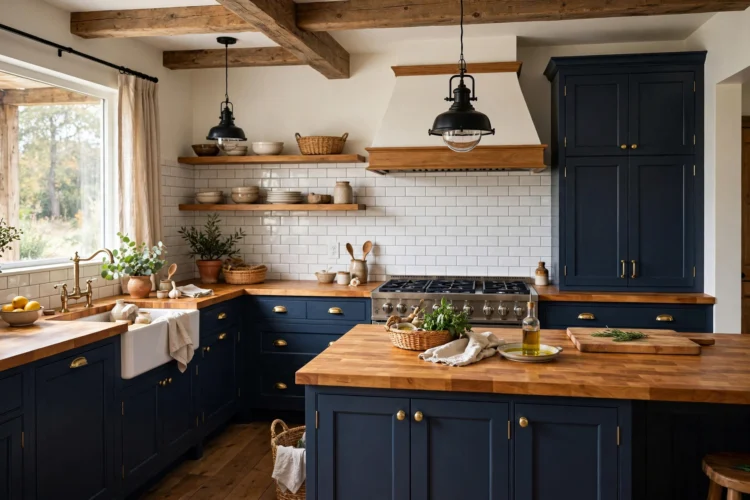
Butcher block counters warm up navy cabinets in a way stone cannot. The honey tones of maple or oak soften the blue’s formality and make the kitchen feel like a working, lived-in room. This pairing suits farmhouse and transitional kitchens where comfort matters as much as looks.
Seal the butcher block with food-safe oil or a hardwax finish and re-oil it a few times a year to keep water out. Pair with a white subway backsplash and matte black or brass hardware. The wood-and-navy combination also hides the patina of daily cooking better than an all-stone kitchen. A blackened steel pot rail on the backsplash gives hanging storage that suits the hardworking mood of the pairing.
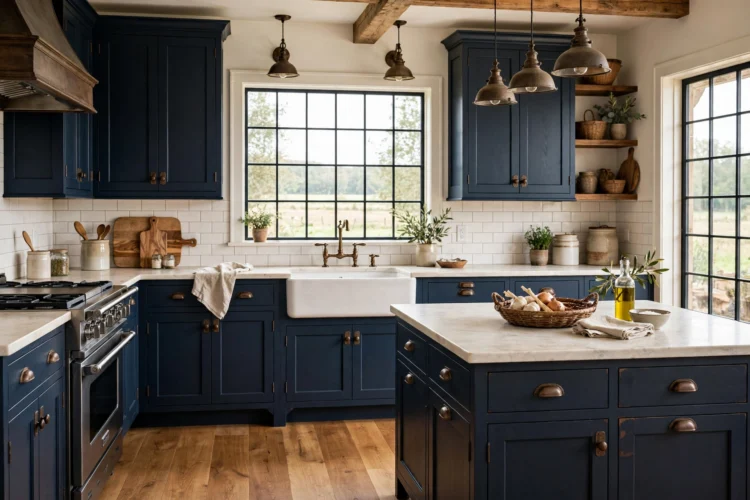
Aged bronze hardware gives navy cabinets a rustic, timeworn edge that polished metals cannot. The dark, mottled bronze sits quietly against the navy, letting the cabinet color lead, and it pairs naturally with a fireclay farmhouse sink and a brick or handmade-tile backsplash. The overall feel is a farmhouse kitchen with depth.
Keep walls warm white and floors in medium oak so the dark palette stays grounded rather than gloomy. Open wood shelves on one wall lighten the composition and give the bronze somewhere to echo in brackets or rail hooks. This is a hardworking look that ages gracefully. Butcher block on the island only, with stone on the perimeter, splits the difference between rustic warmth and easy cleanup.
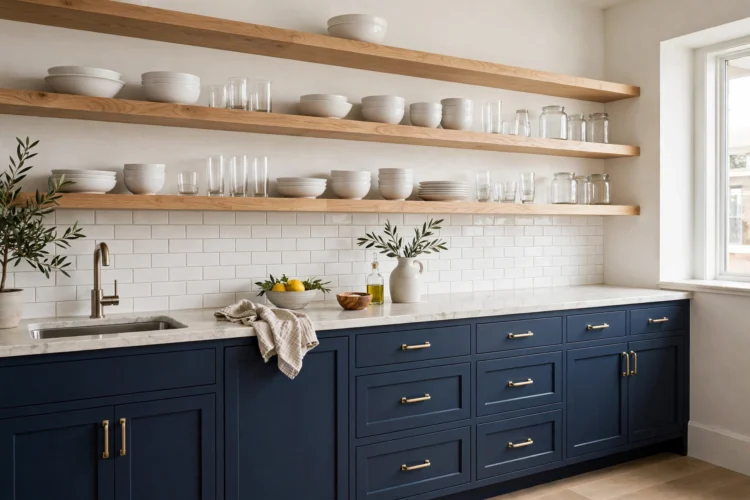
Replacing some navy uppers with open white oak shelves breaks up the dark wall and adds warmth at eye level. The pale wood glows against the navy, and the shelves give everyday dishes a display spot. Keep the styling simple: white bowls, clear glasses, and a few wood boards.
Use thick oak shelf boards, at least an inch and a half, on dark steel brackets that tie back to the hardware. Limit open shelving to one wall or one section so the kitchen keeps enough closed storage for the less photogenic items. The mix of navy, oak, and white is one of the most balanced palettes a kitchen can wear. Under-shelf puck lights make the oak glow against the navy and turn the shelves into the kitchen’s evening focal point.
Navy endures because it contrasts beautifully and pairs with nearly everything. Pick the version that matches your home’s style, commit to the hardware that supports it, and the kitchen will look considered for years. Order door samples in two or three navy shades, since undertones shift with your home’s light.