Physical Address
304 North Cardinal St.
Dorchester Center, MA 02124
Physical Address
304 North Cardinal St.
Dorchester Center, MA 02124

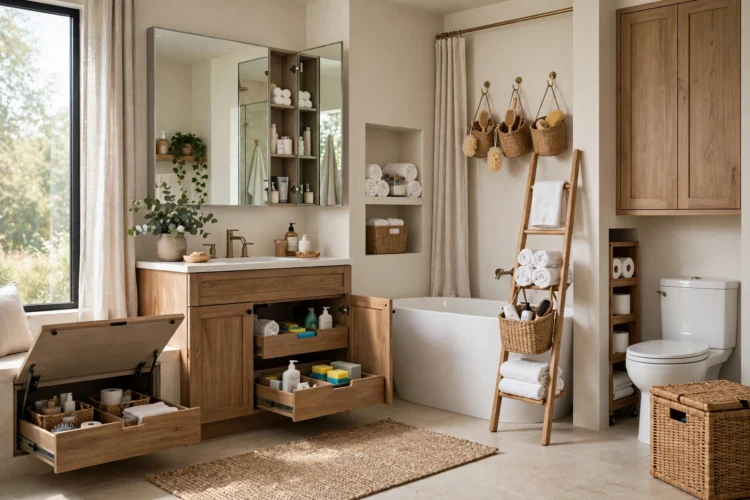
Hidden bathroom storage beats open shelves when the goal is a clear counter. These 10 ideas give every daily item a concealed home.
Bathroom storage ideas solve a problem most bathrooms share: too many daily items and too little counter space. The fix is rarely a bigger bathroom. It is a better hiding place for each category, so toothbrushes, towels, cleaning supplies, and spare rolls each have a home that is not the countertop. These 10 bathroom storage ideas focus on concealed solutions, the kind that leave the counter clear even on a busy morning. Start with the one spot that bothers you most, then work through the rest as time and budget allow.
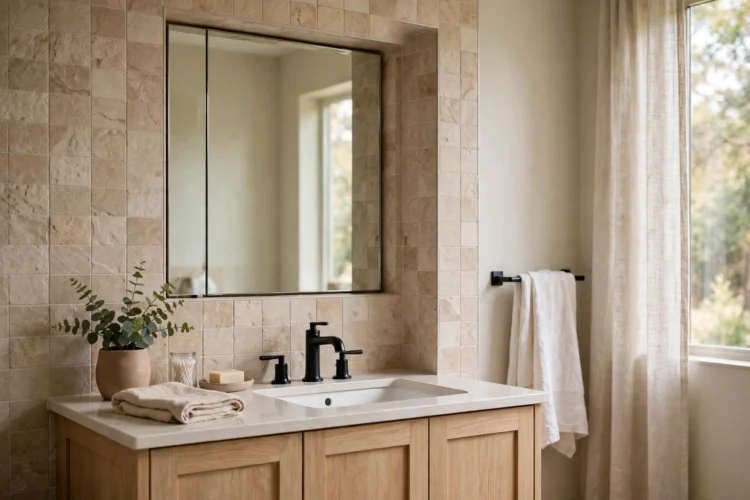
A recessed medicine cabinet uses the empty space between wall studs, so it stores a surprising amount without pushing into the room. Unlike a surface mounted box, it sits flush with the wall and reads like a mirror, which keeps a small bathroom feeling open. Most models hold daily items in the door as well as on shelves, so small bottles stay visible instead of lost at the back.
Measure your stud spacing before you buy, since most cabinets fit a standard bay but some older walls differ. If recessing is not possible, a shallow surface cabinet with a mirrored front still beats an open shelf for visual calm. Keep only daily items inside and move backup stock to a linen closet, or the cabinet fills up within a month.
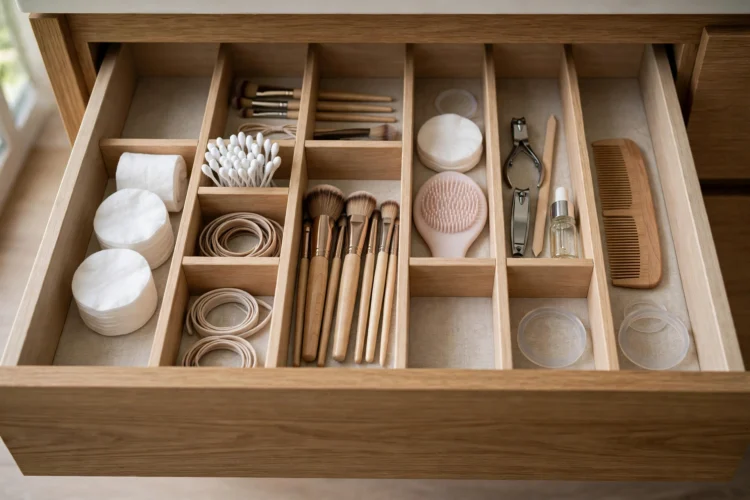
Good bathroom vanity storage starts with drawers, not deep cabinets, because items in a deep cabinet slide to the back and disappear. Drawers fix that by bringing everything toward you, and dividers keep the drawers useful. Sort by routine rather than by product type: a morning drawer for face and hair items, and a second drawer for cleaning and first aid supplies.
Small trays or drawer organizers cost little and stop the slow slide back into chaos. Measure drawer depth before buying organizers, and leave one drawer partly empty so new items have somewhere to go. The same drawer logic drives pull-out storage for deep cabinets, where bringing the shelf to you beats reaching into the dark.
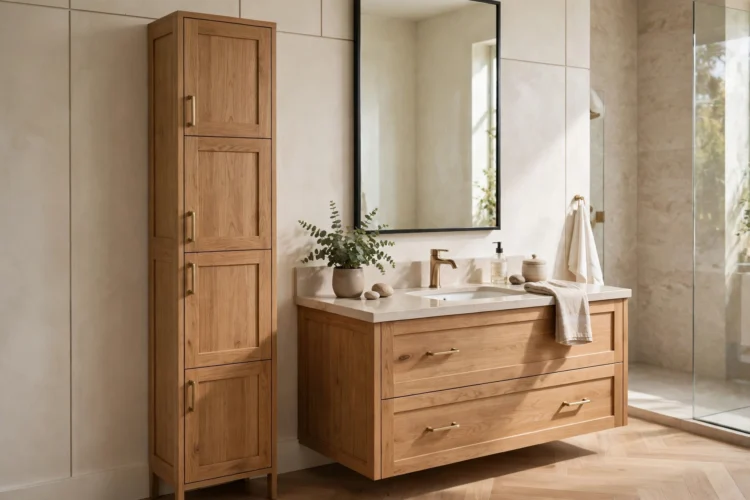
For small bathroom organization, a tall, narrow cabinet turns an unused strip of wall into storage for towels, spare rolls, and cleaning supplies. Place it beside the vanity or on the wall opposite the door, where it does not block movement. A cabinet that runs from floor to near ceiling holds more than three separate small shelves and looks tidier doing it.
Pick a depth of around 30 centimeters or less so the cabinet does not crowd the walkway. Closed doors matter here: open tall shelving looks tidy only on the day you style it, while doors hide the uneven reality of folded towels and half used bottles. Match the cabinet finish to the vanity so it reads as built in rather than added on.
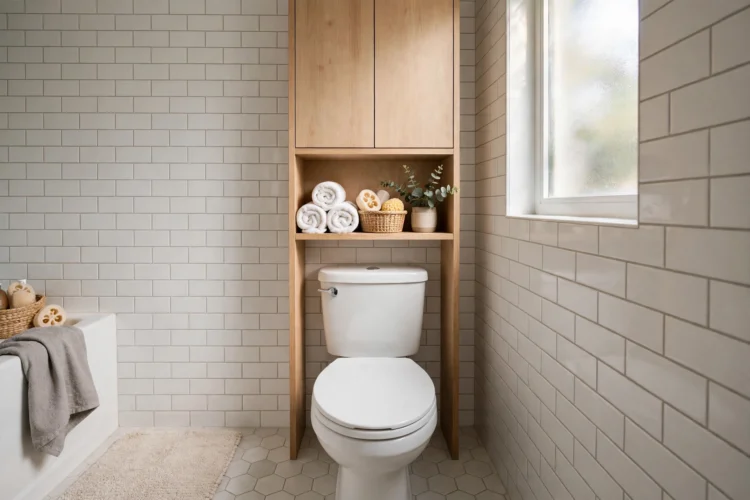
Over toilet storage uses the wall above the toilet, often the only free wall in a small bathroom, and it can hold a lot without looking heavy. A slim cabinet or a pair of closed shelves keeps spare rolls and cleaning supplies within reach but out of sight. The trick is to keep the unit shallow and to leave breathing room above it, so it does not loom over anyone sitting below.
Avoid open wire shelving here if you can, since it collects dust and shows every bottle. A cabinet with a mirrored or paneled front blends into the wall better. Check the height carefully: the bottom of the unit should sit well above head height when seated, and it should not block access to the cistern lid.
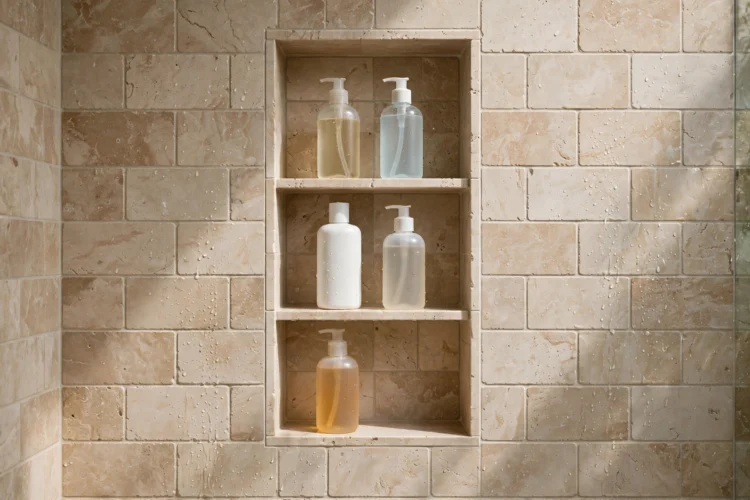
Bottles lined along the tub edge or balanced on the shower floor make a clean bathroom look messy in seconds. A recessed shower niche gives shampoo, conditioner, and soap a permanent shelf that drains and stays out of the spray path. One niche at chest height works for most showers, while a tall niche with two shelves suits a shared family bath.
If cutting into the wall is not an option, a corner ledge or a suction shelf at least gets bottles off the floor. Keep the niche shelf slightly sloped toward the shower so water runs out instead of pooling. Limit the niche to what you use weekly, and move backups to a cabinet, or the niche becomes a second cluttered shelf.
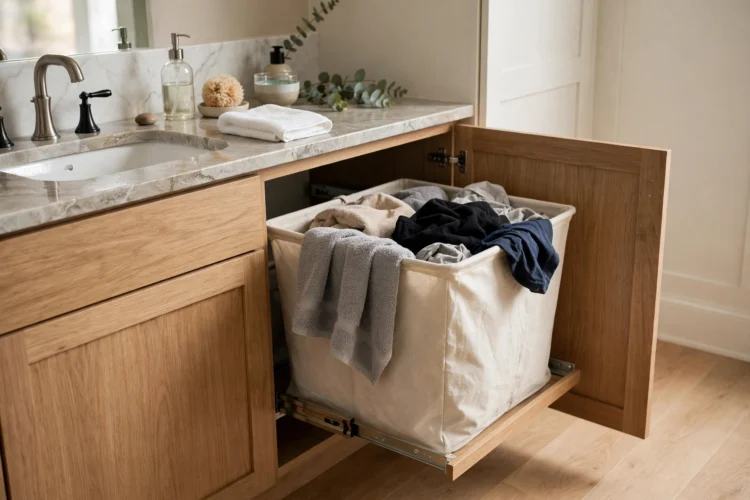
A laundry hamper sitting in the open adds visual bulk to a small bathroom and collects stray towels on its lid. A pull-out hamper inside a vanity cabinet or a tall unit hides the laundry and keeps the floor clear. The pull-out format also makes it easier to carry a full load out, since the bag lifts straight up instead of dragging across the floor.
Ventilation matters for a closed hamper, so pick a unit with small air gaps or a mesh bag rather than a sealed plastic bin. If you have no spare cabinet, a slim hamper that slides between the vanity and the wall works nearly as well. One hamper per bathroom prevents the pile that forms when laundry has no obvious home.
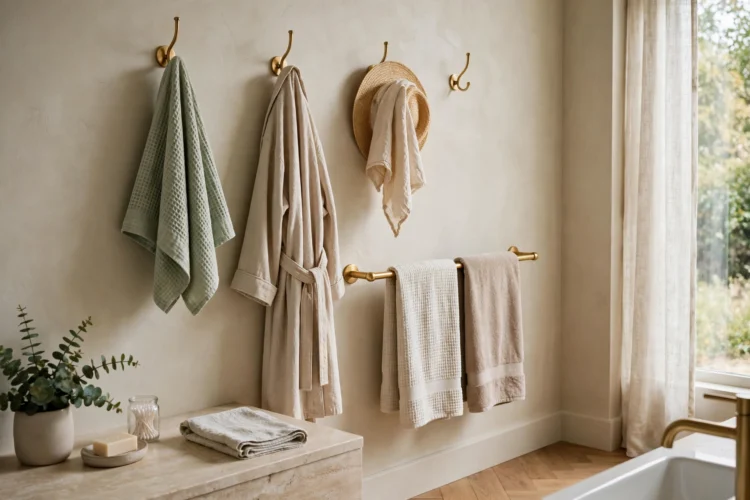
Many items land on the counter because they have nowhere else to hang. A row of hooks on the back of the door holds robes, a towel, and a wash bag, while a rail near the shower holds the towel you actually use. Hooks cost little, install in minutes, and free more counter space than most storage furniture.
Put hooks where the item gets used, not where they look neat in a photo. A hook beside the mirror holds a hair dryer cord, while a hook inside a cabinet door holds a brush out of sight. The idea mirrors wall-mounted storage that frees the counters in kitchens, where vertical space does the work that counters used to do.
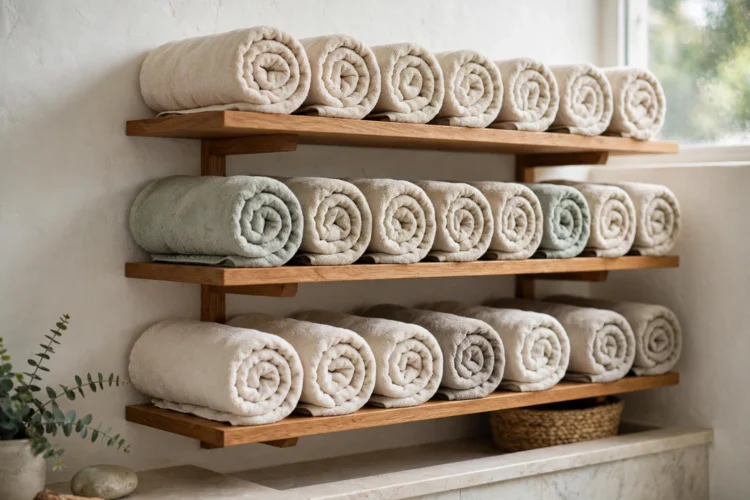
Linen storage fails when clean towels, half used towels, and cleaning cloths share one pile. Give each group its own shelf or basket and label the baskets if the bathroom is shared. Rolled towels take less shelf depth than folded stacks and make it easy to see when you are running low.
Store only one spare set per person in the bathroom itself and keep the rest in a hallway closet. That limit stops the linen shelf from becoming general storage for everything that lacks a home. A basket on a high shelf holds spare rolls and small backups, and because the basket pulls out like a drawer, you can restock without emptying the whole shelf. For larger backup stock, dedicated pantry style storage shows how one deep zone beats scattered small stashes.
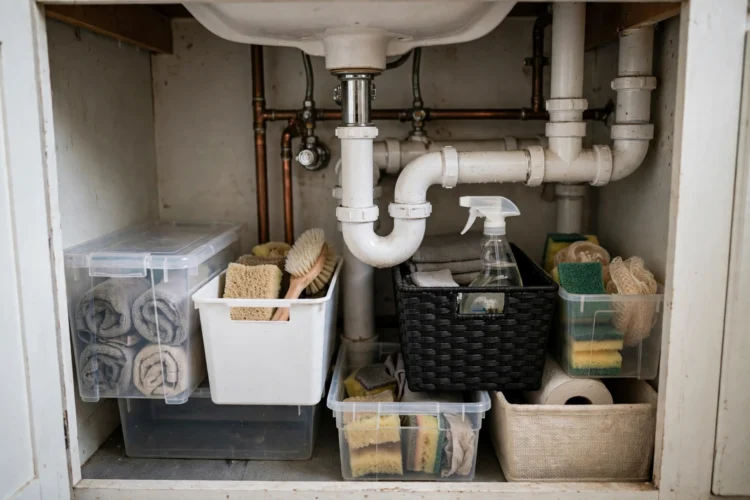
The cabinet under the sink looks roomy until the pipes cut it into awkward corners. Stackable bins and a small tension rod turn that space into something usable: hang spray bottles from the rod and stack bins beside the trap. A pull-out tray on the cabinet floor lets you reach the back without emptying the front.
Measure around the pipes before buying any organizer, and leave the trap accessible for maintenance. Keep only cleaning supplies and spare toiletries under the sink, and move anything you use daily to a drawer at hand height. A small lazy Susan in a corner of the cabinet stops bottles from hiding behind each other.
Even good hidden bathroom storage drifts back toward clutter without a reset. Once a week, spend five minutes returning stray items to their homes, tossing empty bottles, and wiping the counter clear. That short routine matters more than any single organizer, because it catches the drift before it becomes a weekend cleanup.
During the reset, check one zone in rotation: this week the medicine cabinet, next week the vanity drawers. Toss anything expired or unused for months, since expired products take the space that daily items need. The habit is the same one behind small space kitchen storage, where a quick weekly tidy keeps a tight room working long after the organizing project ends.