Physical Address
304 North Cardinal St.
Dorchester Center, MA 02124
Physical Address
304 North Cardinal St.
Dorchester Center, MA 02124

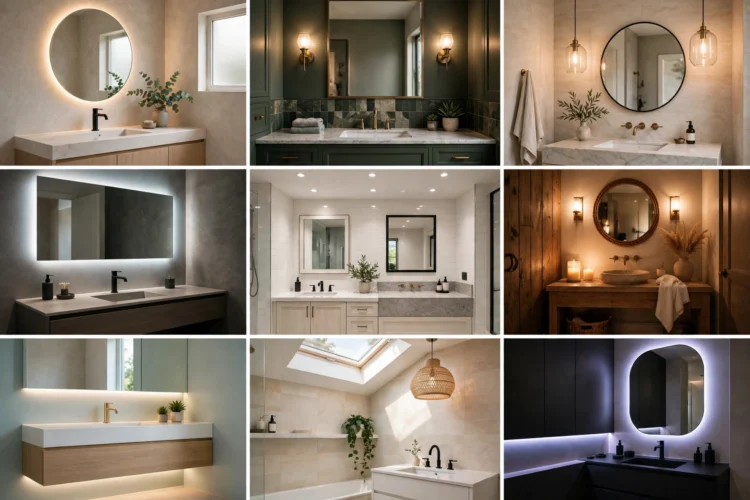
Good bathroom lighting splits the room by task: bright, even light at the mirror and soft, warm light at the tub. These 9 ideas show how.
Bathroom lighting ideas matter more than most fixtures in the room, because light decides whether the mirror flatters you and whether the tub zone feels calm. One overhead bulb cannot do both jobs. The mirror needs bright, even face light, while the bath needs soft, warm light you can sink into. These 9 bathroom lighting ideas split the room by task, so each zone gets the light it actually needs. You do not need a full rewire for most of them: swapping a fixture, adding a dimmer, or changing a bulb color can shift the whole room.
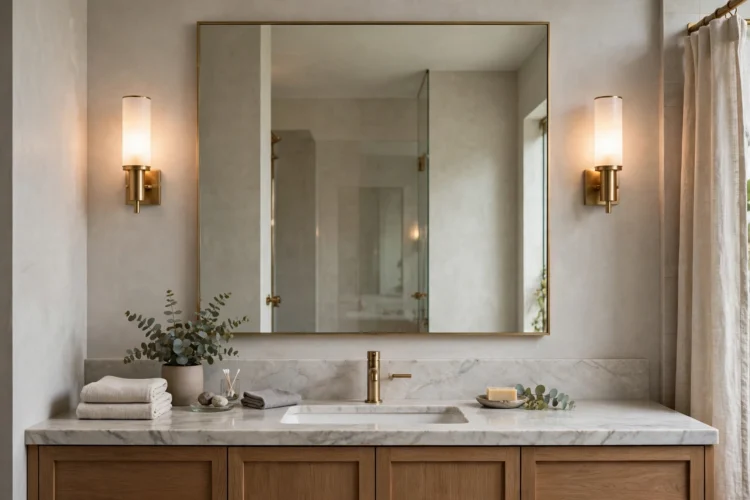
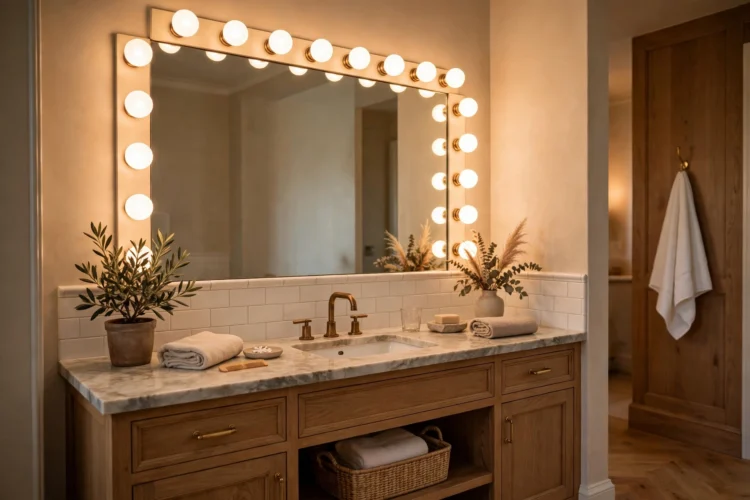
Among vanity lighting ideas, bathroom sconces mounted at eye level, one on each side of the mirror, give the most flattering face light in a bathroom. Light comes from both sides instead of from above, so it fills shadows under the eyes and chin rather than casting them. That even light helps with shaving, makeup, and any close mirror task.
Mount the center of each sconce around eye height for the people who use the mirror most, and keep the shades simple so light spreads evenly. If side space is tight, a single wide fixture above the mirror works, but avoid a single spot from directly overhead, which is the harshest setup of all. Frosted glass shades soften the bulbs without dimming the useful light.
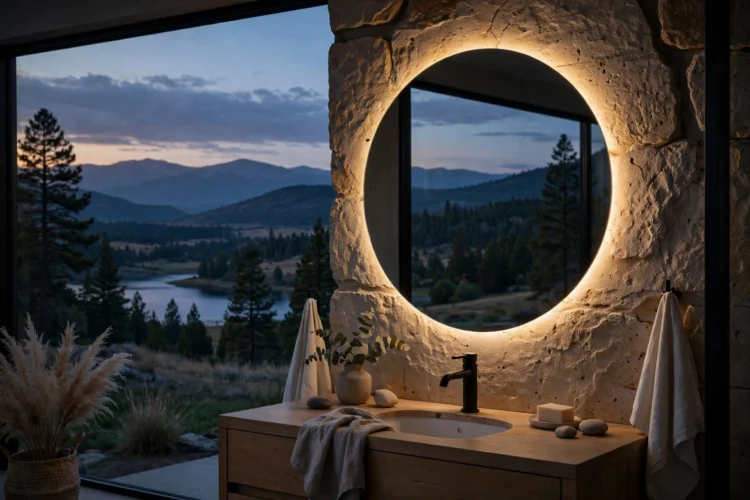
For bathroom mirror lighting without visible hardware, a backlit mirror hides its light source behind the glass edge, so the glow spreads softly across the wall and onto your face. The result looks modern without any visible hardware, and it suits bathrooms where wall space beside the mirror is too narrow for sconces. Many backlit mirrors also include a demister pad, which keeps the glass clear after a hot shower.
Check the color temperature before you buy, since backlit mirrors range from cool daylight to warm white. Warm white around 2700 to 3000 kelvin flatters skin and matches most bathroom bulbs. If the mirror has a built-in light, wire it to its own switch so you can use it alone in the evening without the ceiling light.
Ceiling light should fill the room evenly, not blast one spot. Recessed downlights spaced across the ceiling give general light without a single harsh fixture in the middle, and a flush mount with a frosted shade works in rooms where recessed lights are not practical. The goal is a base layer you can then adjust with mirror and accent lights.
Space recessed lights evenly and avoid placing one directly over the toilet or the tub, where it creates a spotlight effect. A dimmer on the ceiling layer lets you drop the whole room to a softer level in the evening. The same layered approach works in kitchen lighting beyond the basic flush mount, where one fixture rarely serves a whole room well.
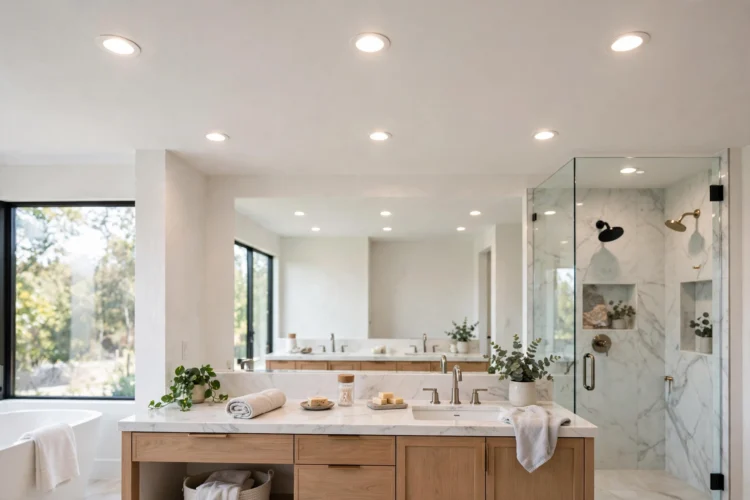
Dimmable bathroom lights in the tub zone deserve their own dimmer, separate from the mirror and ceiling lights. A long soak calls for low, warm light, while cleaning the tub needs full brightness, and one switch cannot serve both. A dimmer lets you set the room to bath level in seconds and return it to full light when you need to clean.
If your tub sits under a window, the dimmer matters even more in the evening, when daylight disappears and the room can feel stark. Pair the dimmer with warm bulbs and a candle safe ledge or a small stool for a book, and the tub corner becomes a place you actually linger in. Keep any fixture near the tub rated for damp zones and out of direct splash range.

A pendant over a freestanding tub turns the tub into a focal point and adds a pool of warm light exactly where you relax. Hang one pendant centered over the tub, or a pair if the tub is long, and keep the drop high enough that no one bumps it when standing in the tub. A simple drum or globe shade spreads light softly instead of throwing a hard spot.
Pendants work best as accent light, not as the only light in the room, so keep the ceiling layer for general brightness. Choose a damp rated fixture and a warm bulb, and check the cord length before you buy, since tub ceilings vary. The pendant style echoes pendant lights over islands and peninsulas, where one hanging fixture marks a zone within a larger room.

A windowless bathroom can still feel bright if you borrow light well. A solar tube brings real daylight through the roof into the middle of the room, and it costs less than adding a window. Where a tube is not possible, a large mirror opposite the door bounces light from the hallway into the room.
Light wall colors and glossy tile also help, since they reflect whatever light exists instead of absorbing it. Keep window treatments sheer where a window does exist, and avoid heavy blinds that block the one daylight source the room has. If you add a skylight, pick one that opens, so the bathroom gains ventilation along with light.
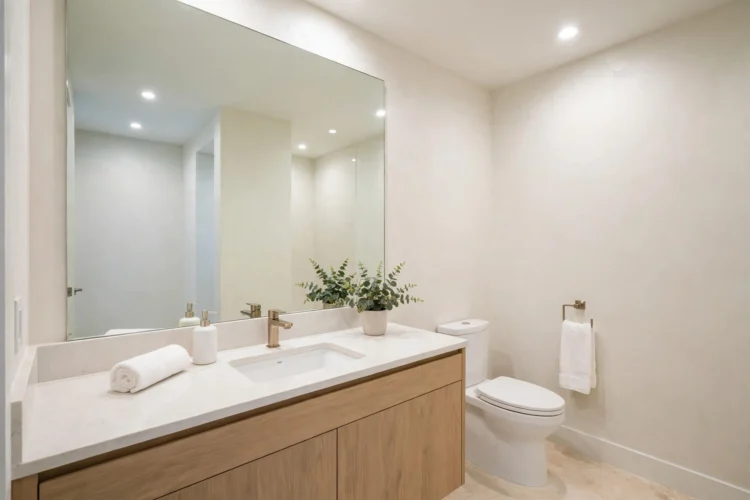
Color temperature changes how a bathroom feels more than brightness does. Warm white light, around 2700 kelvin, flatters skin and feels relaxing, while cool white light, around 4000 kelvin, feels clinical and sharp. Most bathrooms feel best in warm white, with a slightly cooler bulb only where precise tasks happen.
Buy bulbs with the kelvin number printed on the box and match every bulb in the room, since mixed temperatures make the room look uneven. If your mirror light and ceiling light differ, your face will look different in each, which defeats the point of good mirror lighting. Stick to one temperature across the room and adjust brightness with dimmers instead.
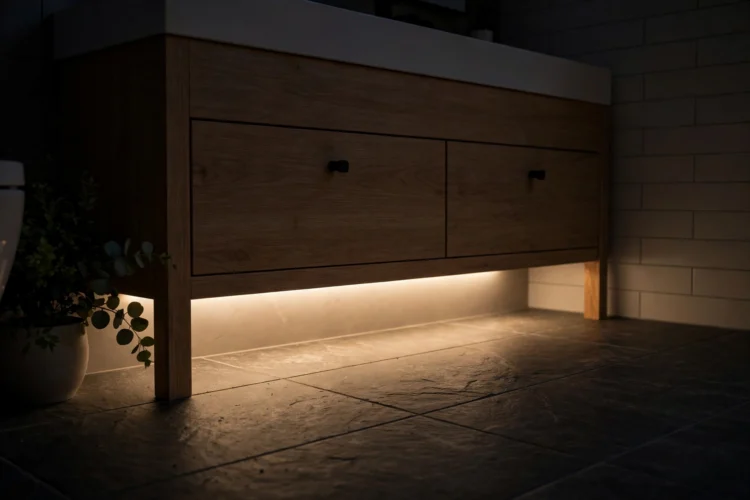
A low night light path stops the midnight stumble to the bathroom without waking you fully. A small plug-in light near the floor, a motion sensor strip under the vanity, or a toe kick light gives just enough glow to walk safely. The light should sit low and warm, so it guides your feet without shining in your eyes.
Motion sensors work best here, since they switch off on their own and you never need to fumble for a switch in the dark. Keep the night light out of the direct line of the bed, or it will disturb sleep even at low brightness. A strip under the vanity also doubles as a soft evening light when the main lights feel too bright.
Under cabinet light fills the shadow that a wall cabinet casts over the counter, which is exactly where you need light for grooming tasks. A slim led strip under a mirrored cabinet or a shelf lights the basin area without adding a visible fixture. The strip stays hidden, so the counter looks clean while the work surface stays bright.
Wire the strip to the mirror light switch so both come on together, or add a small sensor so it lights when you approach. The same task lighting idea appears in under cabinet lighting that transforms task work in kitchens, where a strip under a cabinet does more for usability than a brighter ceiling bulb.