Physical Address
304 North Cardinal St.
Dorchester Center, MA 02124
Physical Address
304 North Cardinal St.
Dorchester Center, MA 02124

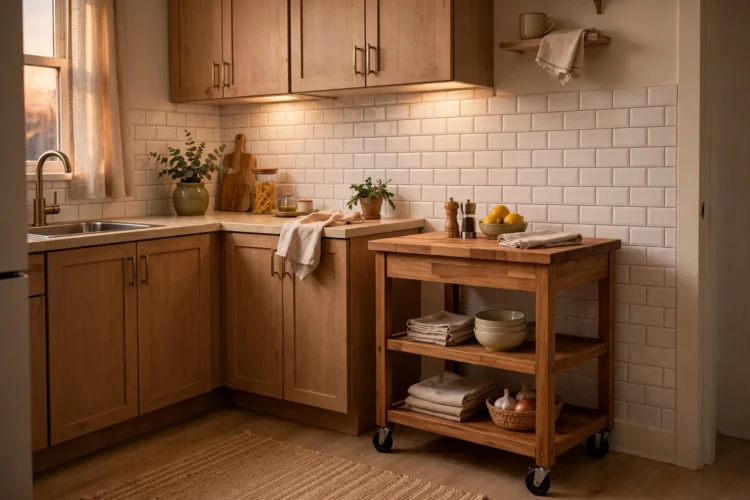
Twelve renter-friendly small apartment kitchen ideas with zero drilling and zero demo, from peel-and-stick backsplashes to rolling islands.
Small apartment kitchen ideas have one hard rule: everything must come back off without a trace. Renters cannot drill into tile, rip out cabinets, or repaint without permission, yet a beige rental kitchen still deserves to feel like home. The upgrades that actually survive renter life are portable, stick-on, or freestanding, and they move to the next apartment when the lease ends.
The eight ideas below are the ones renters keep using year after year. Each one installs in an afternoon, removes cleanly, and makes a real difference in how the kitchen cooks, stores, and looks. We narrowed the original twelve down to the eight with the best mix of impact and reversibility.
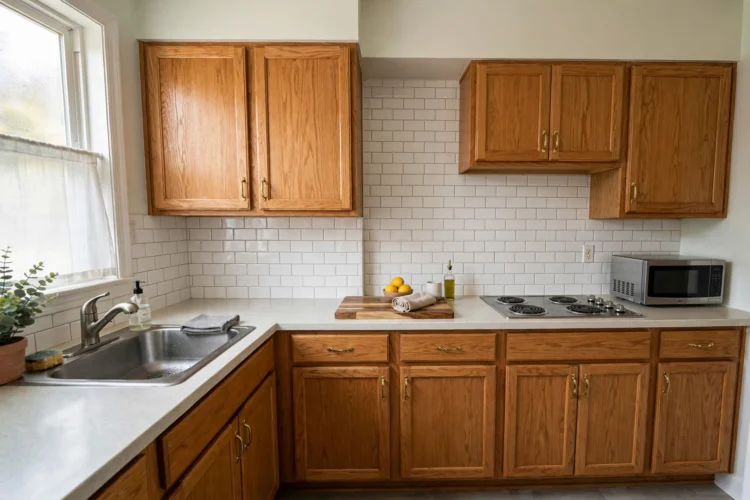
Peel-and-stick backsplash panels give a rental kitchen the look of real tile with nothing more than scissors and a smoothing cloth. Modern versions come in subway, zellige-look, and marble-look finishes with convincing texture, and quality brands hold through steam and splatter for years. Measure the wall, cut panels to fit around outlets, and press them on starting from the center outward. Wipe the wall with degreaser first; kitchen walls hold a film of cooking oil that weakens any adhesive.
Removal is the selling point: warm the panel with a hair dryer and peel slowly, and the adhesive releases without pulling paint. Peel-and-stick tile typically ranges from $8 to $20 per pack covering about ten square feet, so a full rental backsplash usually costs under $150. Keep a spare pack for touch-ups, since panels behind the stove take the most heat.
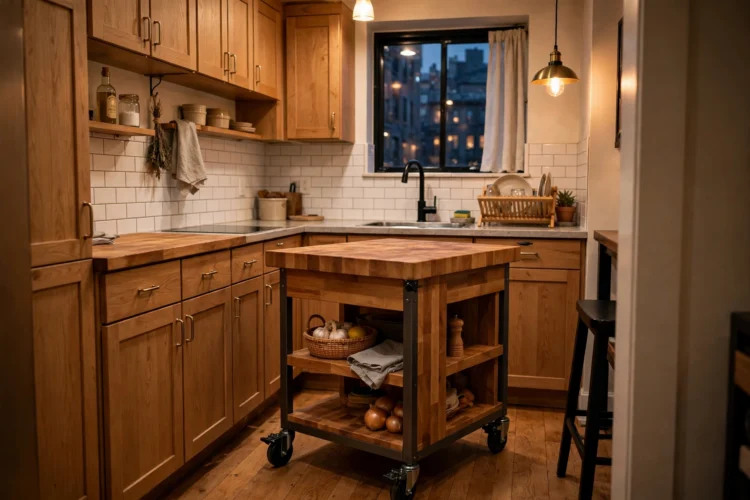
A rolling kitchen cart adds the counter space most small apartments lack, and it wheels away when you need the floor. Look for a cart at least thirty inches wide with a butcher block or stainless top, locking casters, and open shelving or drawers below for pots and pantry overflow. Park it against the wall as a coffee station on weekdays and roll it center-floor as a prep island when you cook.
Lock the casters before chopping, and choose a top that overhangs the frame by an inch so crumbs fall clear of the shelves. A solid rolling cart typically ranges from $80 to $250, far less than any built-in option, and it counts as furniture, so no landlord approval is needed. Some carts add a drop-leaf side that folds up for extra prep space and down for daily traffic, a handy trick in studios. It also moves with you, which makes it the rare kitchen upgrade that pays for itself twice.
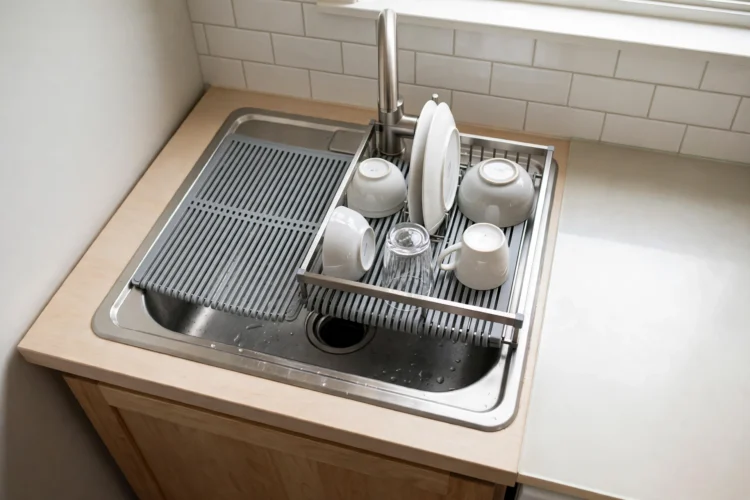
In a small apartment kitchen the counter is too precious to surrender to a dish rack. An over-the-sink roll-up or expandable rack sits across the basin and lets dishes drip straight into the sink, freeing the full counter for prep. Roll-up versions are silicone-coated steel rods that flatten into a drawer when not in use.
Measure the sink width before buying, since racks come in fixed sizes and a poor fit wobbles. Use the rack for daily dishes and keep a small mat for oversized pots. Roll-up racks typically cost $20 to $40, and the reclaimed counter space feels like gaining an extra two feet of kitchen. Hang dish towels from the rack’s side bars to keep them off the counter too.
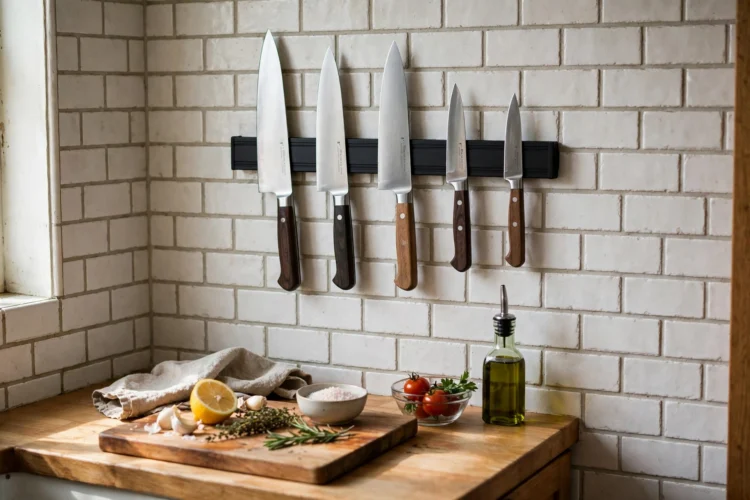
A magnetic knife strip mounted with removable adhesive hooks or heavy-duty mounting tape gets knives off the counter and out of a crowded drawer. It also protects edges better than a knife block, since blades never drag across wood slots. Mount it at eye level near the main prep zone, keeping the strip clear of the stove’s heat.
Use a strip rated for the weight of your heaviest chef’s knife, and press the mounting tape onto clean, dry tile or painted drywall for a full day before hanging knives. Magnetic strips typically cost $15 to $35. When the lease ends, dental floss slid behind the tape releases it without marking the wall.
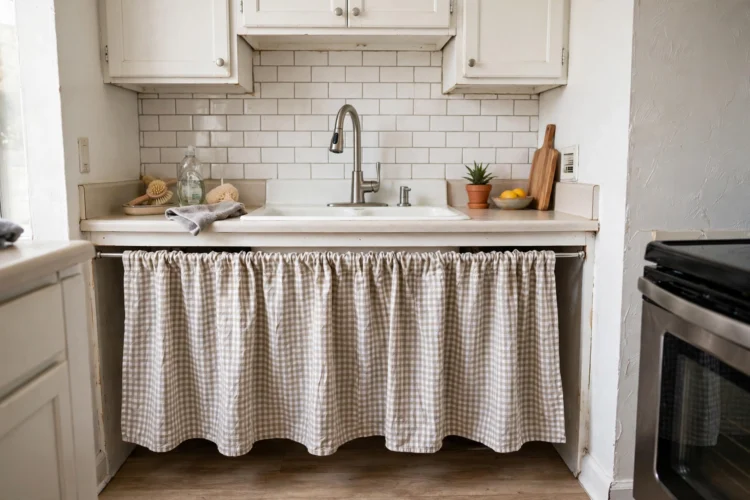
The cabinet under a rental sink usually has no door worth looking at, just pipes and cleaning bottles. A spring tension rod fitted inside the cabinet frame with a washable cafe curtain hides the clutter in seconds. Choose a curtain in a washable cotton or linen-look fabric that reaches just past the frame.
Measure the inside width and buy a rod that extends at least an inch beyond it so the spring holds firm. This trick also works for open shelving gaps and awkward under-counter voids. A rod and curtain together typically cost under $30, and the whole project takes ten minutes with no tools at all.
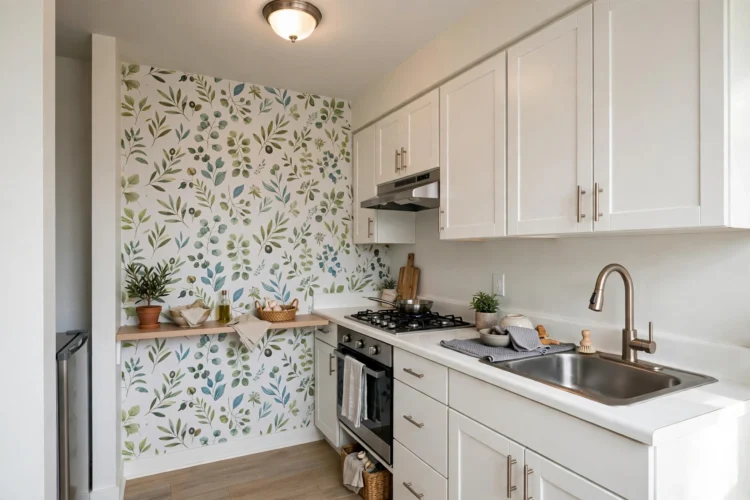
One wall of removable wallpaper turns a plain rental kitchen into a designed room. Peel-and-stick wallpaper now comes in grasscloth looks, bold florals, and graphic geometrics that read as real paper from a few feet away. Apply it to the wall you face while cooking, usually the one opposite the cabinets, for maximum daily impact.
Work with a partner, smoothing from the center outward to avoid bubbles, and order ten percent extra for pattern matching. Quality removable wallpaper typically ranges from $40 to $80 per roll, and one or two rolls cover a rental kitchen accent wall. Peel it off slowly at move-out and the wall underneath stays untouched.
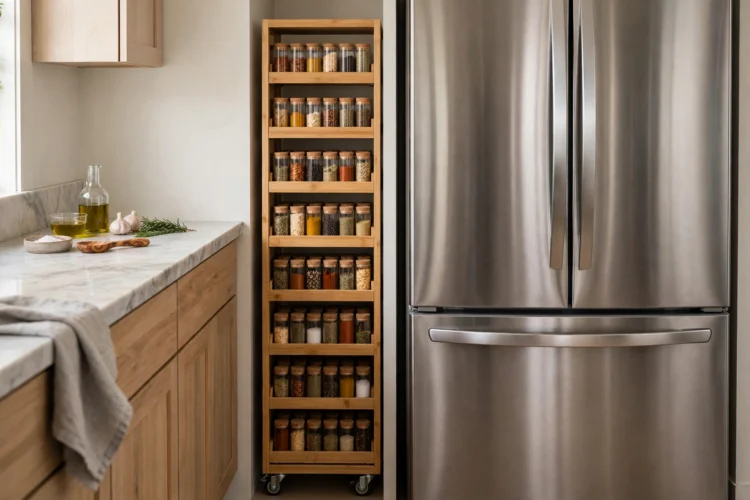
The six-inch gap between the fridge and the wall is wasted space in almost every apartment kitchen. A slim rolling tower, about five inches wide with four or five tiers, slides into that gap and holds spices, oils, cans, and cleaning supplies. Pull it out like a drawer to see everything at once.
Check the gap height against the tower, since fridge coils and baseboards change the clearance. Anchor nothing to the wall; the tower’s own weight and low center keep it stable. Slim towers typically cost $25 to $50, and the storage they unlock rivals a full extra cabinet.
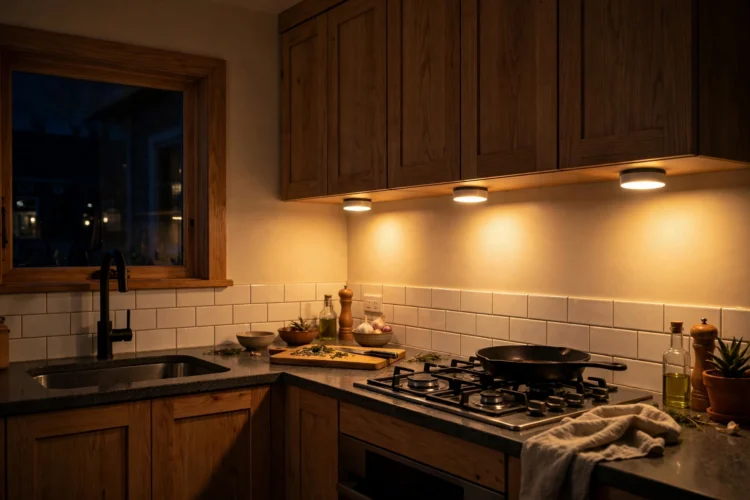
Rental kitchens are often lit by a single harsh ceiling fixture that leaves counters in shadow. Battery-powered puck lights with remote controls stick inside upper cabinets and under shelves, washing the counter in warm light with zero wiring. Place one puck every twelve to eighteen inches for even coverage.
Choose lights with a warm color temperature around 2700 to 3000 Kelvin so the kitchen glows instead of glaring. Rechargeable pucks cost more upfront but save a fortune in batteries over a lease. A set of six typically ranges from $25 to $60, and the difference in how the kitchen feels at night is immediate. Stick one above the coffee maker too, since dark corners swallow small appliances whole.
Renter-friendly does not mean temporary-looking. Each of these ideas installs without permission slips and removes without repair bills, and most of them pack into a moving box for the next kitchen. Start with the one that bugs you most, and the rest of the apartment will start to feel like yours. None of them needs more than scissors and a tape measure.