Physical Address
304 North Cardinal St.
Dorchester Center, MA 02124
Physical Address
304 North Cardinal St.
Dorchester Center, MA 02124

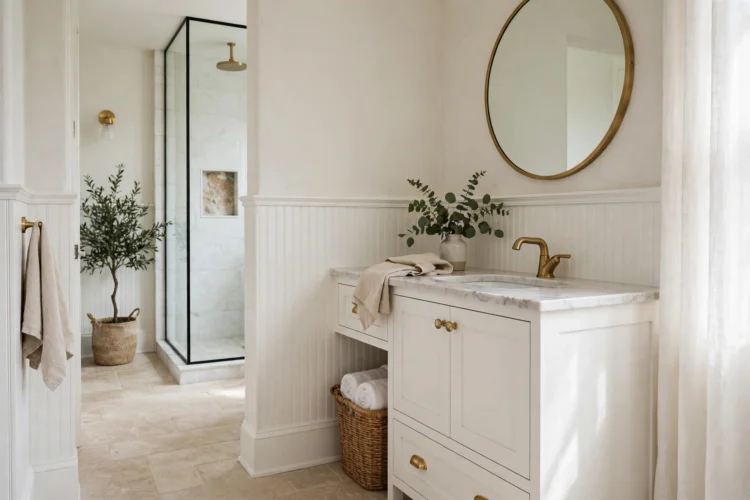
Wainscoting gives a builder-grade bathroom architecture and warmth, and the right panel style can handle moisture while looking custom.
Bathroom wainscoting ideas solve a common problem: a bathroom with flat, blank walls that looks unfinished no matter how nice the faucet is. Wall paneling adds shadow lines, rhythm, and a sense of craft, and it does the job in a room where full wallpaper or unprotected plaster can struggle. Done well, wainscoting makes a plain bathroom feel designed from the floor up.
The trick is choosing a panel style that suits your moisture level, your wall height, and the rest of the house. A full-height beadboard wall reads cottage, while a crisp shaker panel reads tailored and modern. Use the ideas below to match the style to your bathroom, then protect it with the right paint and sealing so it lasts.
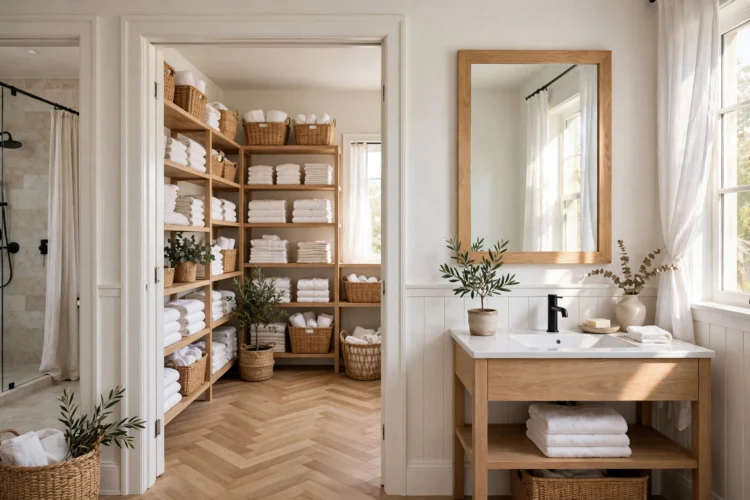
Beadboard is the classic starting point for bathroom wainscoting, and it earns that spot. Narrow vertical boards with a small bead detail add texture without shouting, and the vertical lines make a low ceiling feel a little taller. In a small bathroom, beadboard to chair rail height, roughly one third of the wall, keeps the room bright while adding visible craft.
For wet zones, choose a moisture-resistant board or a PVC beadboard panel rather than raw wood that can swell near a shower. Paint it in a satin or semi-gloss finish so splashes wipe off easily, and seal the top rail and bottom edge with paintable caulk. The result reads warm and traditional, and it pairs well with a simple white vanity and chrome fixtures.
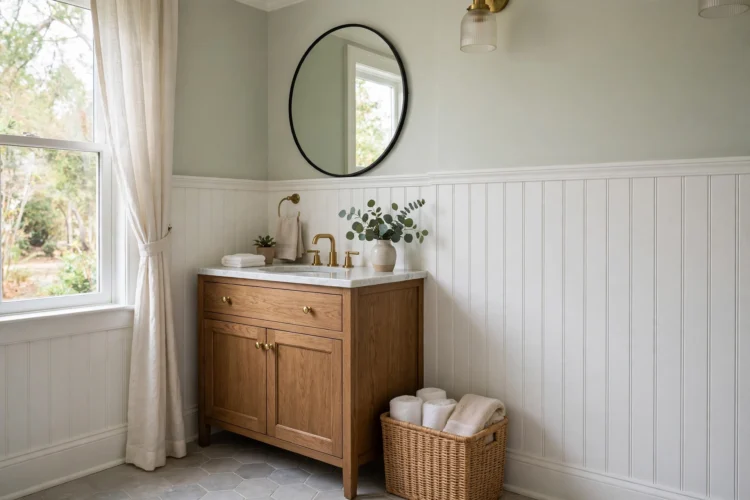
Shiplap brings a calmer, wider line than beadboard. Horizontal boards with a small gap between them stretch a narrow bathroom sideways and suit farmhouse, coastal, and modern rooms alike. Painted white, shiplap disappears into the background in a good way, giving the eye texture without competing with tile or a patterned floor.
Keep shiplap away from direct shower spray unless it is a waterproof panel product, and leave a small gap at the floor so water cannot wick upward. A painted shiplap wall behind a freestanding tub looks intentional rather than rustic, especially when the trim is crisp and the gaps stay even. If your bathroom already has strong tile, use shiplap on the driest wall only so the room does not feel busy.
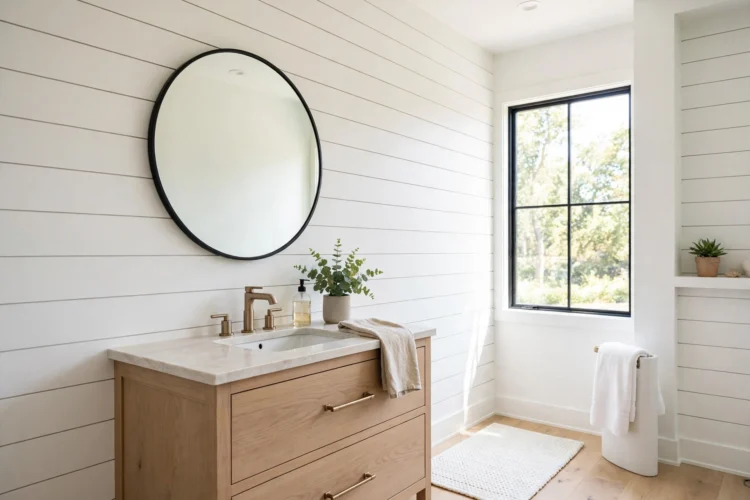
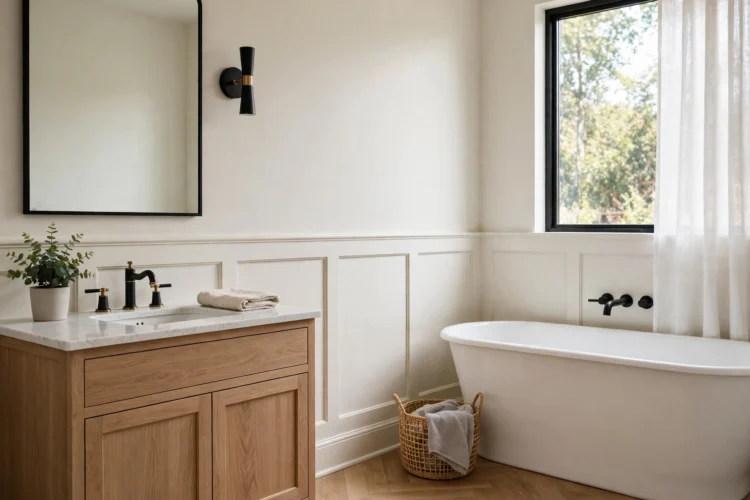
Shaker style wainscoting uses flat panels framed by simple rails and stiles, and it gives a bathroom a furniture-like finish. The look suits transitional and modern homes because the lines are clean and the panels can be sized to fit any wall, including short walls beside a vanity or a narrow wall behind a toilet. Painted in the same color as the trim, shaker panels look built in rather than added on.
Plan the panel layout on paper before cutting anything, so rails line up across outlets and corners. Uneven panel widths draw the eye, while a symmetrical layout feels calm even in a small room. Use moisture-resistant MDF or a sealed wood in dry areas, and keep the panels out of the shower enclosure, where tile should do the work instead. A tailored panel wall also gives a plain vanity something handsome to sit against, as seen in these bathroom vanity ideas from floating to double sink that pair well with framed walls.
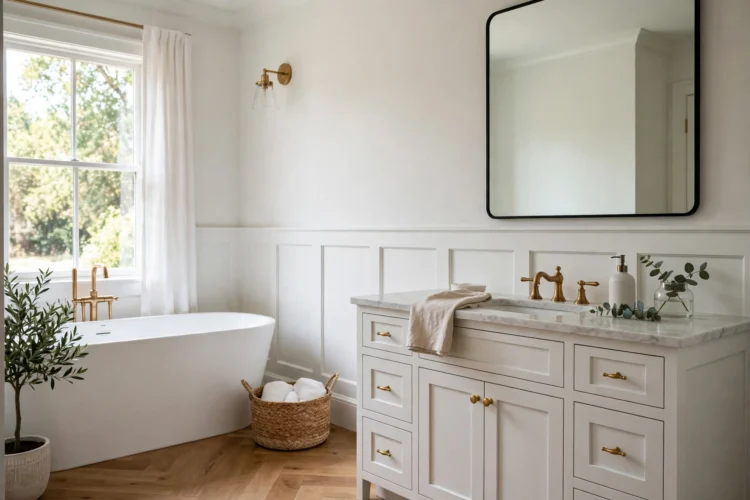
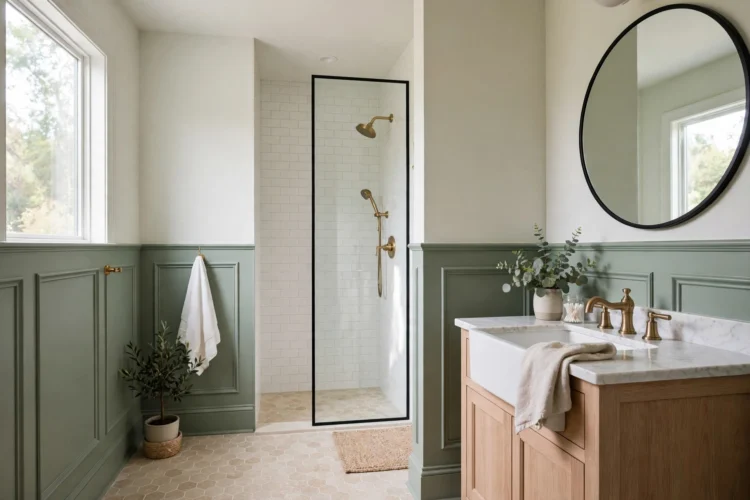
White wainscoting is safe, but color is where paneling earns its keep. A soft sage, dusty blue, or warm greige on the lower wall adds depth while the upper wall stays light, so the room still feels open. Darker colors, such as deep green or navy, work in larger bathrooms or powder rooms where a moody wall feels like a choice rather than a cave.
Test the color on one panel in daylight and in evening light before committing, because bathroom bulbs shift color more than people expect. Keep the upper wall and ceiling pale to balance a strong lower color, and repeat the color once elsewhere, in a towel or a small stool, so it feels planned. For color pairings that stay fresh, browse these bathroom paint color ideas for a fresh, clean look before you buy a full gallon.
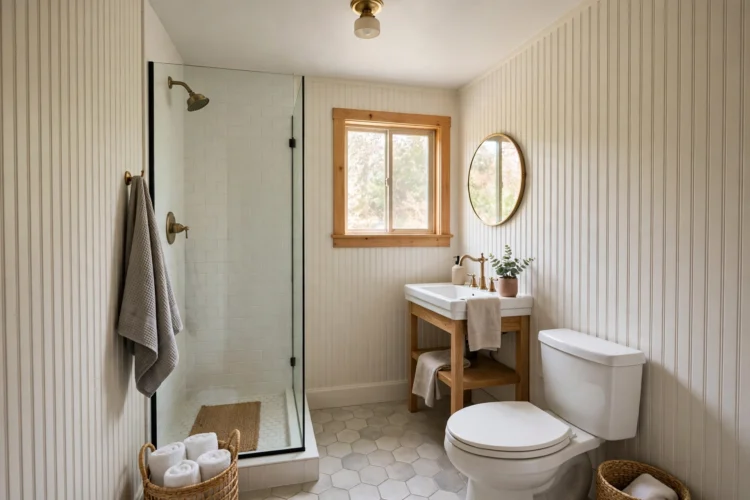
Full-height paneling sounds bold in a small room, but it can make the space feel finished instead of chopped up. When the panel runs from floor to ceiling, the eye reads one continuous surface, and the room gains a boutique feel. This works best in powder rooms and small baths where one or two walls can carry the full treatment while the rest stays simple.
Use a lighter color for full-height work, and keep the panel profile slim so the wall does not feel heavy. In a shower room, stop the panel at the shower glass and let tile take over inside the wet zone, so the two materials meet at a clean line. Full-height beadboard in a soft white can also hide imperfect plaster, which is a practical bonus in older homes.
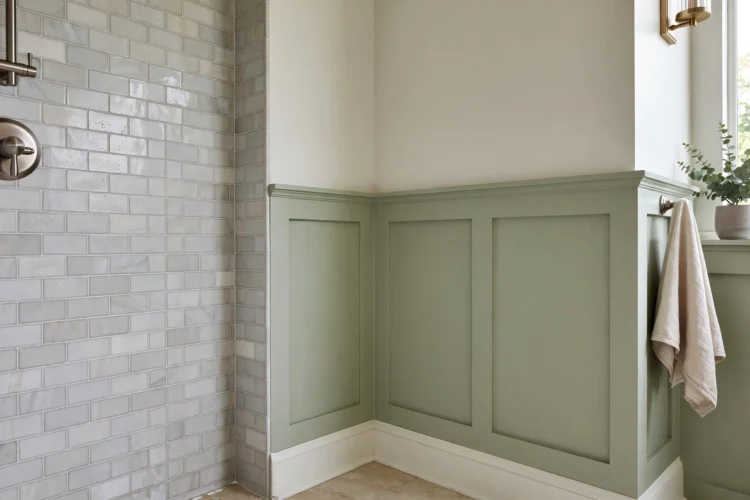
The smartest bathroom wainscoting ideas know where paneling should stop. Tile belongs inside showers and behind tubs, while paneling shines on dry walls. A tiled shower wall that meets a paneled vanity wall at a corner trim piece looks deliberate, and each material does the job it handles best. The contrast between cool tile and warm painted wood also adds depth to an otherwise plain room.
Match the grout and panel paint tones so the two surfaces feel related. A white subway tile with soft white paneling reads calm, while a handmade-look tile with warm greige paneling reads layered and collected. Tile choices matter here, and these subway tile bathroom ideas beyond the basic brick pattern show how a simple tile can still feel custom next to paneling.
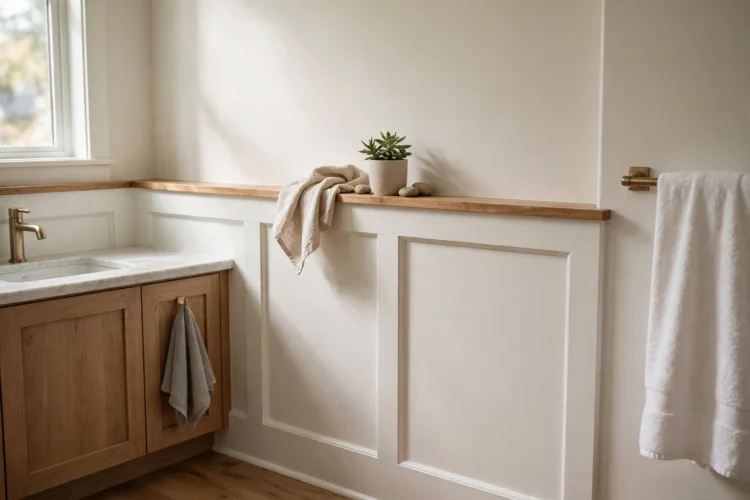
A cap rail finishes the top of wainscoting and turns a flat panel into architecture. A slightly wider rail with a small lip creates a ledge that can hold a tiny plant, a candle away from water, or a small framed photo. The ledge also protects the panel edge from bumps and gives the wall a crisp shadow line that paint alone cannot achieve.
Keep the ledge shallow, about an inch beyond the panel face, so it does not collect dust or crowd a narrow walkway. Paint the cap the same color as the panel for a seamless look, or paint it a shade darker to define the line. In a hallway bathroom, a sturdy cap rail also gives children a visual boundary that keeps hands off freshly painted upper walls.
Many newer bathrooms share the same flaw: smooth walls, basic trim, and no detail to catch the eye. Wainscoting fixes that without moving plumbing or replacing a vanity. Even a simple picture-frame molding applied to the lower wall adds the look of paneling at a lower cost, as long as the rectangles stay even and the corners stay square.
Start with the wall you see first when entering, because that wall sets the tone for the whole room. Add the same treatment to the wall behind the toilet or beside the vanity only if the budget allows, since a single strong wall often beats three rushed ones. Vintage-inspired rooms benefit most from this trick, and these vintage bathroom ideas with classic fixtures show how paneling and period details work together without feeling like a costume.
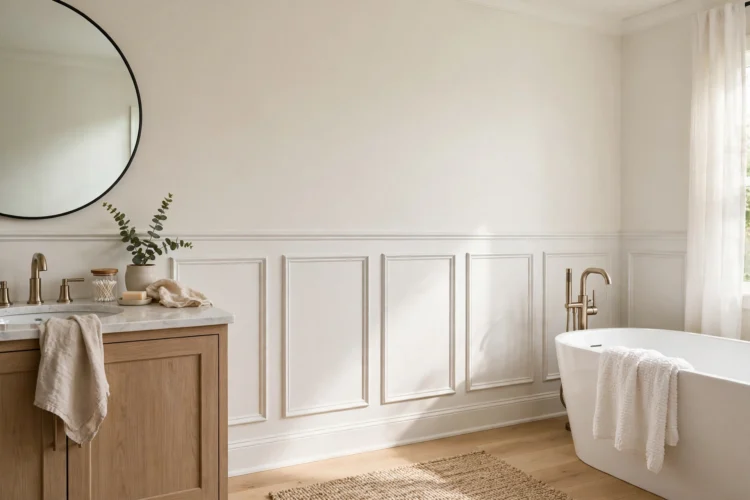
Moisture-safe wainscoting comes down to finishing, not just material choice. Prime all sides of wood panels before installation where possible, caulk every seam and joint after fitting, and finish with two coats of a bathroom-grade satin or semi-gloss paint. Ventilation matters too: run the exhaust fan during showers and for a while after, so steam does not sit on painted wood.
Check the bottom edge and the joints near the tub once a season, and touch up paint before small chips become soft spots. Wipe splashes promptly rather than letting water sit in a bead groove. With that routine, painted wainscoting stays crisp for years, and the bathroom keeps the custom look that made the project worth doing.