Physical Address
304 North Cardinal St.
Dorchester Center, MA 02124
Physical Address
304 North Cardinal St.
Dorchester Center, MA 02124

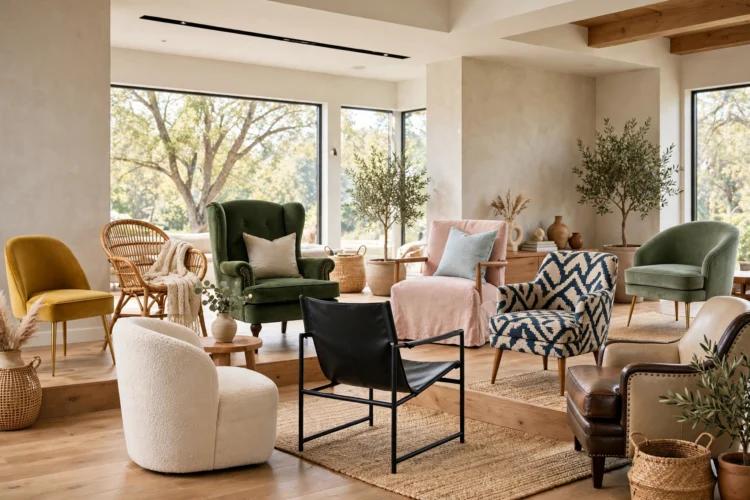
The right accent chair does more than add a seat. It contrasts the sofa, fills an awkward corner, and gives the room a finished shape.
A sofa alone rarely finishes a living room. It needs a partner, a chair that adds a seat, a shape, and a point of contrast. These living room accent chair ideas treat the chair as the supporting player it is, chosen to stand apart from the sofa just enough to make the whole seating group look deliberate. The wrong chair either disappears into the sofa or fights it. The right one gives guests a favorite seat and gives the room a shape that feels complete from the doorway.
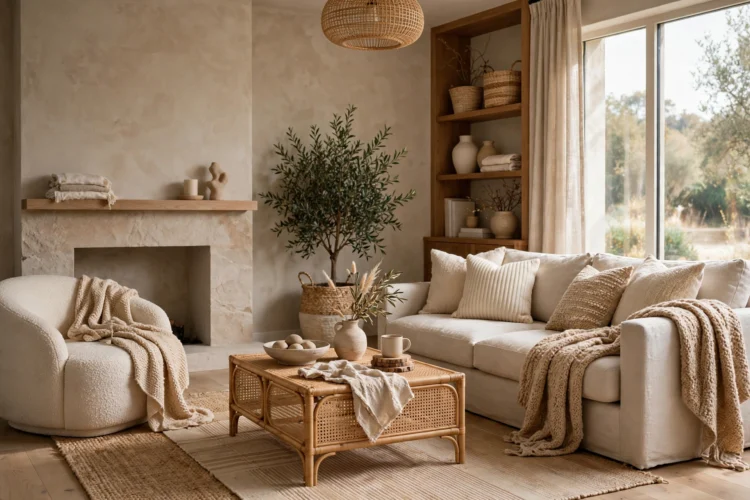
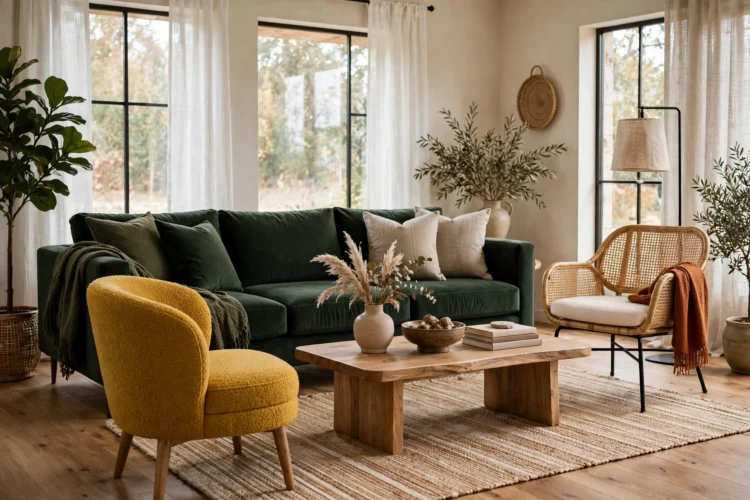
Matching the accent chair to the sofa is the safest choice and usually the dullest. If the sofa is plain and boxy, pick a chair with a curve, a different leg style, or a patterned fabric. If the sofa is patterned, pick a solid chair in a color pulled from that pattern. Contrast creates a conversation between pieces, while matching creates a set that looks bought in one trip.
Contrast still needs a link between the pieces. Share one element, such as wood tone, cushion color, or overall style era, and let the rest differ. A modern sofa pairs well with a mid-century style chair if both keep clean lines. A traditional sofa pairs well with a wing chair if both use similar fabric weights. The shared element keeps the room calm while the differences keep it interesting.
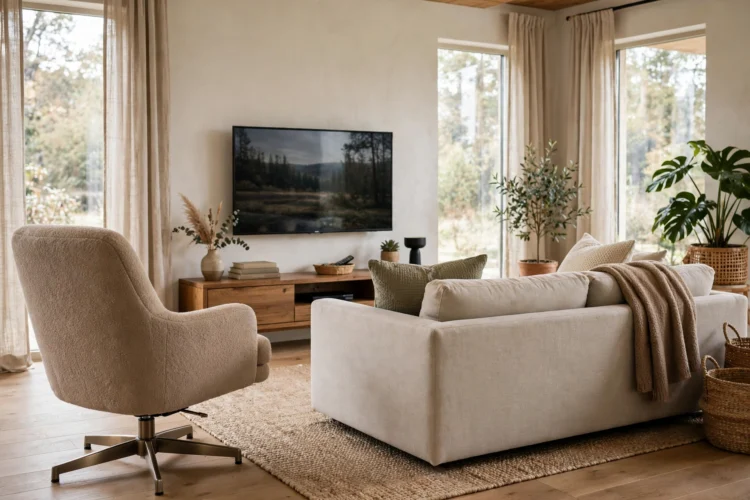
A swivel chair suits rooms where one seat must serve two directions. In a living room open to a kitchen, a swivel chair turns from the television to the conversation, or from the window view to the dining table, without dragging furniture across the floor. That flexibility earns its place in open-plan rooms and in rooms where the television and the fireplace sit on different walls.
Swivel chairs need clearance to turn, so measure a full circle around the base before buying. A chair that cannot swivel without hitting a table or a wall loses its whole advantage. A swivel chair living room setup also benefits from a small side table that stays put while the chair moves, so drinks and books always have a home. These flexible living room seating ideas show more ways to seat a room that serves two purposes.
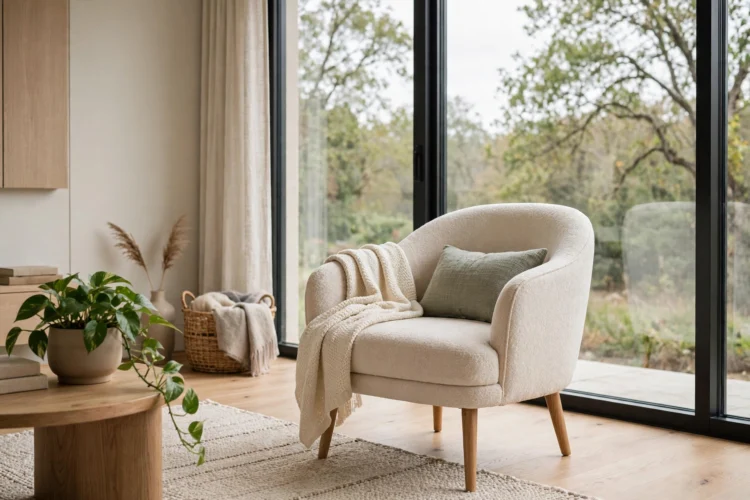
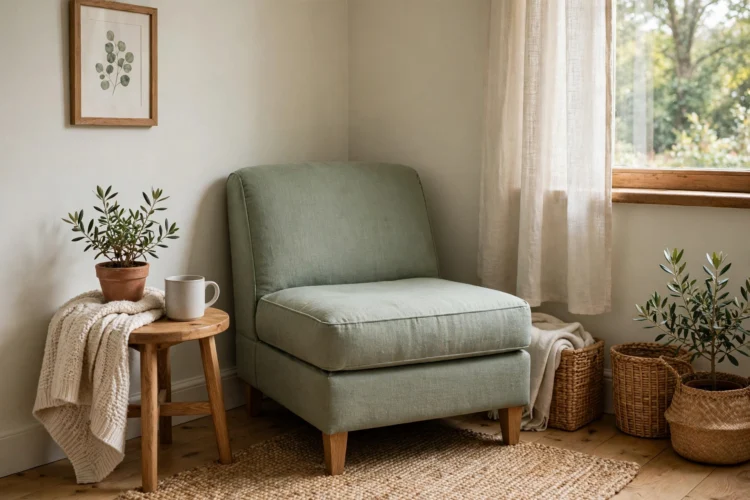
Slipper chairs, low armless chairs that sit close to the ground, fit corners and narrow gaps where a full armchair would crowd the room. They work beside a fireplace, at the end of a sofa, or in a bay window, adding a seat without blocking light or walkways. Their low profile keeps sightlines open, which matters in small rooms.
The trade-off is comfort for long sits. A slipper chair suits short stays, such as chatting over coffee or waiting while someone else reads, better than an evening of television. Pair it with a cushion for back support if guests will sit longer. In a tight corner, one slipper chair often beats a pair of chairs that leave no room to pass. Accent chair styles like this prove that a smaller chair can still anchor a corner.
Some chairs exist for settling in. A lounge chair with a deep seat, a reclined back, and an ottoman invites long reading sessions and slow evenings. Place it near a lamp and a side table, away from the main television sightline, so it becomes a retreat inside the room rather than another television seat.
Lounge chairs take more floor space than they appear to, since the ottoman and the recline both need room. Measure the full footprint, including legroom in front, before committing a corner to one. A chair that looks generous in a shop can block a walkway at home. If space is tight, a lounge chair with a smaller ottoman, or a footstool that tucks under a side table, keeps the comfort without the sprawl.
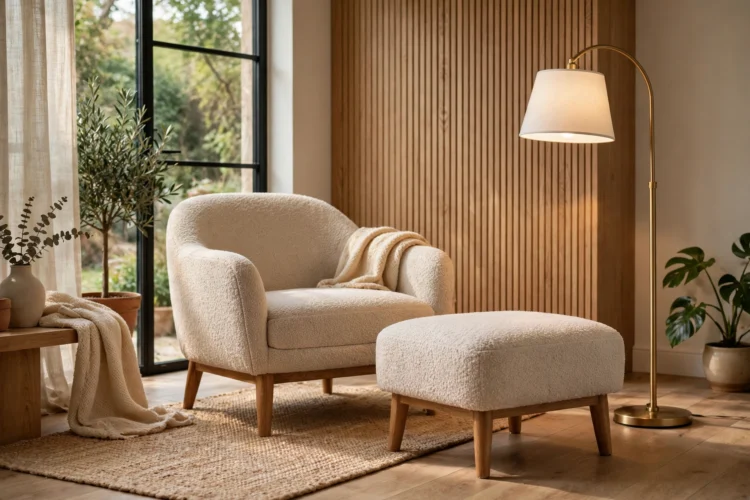
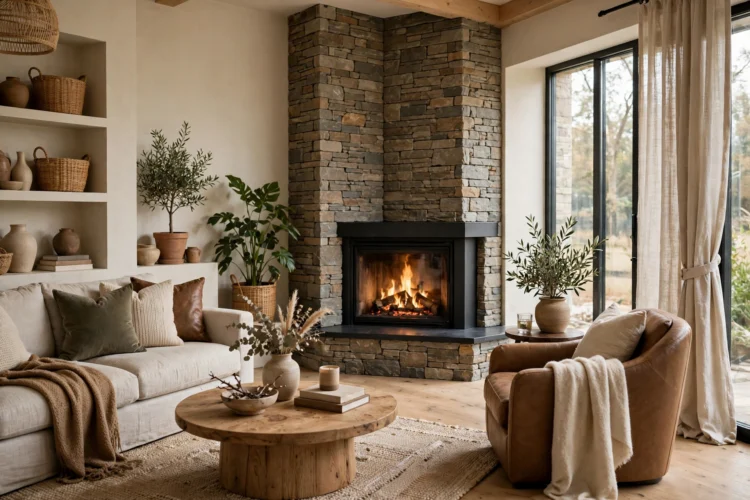
Fabric decides how a chair feels and how it ages. Linen and cotton blends feel relaxed and suit casual rooms, but they show wear faster in a sunny spot. Velvet looks rich and holds color well, though it needs brushing to keep its nap even. Leather lasts for years and wipes clean, but it feels cool at first touch and suits rooms with warmer tones to balance it.
Choosing accent chair fabric also means thinking about who uses the chair. Pets and children favor washable covers or tight weaves that resist snagging. A chair near a window needs fabric that handles sun without fading fast. Order a fabric sample and live with it for a few days, checking it in morning and evening light, before ordering the chair. A sample pinned beside the sofa tells you more than any product photo.
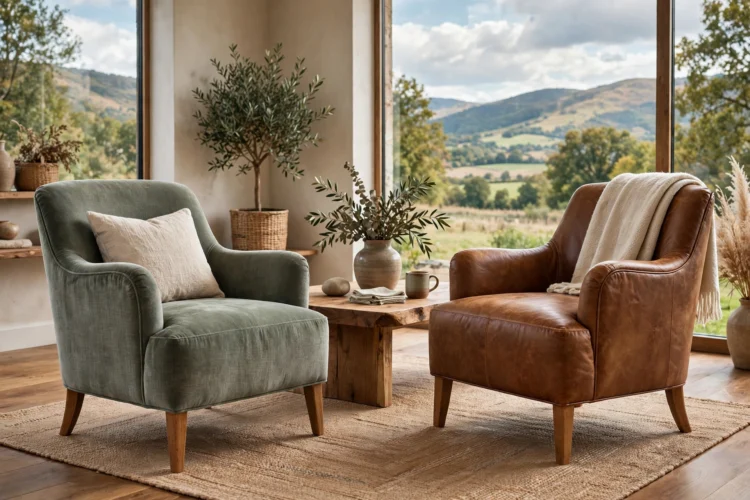
Every accent chair needs a walkway around it, not just a spot on the floor. Measure the chair width, then add space to walk past it without turning sideways, and space to pull it out from a table. A chair crammed against a wall or a sofa looks like storage, not seating, and guests will avoid it.
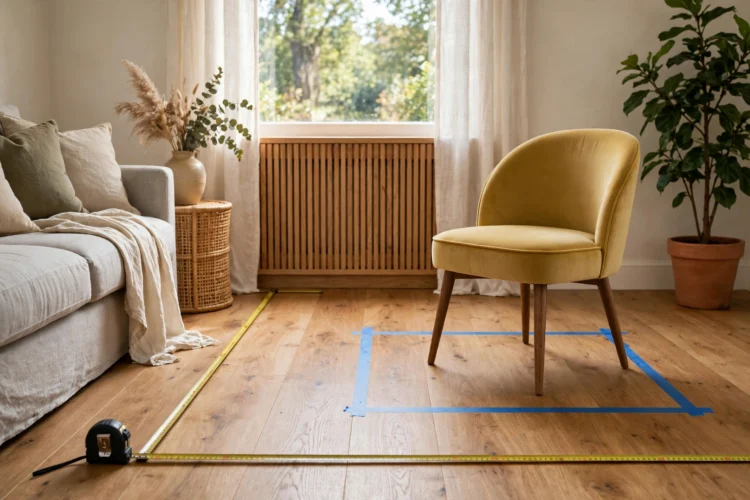
Tape the footprint on the floor before buying, using painter’s tape to mark the chair outline and the walkway beside it. Live with the tape for a day and walk the route you normally take through the room. This simple test catches most size mistakes, including chairs that block a door swing or crowd a coffee table. For help with room measurements, these living room layout measurements cover walkways and seating clearances.
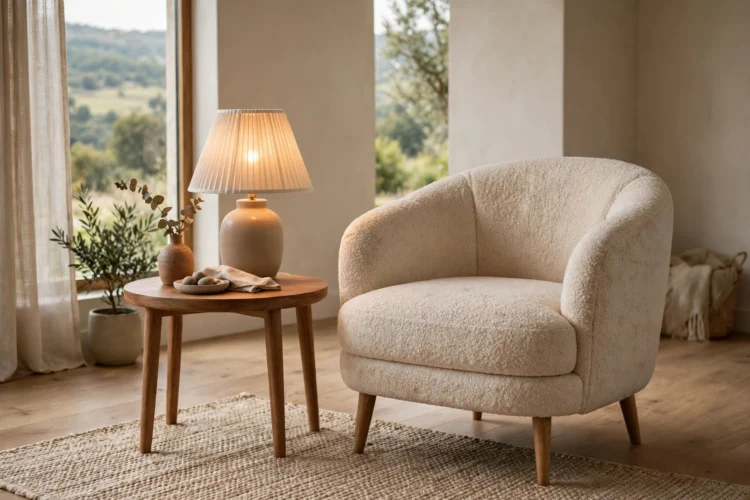
A chair without a side table and a light is a chair nobody uses for long. A small table within arm’s reach holds a mug, a book, and a phone, while a floor lamp or a nearby table lamp makes the chair usable after dark. Together, the three pieces form a complete corner, and the chair stops looking like an afterthought.
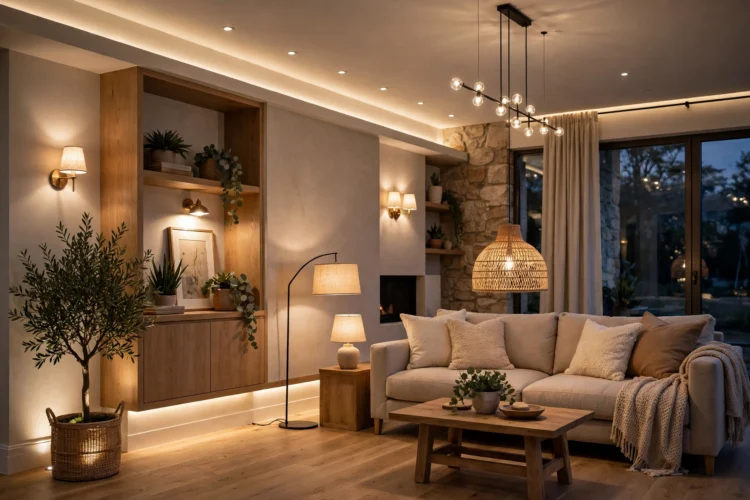
Keep the table height close to the chair arm height, so reaching for a mug feels natural. A table that is much lower forces an awkward reach, and one that is much higher dominates the chair. The lamp should sit slightly behind the chair, not in front of it, so light falls over a shoulder for reading. A reading corner setup shows how this trio works in a small space, and a cozy corner lighting guide covers lamp placement in more detail.
The final test of any accent chair is simple: does someone sit in it? A chair placed for symmetry, facing a wall or blocking a window, often stays empty, while a chair placed near light, near conversation, and near a table gets used daily. Watch where guests naturally settle when they visit, and move the chair toward that spot instead of forcing a layout that only looks good in photos.
If a chair still goes unused after a move, check the basics: is it too close to a draft, too far from a table, or facing away from the room? Small moves, a few inches toward the sofa or a turn toward the window, often fix the problem. A chair that gets used completes the room in a way no arrangement of unused furniture can, since a lived-in room always looks more finished than a staged one.