Physical Address
304 North Cardinal St.
Dorchester Center, MA 02124
Physical Address
304 North Cardinal St.
Dorchester Center, MA 02124

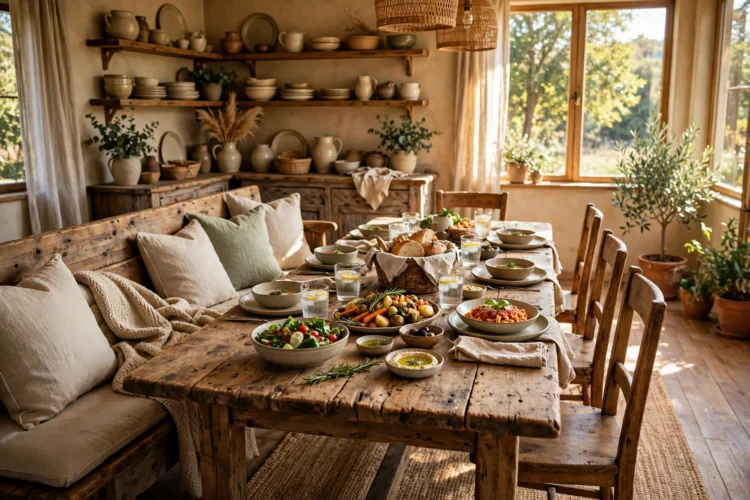
A dining bench squeezes extra seats around the table and slides out of sight when dinner ends. These 13 ideas cover backless, backed, upholstered, and storage benches.
A dining bench changes how a family eats together. It seats more people than chairs in the same stretch of table, slides out of the way when dinner ends, and gives kids room to wiggle without knocking over a chair. A dining bench also costs less than a matching set of chairs, which leaves budget for the table itself. The 13 dining bench ideas below cover the main choices, backless or backed, wood or upholstered, plain or storage, so you can pick the bench that fits your table, your room, and the way your family actually eats.
A backless bench is the simplest bench there is, and the most useful in a small room. It slides fully under the table when dinner ends, so the floor stays clear and the room feels bigger. Without a back, the bench also works as extra seating in the living room when guests overflow. Choose a bench top about 30 cm deep so adults sit comfortably, and check that the bench legs clear the table legs when it slides in. A backless dining bench suits families with older kids who do not need back support at the table.
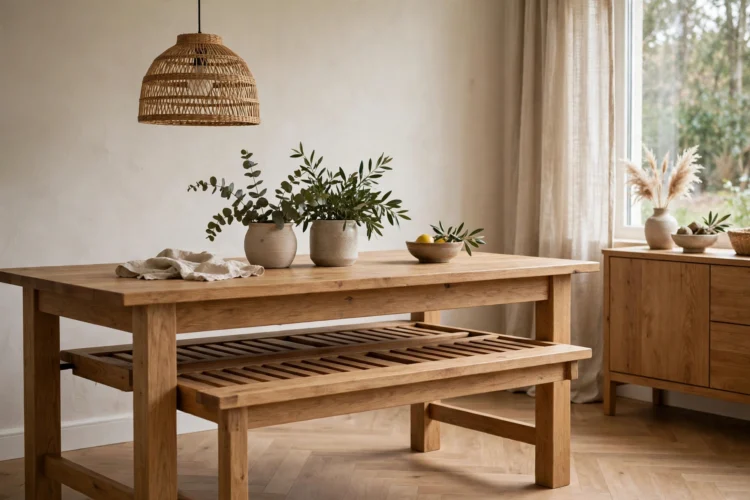
A dining bench with back support gives diners something to lean on during long meals without turning the bench into a sofa. The back should rise about 20 to 25 cm above the seat, enough to support the lower back and no more. Higher backs block the view across the table and make the bench hard to slide under it. A low-backed bench works well against a wall, where the back doubles as a visual anchor for the dining zone. Look for a back with a slight recline rather than a straight vertical board, since a small angle makes a big difference over a two-hour dinner.
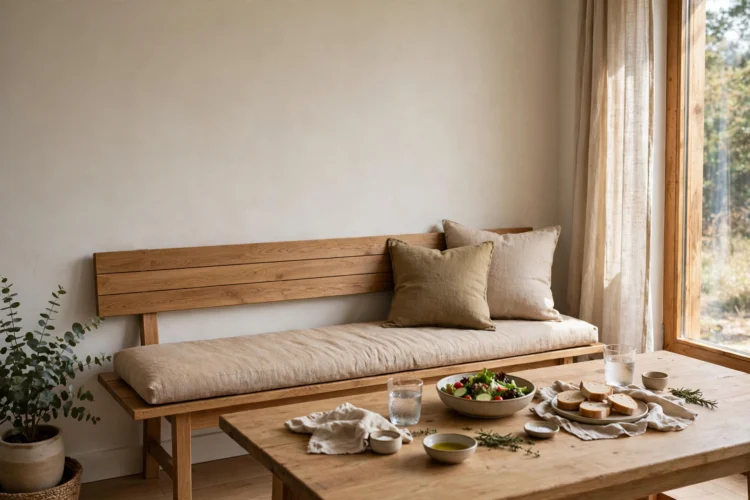
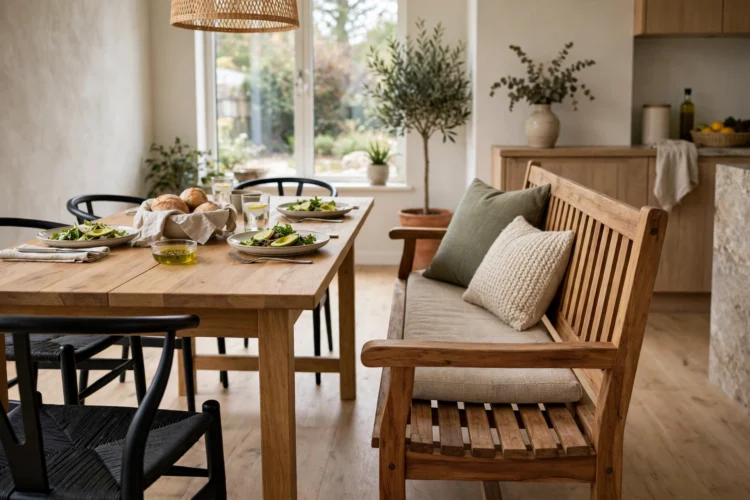
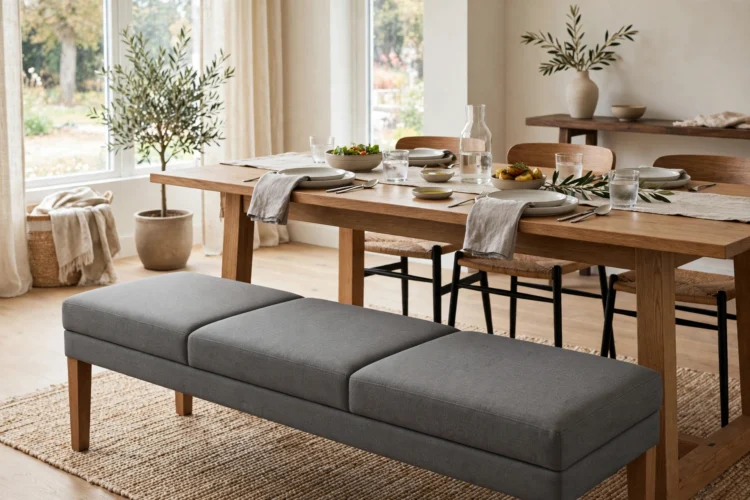
An upholstered bench adds comfort that bare wood cannot match, and the right fabric makes it practical for family meals. Look for performance fabrics, tight weaves with a stain-resistant finish, in a mid-tone color that hides crumbs between cleanings. Dark green, warm gray, and navy all work well. Avoid loose linen and pale velvet, which show every spill. A removable seat cover is worth paying for, since you can wash it after a spaghetti night instead of scrubbing the bench in place. An upholstered dining bench pairs well with wood chairs on the opposite side of the table, and the fabric softens the whole room.
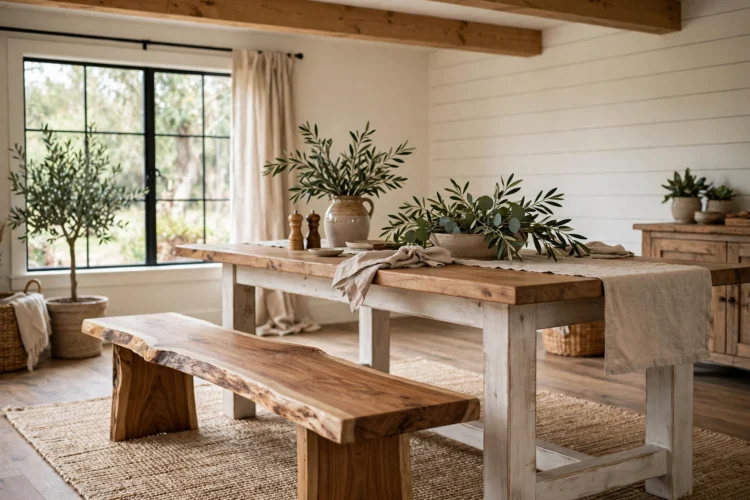
A wooden dining bench with a live edge keeps the natural curve of the tree along one side, so no two benches look alike. The shape suits rustic and modern farmhouse rooms, and it pairs naturally with a thick wood table. Sand the live edge smooth enough that clothes do not catch on it, and seal it with a hard-wearing finish since the edge gets more contact than a straight side. A live-edge bench works best with a table in the same wood species, so the grain ties the two pieces together. Keep the bench top level: a live edge can bow slightly, so check it with a straight edge before you buy.
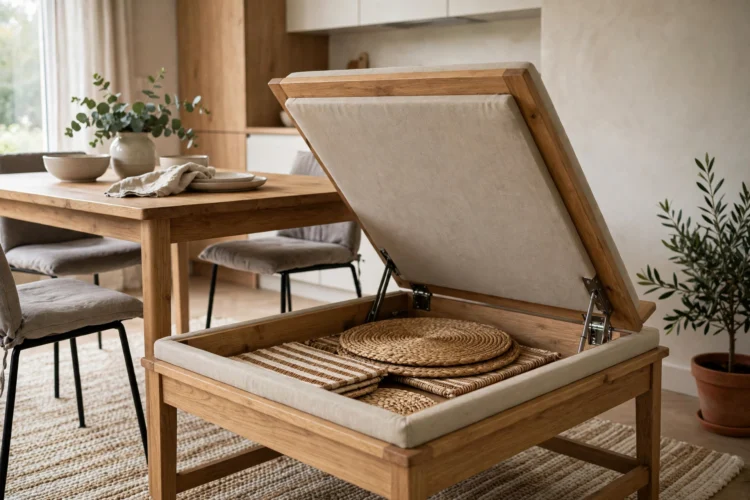
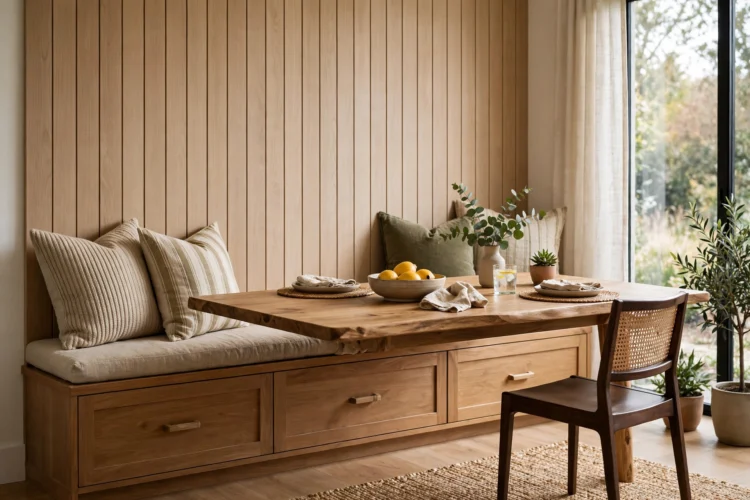
A storage bench hides placemats, tablecloths, board games, and school supplies inside its seat. Lift the top and the clutter disappears, which matters in homes where the dining table doubles as a homework desk. For a bench seating dining table that hides supplies, the lift-up lid keeps everything out of sight. Choose a bench with a lid that stays open on its own, so you can load it with both hands, and check that the hinges close softly, since small fingers find their way into every gap. A storage bench runs heavier than a plain bench, so fit it with felt pads and plan to leave it in place rather than moving it daily. The extra weight is the price of the extra storage.
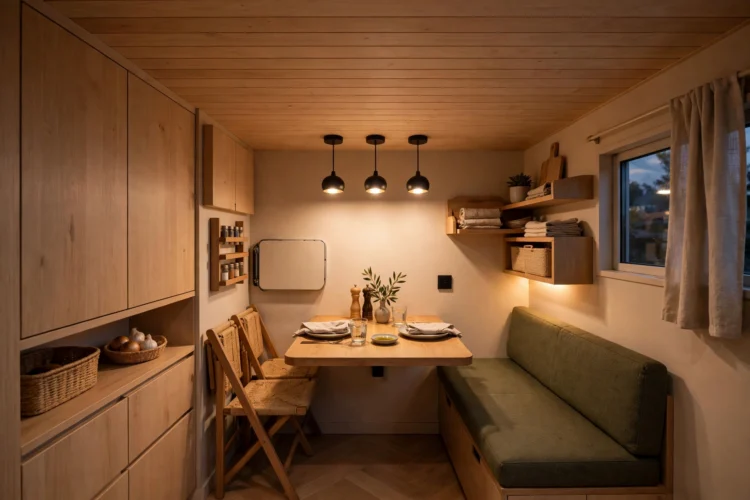
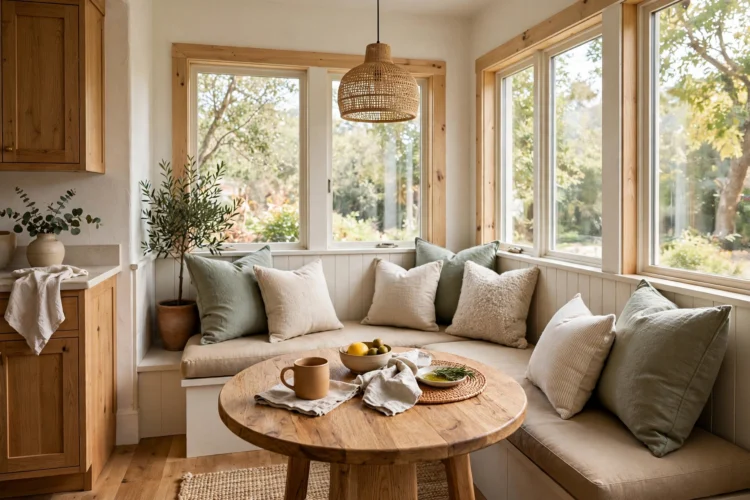
A corner banquette turns a dead corner into the best seat in the house. Two benches meet at a right angle, the table slides in between them, and the corner becomes a cozy booth that seats six in the space of four chairs. Banquettes suit breakfast nooks and small dining rooms where a full table and chairs would block the walkway. Build the bench base from the same material as the room trim so it reads as part of the house rather than a piece of furniture. Add a cushion in a wipeable fabric and a row of throw pillows, and the corner becomes the spot where everyone wants to sit. For more nook inspiration, these round dining table ideas show how a curved table softens a corner banquette.
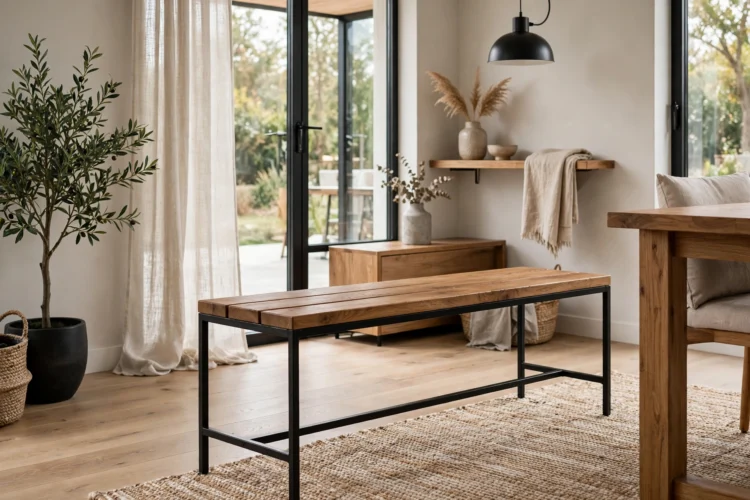
A metal-frame bench brings a clean, industrial line to a modern dining room. Thin steel legs and a wood or leather seat keep the bench visually light, so it suits rooms where a chunky wood bench would feel heavy. Powder-coated steel resists scratches and wipes clean, which helps in a house with kids and pets. Check the frame joints for welding quality: a well-made bench feels solid when you sit on the edge, while a cheap one flexes. Pair a metal-frame bench with a glass or stone table to keep the modern line consistent, or mix it with a wood table for a softer contrast.
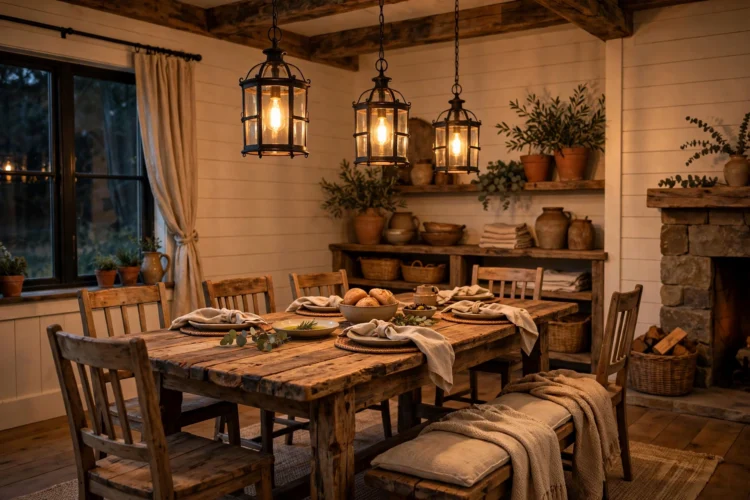
Matching the bench wood to the table wood is the safest way to make a bench look planned. The same species, the same stain, and the same finish turn two separate pieces into one set. This works best when you buy the bench and table together, or when you order the bench from the same maker. If an exact match is impossible, match the tone rather than the species: a warm oak bench sits happily next to a warm walnut table, while a cool gray bench next to a warm table will always look off. A farmhouse dining table with a matching bench is the classic version of this idea, and it suits rooms where the dining set is the main feature.
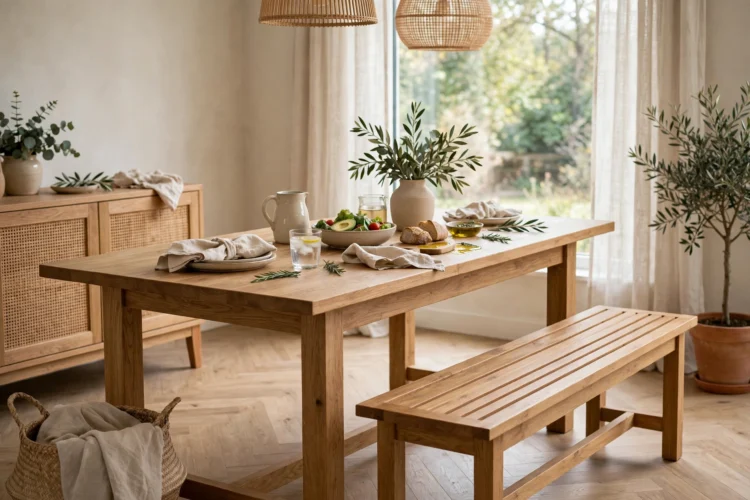
A long bench, two meters or more, turns a big table into a family gathering spot. Three adults or four kids fit along one side, which frees the other side for chairs and keeps the head of the table clear for the host. A long bench needs a center leg or a thick top to stop it sagging in the middle, so check the construction before you buy. The bench should also be light enough for one person to move, since you will pull it out to clean under it. For holiday dinners, a long bench plus a few spare chairs seats more people than any chair-only plan.
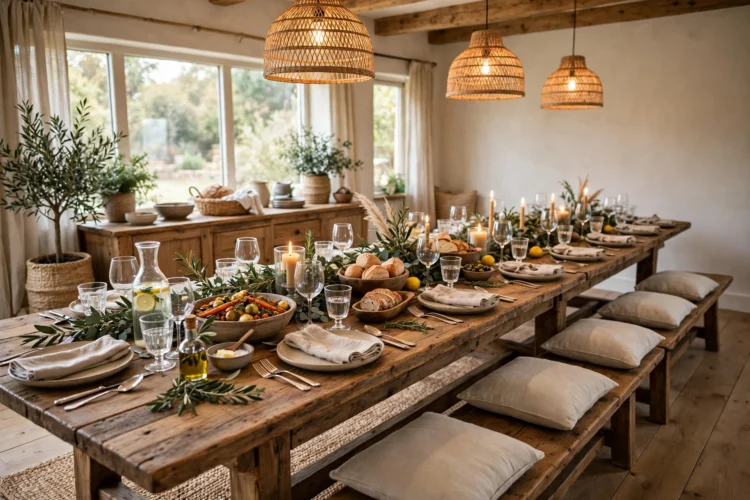
A short bench, about 90 to 120 cm long, fits tables that seat four and rooms where a full bench would block the walkway. It seats two adults comfortably and slides fully under a small table, which keeps a tight dining room usable. A short bench also works as a window seat or a hallway bench when it is not at the table, so it earns its floor space twice over. Match the bench length to the table: a bench longer than the table looks wrong, and a bench much shorter leaves wasted space. Measure the table first, then shop for the bench.
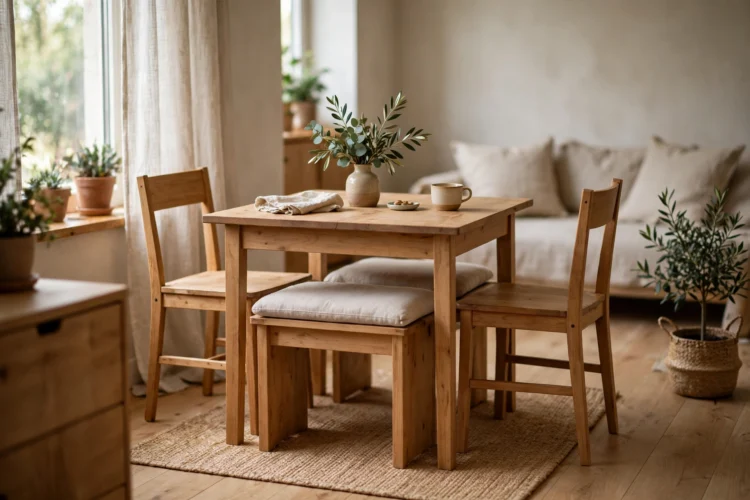
Loose cushions make a wood bench comfortable and washable at the same time. Choose cushions with zip-off covers in a sturdy fabric, and buy a spare set so one set can be in the wash while the other is on the bench. Tie-on cushions stay in place better than loose ones, and a thin cushion, about 5 cm, adds comfort without raising sitters too high above the table. Keep the cushion color a step darker than the table wood so crumbs and stains stay hidden between washes. A bench with washable cushions is the most practical choice for families with young kids.
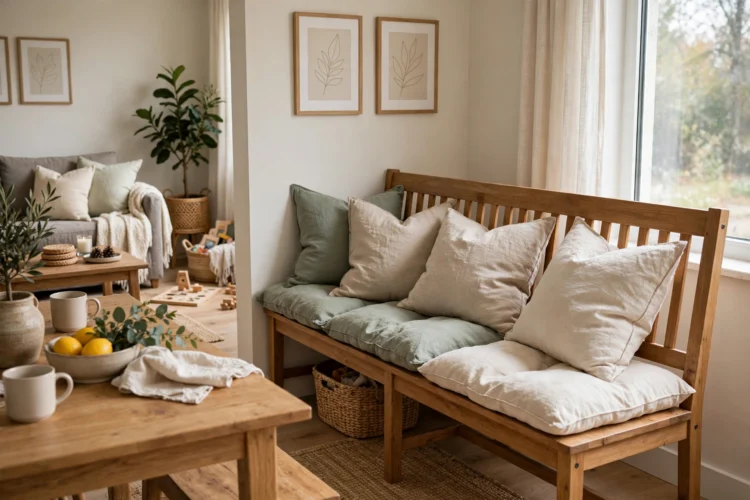
A built-in bench along one wall frees up the center of the room and gives the dining area a finished, architectural feel. The bench base can hold storage drawers, and the wall above it takes shelves, art, or a row of hooks for bags and coats. Build the bench seat at the same height as a dining chair, about 45 cm, and add a cushion in a fabric that matches the room. A built-in bench suits long, narrow dining rooms where chairs on both sides would block the walkway. The trade-off is permanence: once it is built, the layout is set, so be sure of the table size before you commit.
A teak or acacia bench made for the patio can work beautifully at an indoor dining table. The wood is built to handle moisture and heavy use, and the slatted design dries fast after a spill. Bring it inside, sand it smooth, and seal it with an indoor finish to stop it shedding fibers on clothes. The slatted seat suits casual rooms and summer houses, and it pairs well with a simple wood or glass table. Check the bench for outdoor hardware that might rust indoors, and swap any steel bolts for stainless ones. A kitchen island with seating uses the same casual logic, and the bench keeps the dining room just as relaxed.