Physical Address
304 North Cardinal St.
Dorchester Center, MA 02124
Physical Address
304 North Cardinal St.
Dorchester Center, MA 02124

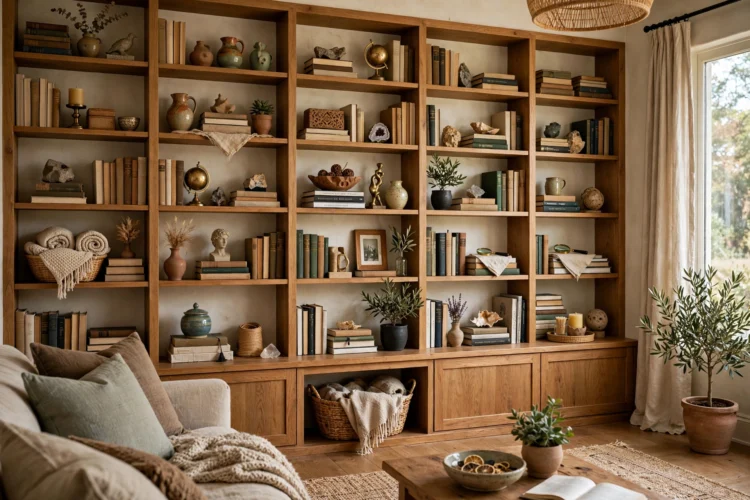
A shelf that looks collected was edited, not filled. These ten ideas mix books, art, and breathing room so your shelves feel personal instead of crowded.
A bookshelf that looks collected did not get that way by accident. It was edited, rearranged, and left with room to breathe. These living room bookshelf styling ideas help you move past the two usual failures, shelves crammed with books and shelves covered in small objects that read as clutter. The trick is balance: books give a shelf its purpose, objects give it personality, and empty space gives both room to be seen. Work one shelf at a time, and keep stepping back to judge the whole bookcase, not just the shelf in front of you.
Styling works better when you start from zero. Take everything off the bookcase, clean the shelves, and sort items into three piles: books you want to show, objects with a story, and everything else. The third pile goes elsewhere. Most shelves look cluttered because they hold items that were never chosen, only stored.
Once the shelves are empty, place the largest pieces first, such as big art books, a tall vase, or a framed print. These anchor pieces set the scale for each shelf. Bookshelf decorating ideas that begin with editing, rather than adding, tend to last longer, since every item left on the shelf earned its place. If a shelf looks good half empty at this stage, that is a sign you are on the right track.
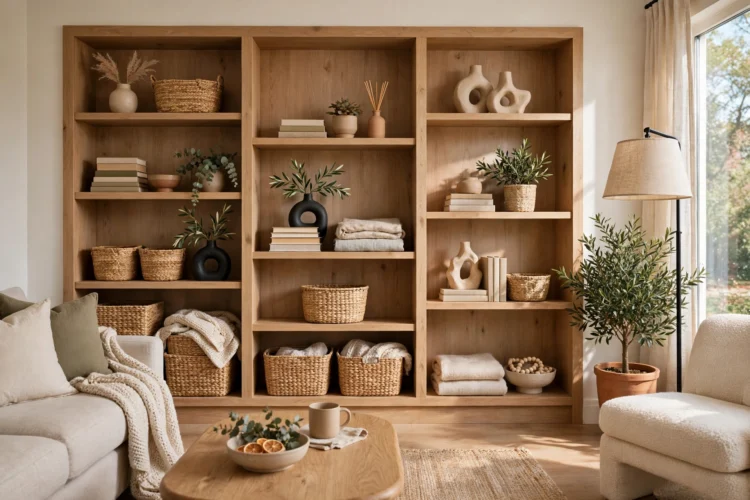
Books look calmer when grouped with intent. Sort by height first, so tall books stand together and paperbacks form their own group, then create one or two color blocks where spines share a tone. A row of cream spines or deep green spines reads as a deliberate band of color, while a random rainbow row can feel noisy.
You do not need to organize by color across the whole bookcase. One shelf of color blocks among shelves of mixed books gives the eye a resting point. Stack some books horizontally as well, since a flat stack breaks the vertical rhythm and creates a platform for a small object on top. Keep stacks to three or four books so they stay stable and easy to pull from.
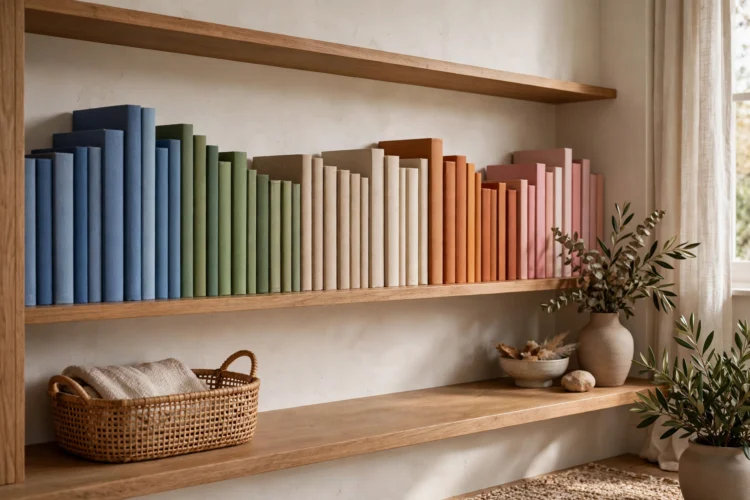
Empty space is not wasted space on a shelf. It is what lets the eye see each group as separate. Leave at least one open stretch on every shelf, a gap wide enough for a hand, where nothing sits. That gap stops the shelf from reading as a solid wall of stuff and makes the items beside it look more considered.
Negative space also gives the shelf room to change. A new book, a gift, or a found object has somewhere to go without forcing a full restyle. If you struggle to leave gaps, remove one item from each shelf and live with the result for a week. Most people find the shelf looks better, not emptier, once the eye can travel across it. These living room display ideas show how breathing room changes a whole wall.
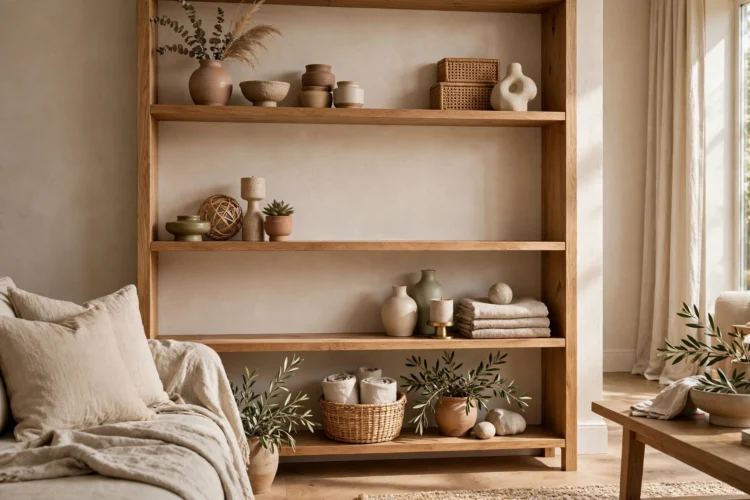
Art leaning on a shelf adds depth that flat wall art cannot. A small framed print or a postcard propped against the back panel creates a layered look, with books in front and art behind. Choose art smaller than the shelf height so it does not crowd the shelf above, and lean it at a slight angle rather than flat against the back.
One piece of art per bookcase is usually enough. Two pieces on different shelves can work if they share a frame color or subject, but more than that turns the shelf into a gallery wall. A leaning frame also hides a scuffed back panel, which is useful on older bookcases. Pair it with a short row of books beside it, not in front of it, so the art stays visible.
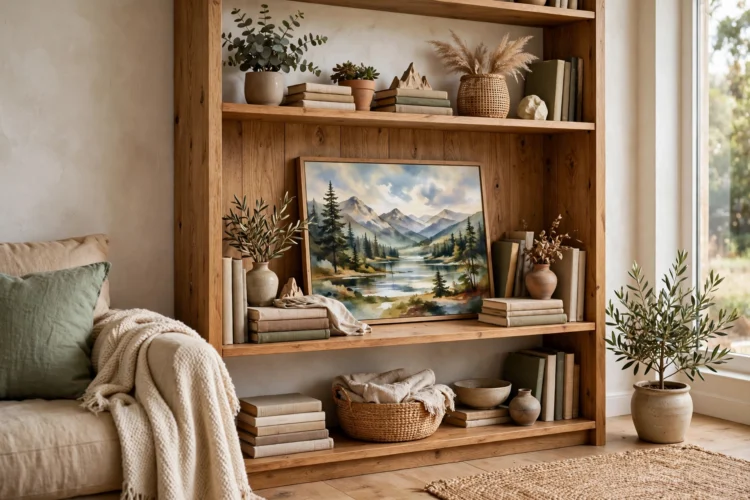
Objects earn a shelf spot when they mean something or look beautiful, not when they merely fill a gap. A vase from a trip, a handmade bowl, or a small sculpture all work. What fails is a collection of tiny trinkets lined up like a shop display. Choose three objects per bookcase at most, and give each one space and a clear neighbor, such as a stack of books or an open gap.
Scale matters as much as meaning. One medium vase beats five small figurines, because the eye can take it in at a glance. Styled bookshelf tips often repeat the rule of odd numbers, and groups of three do tend to look more natural than pairs, but the rule only helps if the three items differ in height. A tall, a medium, and a low object form a shape the eye follows easily. For more object ideas, see these decorative object ideas for living room shelves.
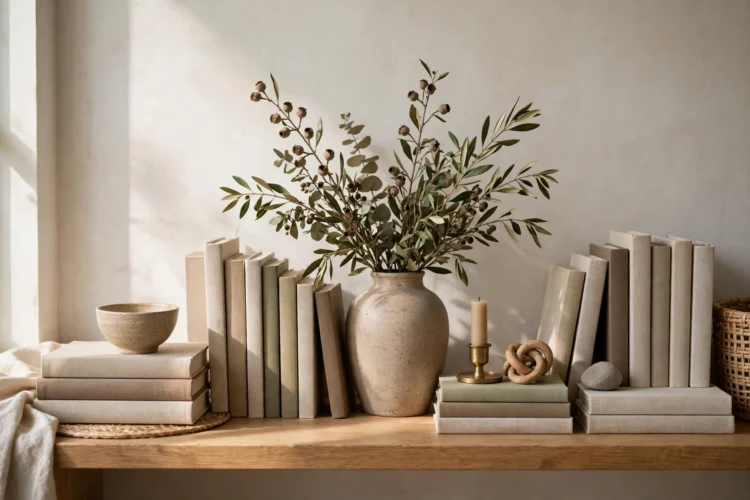
A shelf where everything stands at the same height looks flat, even when the items are lovely. Mix tall books with short stacks, a tall vase with a low bowl, and a leaning frame with a horizontal pile. The changing heights create a skyline across the shelf, and the eye moves along it instead of stopping at one level.
Check heights across the whole bookcase, not just one shelf. If every shelf peaks in the same place, the bookcase still feels uniform. Shift one tall item to a different shelf and see how the balance changes. A plant with trailing leaves adds a different kind of height, since it draws the eye downward, which suits a top shelf that otherwise feels disconnected from the rest.
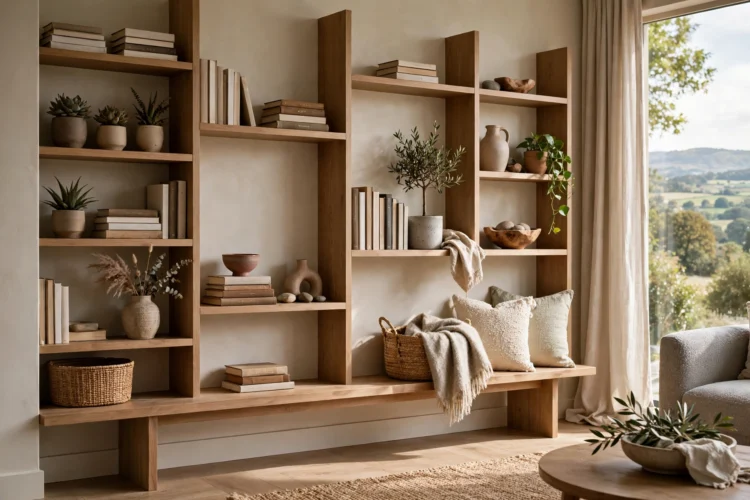
Repetition is what makes a shelf look styled rather than random. Pick one color or material already in the room, such as warm wood, brass, or deep blue, and repeat it in three places on the bookcase. A brass frame, a brass bowl, and a brass bookend tie the shelves together without matching everything.
Three is enough. Five repetitions start to look like a theme, and one looks like an accident. Shelf styling rules like this work because they give the eye a pattern to follow while leaving room for variety. If your room already has a strong accent color, echo it on the shelf in small doses, through a book spine or a vase, rather than repainting or rebuying anything.
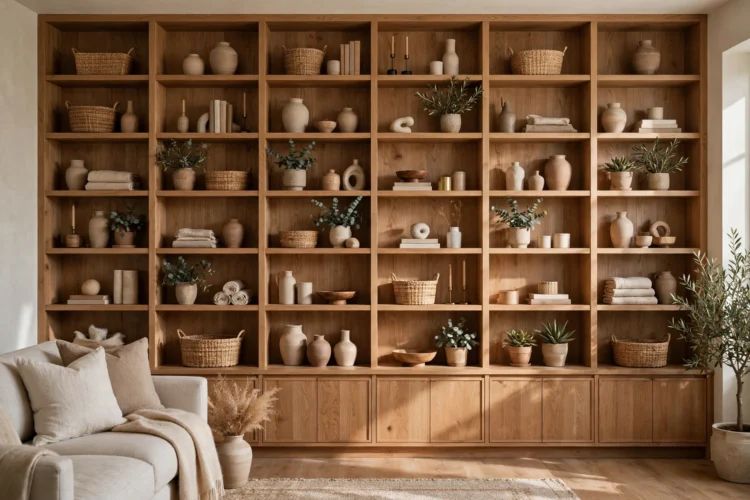
The final step is restraint. Style one shelf, step back to the doorway, and look at the bookcase as a whole before touching the next shelf. From that distance, problems show up clearly: a shelf that is too dark, a gap that looks like a missing item, or a color that appears nowhere else.
Photograph the bookcase as well, since a photo reveals clutter the eye overlooks in person. Remove one item from any shelf that still feels busy, and stop when the shelf looks good in the photo. A collected shelf is never truly finished, and that is part of its charm. New books and objects will arrive, and the shelf will absorb them if you keep the habits of grouping, spacing, and stepping back. These living room shelf updates offer simple ways to refresh a shelf without starting over, and a seasonal living room refresh can guide the next round of edits.