Physical Address
304 North Cardinal St.
Dorchester Center, MA 02124
Physical Address
304 North Cardinal St.
Dorchester Center, MA 02124

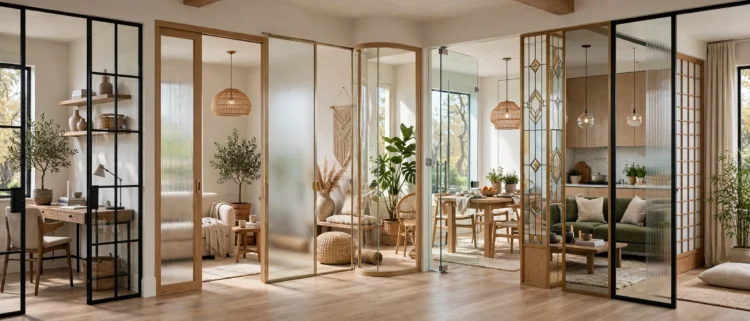
Glass partitions split a room into zones while letting daylight pass through. These ten ideas cover framed panels, frosted glass, blocks, and sliding doors.
Glass partition ideas work best when a room needs two zones but still needs light. A solid wall cuts a space in half and leaves one side dark, while a glass divider keeps the daylight moving through. You can split a living room from a home office, close off a bedroom corner, or give a bathroom a dry zone without losing the bright feel that made you pick the room in the first place. The ten ideas below cover framed panels, frosted glass, blocks, sliding doors, and freestanding screens, so you can match the divider to the room you have.
Before you pick one, check three things. First, measure the opening and note where the light comes from at midday. Second, decide how much privacy the zone needs, since clear glass, frosted glass, and tinted glass behave very differently. Third, look at the frame color you already have in the room, from black window frames to warm wood floors, so the divider reads as part of the room and not an add-on.
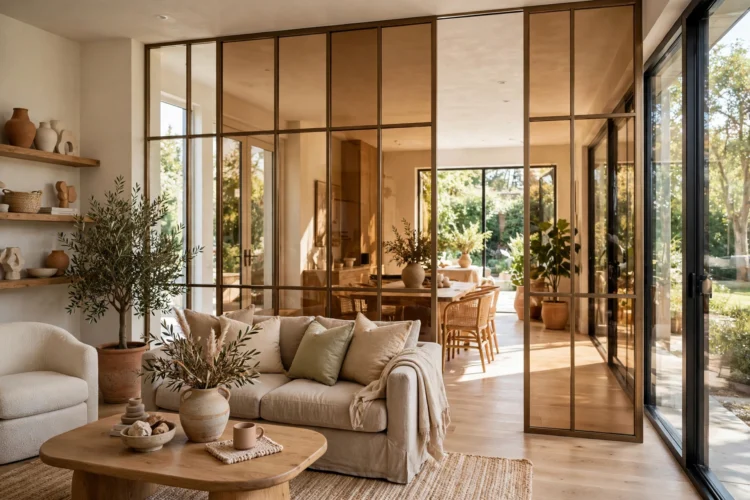
Black frames give glass a clear structure and stop it from looking like a bare sheet. The frames read like window mullions, so the divider feels built in rather than added later. Keep the glass panels as large as the frame allows, since fewer joints mean fewer lines across the view.
If the room gets strong afternoon sun, ask for low-iron glass so the panels stay clear instead of turning green at the edges. A framed glass partition suits a living room that shares space with a home office, and these glass partition ideas pair well with open-plan room divider ideas for the same layout.
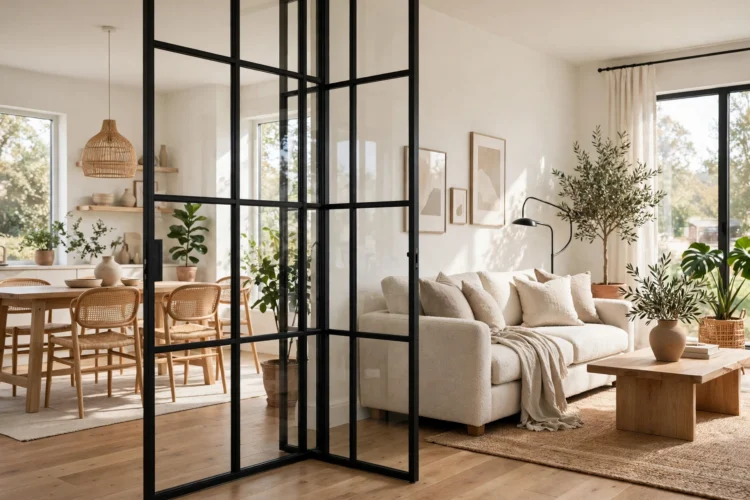
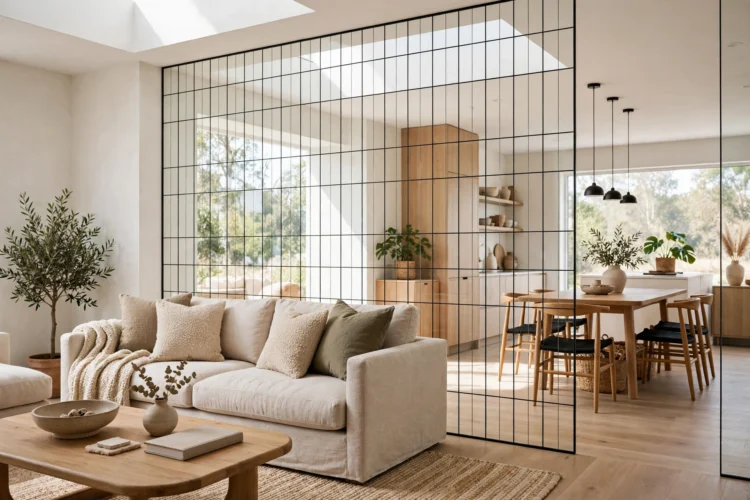
Among glass partition ideas, fine mullions suit rooms where a heavy black frame would feel too strong. The grid breaks the glass into small panes, which adds pattern without adding weight, and the slim lines keep the view open from a sofa or a desk.
The grid also gives you a place to hang a small shelf or a hook rail, which helps in a hallway or an entry zone. For a small flat, this is one of the most flexible glass room divider ideas, since the same panel can split a bedroom from a living area or close off a laundry corner.
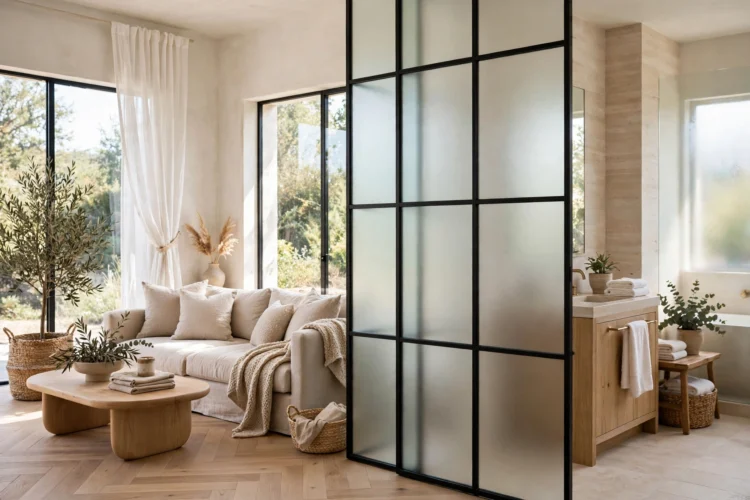
Frosted glass gives privacy without asking you to give up daylight. The surface scatters light, so shapes behind it turn soft while the room on the other side stays bright. A frosted glass partition is the right pick for a zone next to a bathroom, a dressing area, or a bedroom corner where you change clothes.
Among glass partition ideas for privacy, acid-etched glass holds its finish better than stick-on film, though film costs less and peels off when you move. These bathroom skylight ideas pair well with frosted glass, since both push daylight deeper into rooms that lack a window.
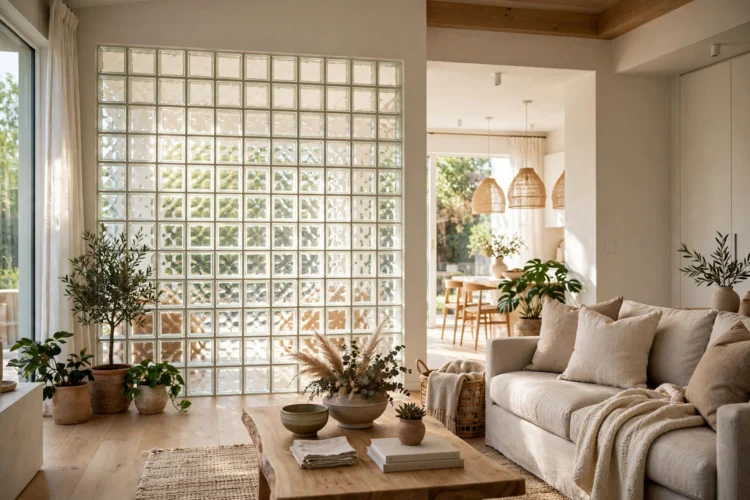
Among these glass partition ideas, glass blocks are the only ones that turn a divider into a light source. Each block bends the daylight that passes through it, so the wall glows softly instead of throwing a hard shadow. The blocks stack like bricks with mortar or a frame system, and they carry their own weight, so they suit a half wall between a kitchen and a dining area or a shower zone that needs a solid edge.
A glass block divider also blocks sound better than a single sheet of glass, which helps when one side holds a television and the other holds a desk. Keep the top course below eye level in a small room, or the wall starts to feel like a barrier instead of a feature.
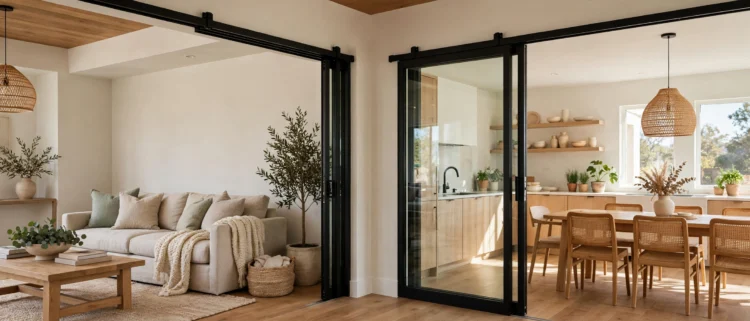
A ceiling track lets a glass door slide away when you want the room open and close when you need quiet. The track hides in the ceiling, so nothing crosses the floor and a rug can run straight through the doorway. Choose a single sliding panel for a narrow opening and two panels that meet in the middle for a wide one.
Among glass partition ideas, sliding doors suit a home office that needs to close for calls and open again for dinner, or a guest room that doubles as a study. When the door stands open most of the day, pick a panel with a slim frame so it reads as a window edge rather than a door left ajar.
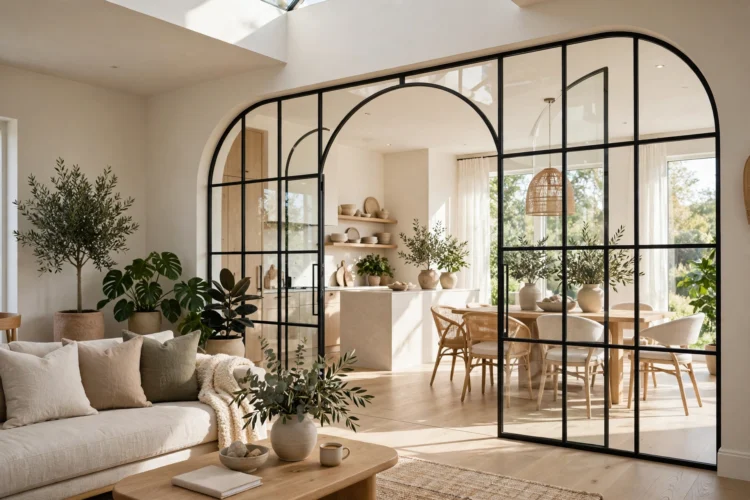
An arch softens the straight lines that fill most modern rooms. The curve at the top of the panel draws the eye upward and gives these glass partition ideas a shape of their own, even when the glass stays clear. The arch also helps in a tall room, where a plain rectangle can look short against a high ceiling.
Order the frame from a maker who bends steel or wood to a template, since a flat-pack arch rarely fits a real opening cleanly. Keep the furniture on both sides low and simple, so the curve stays the feature and the room does not fight it.
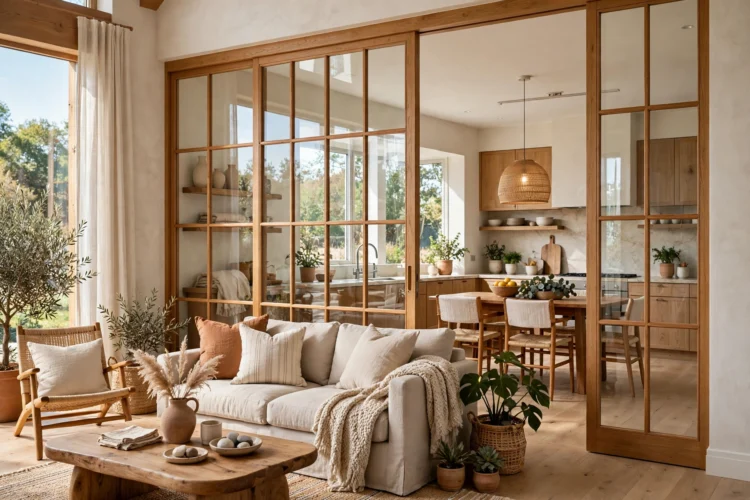
Wood frames warm up glass in a way metal cannot, and they give these glass partition ideas the feel of furniture. A slim oak or walnut frame around clear glass suits rooms with wood floors, a wood dining table, or timber shelving. Use the same wood tone as the largest wood piece in the room, and keep the frame slim so the glass still does the visual work.
These glass dining table ideas show how the same pairing of glass and wood works at table height, so the divider and the table can share one material story. Seal the wood on both faces if the divider sits near a kitchen or a bathroom, where steam reaches it daily.
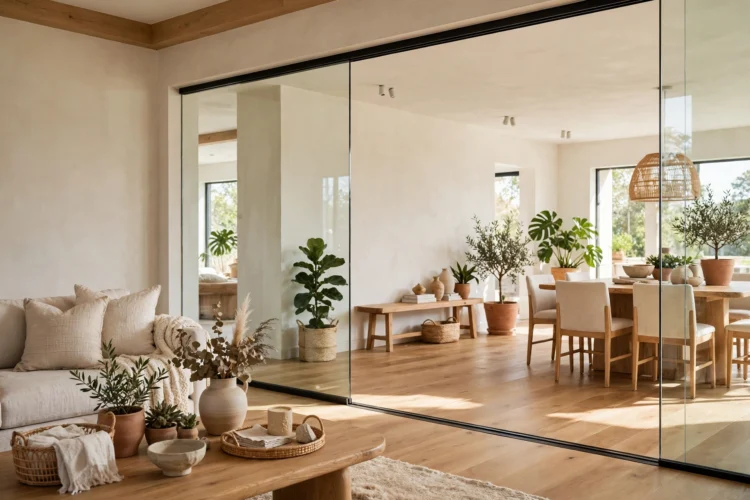
A full-height panel with a slim base channel gives the cleanest look of all. The glass runs from floor to ceiling with no horizontal rail in the middle, so the room reads as one space with a clear edge. The base channel holds the panel in a narrow metal shoe, and a small top channel or a pair of discreet clips holds the upper edge.
Pick tempered glass at least 10 mm thick, since a tall panel needs the strength, and check that the floor is level before you measure, because a slope of a few millimeters shows up as a gap at the top. A frameless panel also cleans fast, with no mullions to trap dust.
Bronze and smoked gray glass add mood without adding a wall. The tint cuts glare from a west-facing window and gives the room a warmer tone in the afternoon, which suits a media corner or a bedroom zone.
Tinted glass still passes plenty of daylight, but it reads darker from the far side, so keep the zone behind it lit with a floor lamp or a wall light. Pair it with brass or dark wood so the warm tone has company, and keep the rest of the glass in the room clear so the tint stays a feature, not a theme.
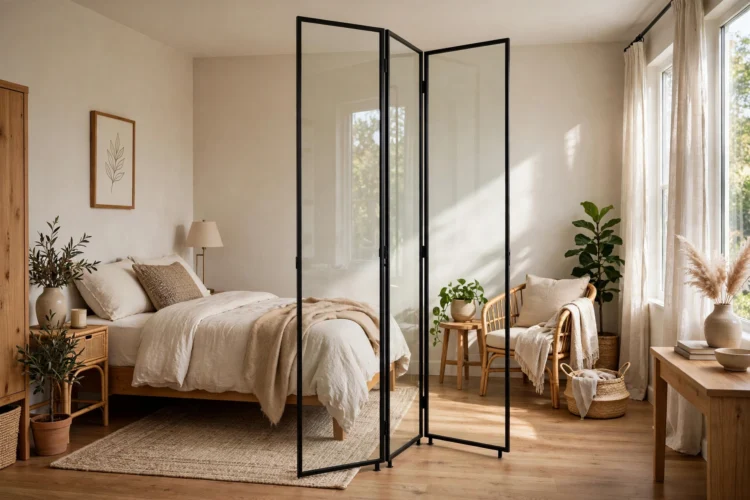
Renters need a divider that leaves no holes, and a freestanding glass panel does the job. The panel stands in a weighted base or a pair of slim feet, so you can set it between a bed and a desk and move it when the lease ends. A frosted lower half gives privacy at bed height while the clear top keeps the light moving.
If glass feels too permanent for a rental, these curtain room divider ideas offer a lighter option that uses the same zoning logic. Measure the base width against your floor space first, since a wide foot can trip a path through a small room.
Start with the zone that bothers you most, not the divider that looks best in a photo. Tape the outline on the floor, live with it for a week, and watch where the light falls at different hours. The right glass partition earns its place by fixing a real problem and keeping the room bright.