Physical Address
304 North Cardinal St.
Dorchester Center, MA 02124
Physical Address
304 North Cardinal St.
Dorchester Center, MA 02124

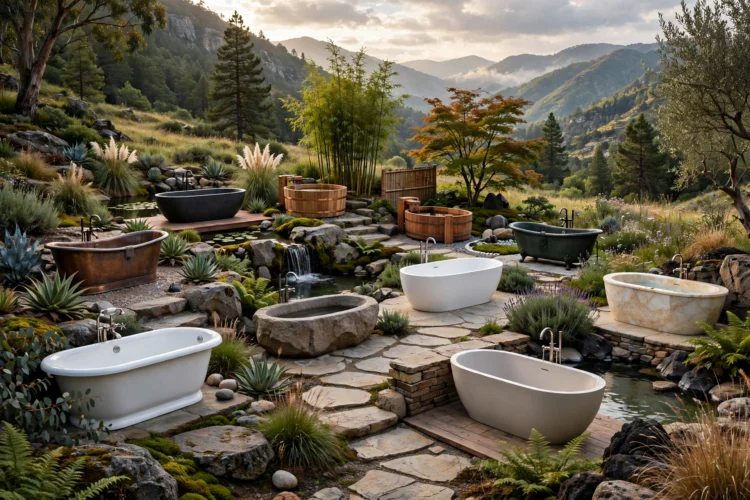
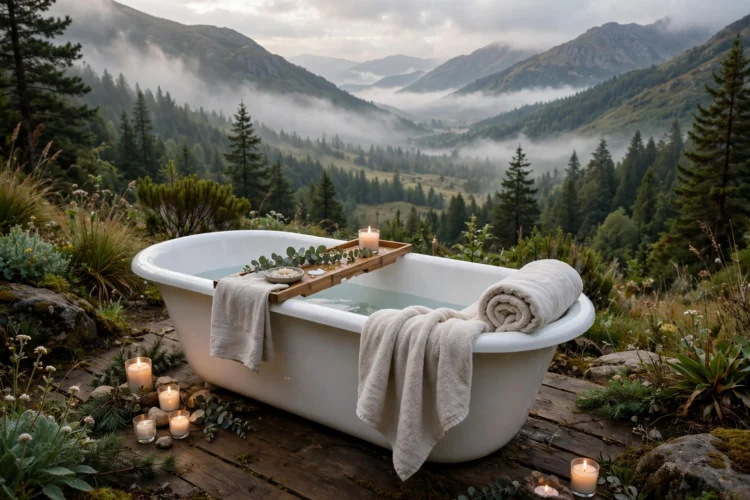
A freestanding tub turns an ordinary bathroom into a spa corner. These 10 ideas cover tub shapes, placement, and details that make every soak feel intentional.
A freestanding tub is the one fixture that can carry a whole bathroom design. Unlike a built-in tub, it stands on its own, so its shape, finish, and placement all show. These freestanding tub ideas cover oval, round, rectangular, and slipper shapes, plus the placement and plumbing details that make each one work. Before you fall in love with a shape, check your floor space: most freestanding tubs need at least a foot of clearance on the sides you walk past, and the floor must support a tub full of water plus a bather.
An oval freestanding tub is the safest choice for a spa style bathroom because its shape suits almost any design, from traditional to modern. The curved sides soften a rectangular room, and the symmetrical shape looks finished from every angle, which matters since a freestanding tub is visible from all sides. A 67-inch oval fits most adults comfortably, while a 59-inch version suits smaller bathrooms without giving up the soaking depth.
Place an oval tub under a window when you can, so the bather gets natural light and a view. If the window wall lacks plumbing, a floor-mounted tub filler solves the supply problem without moving pipes far. Keep the floor around the tub clear of rugs that stay damp, and use a teak bath mat that dries fast and adds warmth underfoot.
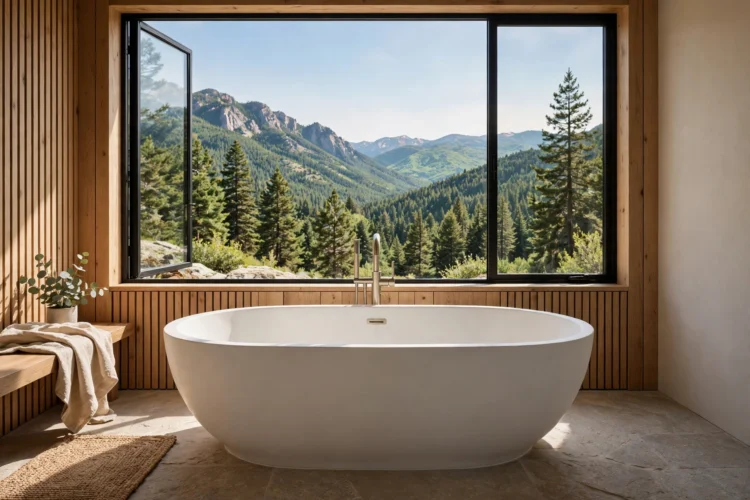
A round soaking tub fits corners and small bathrooms where a long oval tub would block the path. Round tubs are usually deeper than they are long, so they suit upright soaking rather than stretched-out bathing. A 47-inch round tub can fit in a corner that would otherwise hold nothing, and its shape turns an awkward corner into a feature. This soaking tub bathroom idea works best for one bather who likes a deep, hot soak.
Plumbing for a round tub usually comes through the floor, so plan the drain position before you tile. A freestanding filler beside the tub, rather than a wall-mounted spout, keeps the round shape clean. Add a small stool or side table within arm’s reach for a book, a candle, and a towel, since a round tub has no rim shelf to hold them.
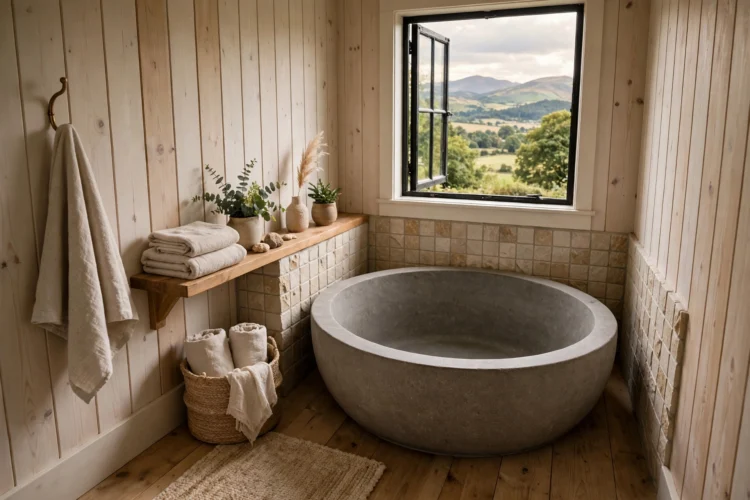
A rectangular freestanding tub suits modern bathrooms with straight lines and minimal trim. The crisp edges echo the vanity and the shower glass, and the flat sides give you a place to rest a bath tray. Rectangular tubs also fit against a wall more neatly than curved shapes, which helps in a bathroom where the tub shares a wall with the shower. Choose a tub with a slightly sloped back if you plan to lean back for long soaks.
Rectangular tubs show water spots on their flat outer walls more than curved tubs do, so a matte solid-surface finish hides marks better than gloss acrylic. Wipe the tub down after use if your water is hard, and keep the wall behind the tub free of open shelving that would catch splashes. A wall-mounted light above the tub, rather than a pendant, keeps the clean lines intact.
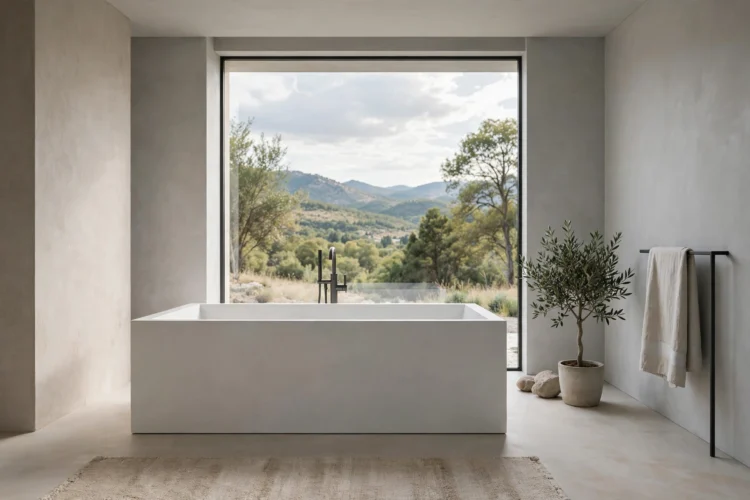
A slipper tub has one end raised higher than the other, so you can lean back in a supported, almost seated position. This shape suits long soaks and readers, since the raised back acts like a lounge chair. Slipper tubs come in single-ended and double-ended versions: single-ended suits a tub against a wall, while double-ended suits a tub in the middle of the room where both ends show.
Slipper tubs are often cast iron with a clawfoot or pedestal base, which adds weight. Check the floor structure before you order, especially in an older home or an upstairs bathroom. A cast iron tub holds heat longer than acrylic, so the water stays warm through a long soak, which is part of the appeal. Pair it with a floor-mounted filler in a matching finish for a coherent look.
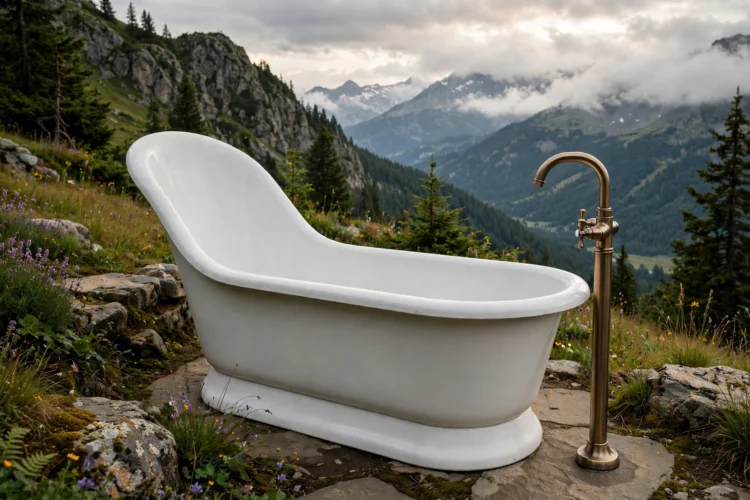
A clawfoot tub is the most recognizable freestanding shape, and it brings vintage character that no modern tub can copy. The feet lift the tub off the floor, which makes a small bathroom feel lighter, and the rolled rim gives a classic silhouette. Clawfoot tubs suit bathrooms with vintage fixtures, subway tile, and a pedestal sink, where the whole room tells one story.
Cleaning under a clawfoot tub takes more effort, since dust collects around the feet. A handheld showerhead on a riser makes rinsing the tub easy, and a curtain ring above the tub gives you a shower option without a separate enclosure. If you love the look but not the upkeep, a pedestal-base tub gives a similar raised profile with a simpler base to clean around.
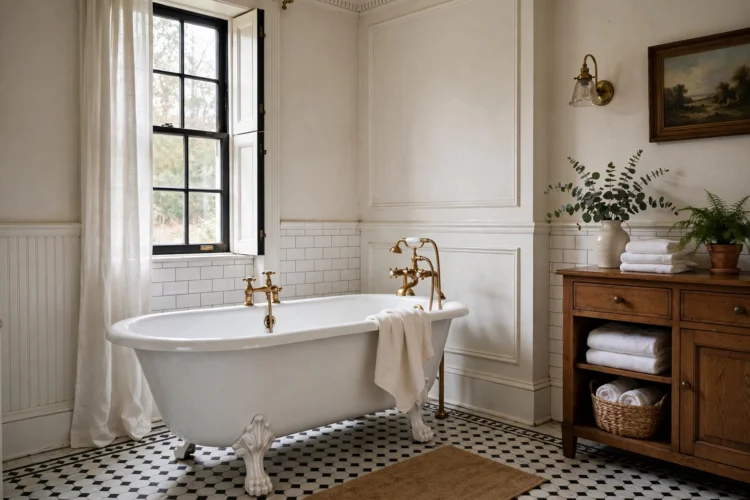
Freestanding bathtub placement under a window is the most photographed tub setup for a reason: natural light, a view, and a sense of openness that no other spot offers. The window wall usually needs a floor-mounted filler, since wall plumbing would cross the window. Frosted glass on the lower window panes keeps privacy while the upper panes stay clear for light.
Check the window height before you commit. A tub rim near 24 inches high plus a bather sitting up needs a sill high enough that the view works from a seated position. If the window is low, a tub with a lower profile or a raised platform under the tub can fix the sight line. Keep the window treatment simple, like a roller shade that resists moisture, rather than curtains that stay damp.
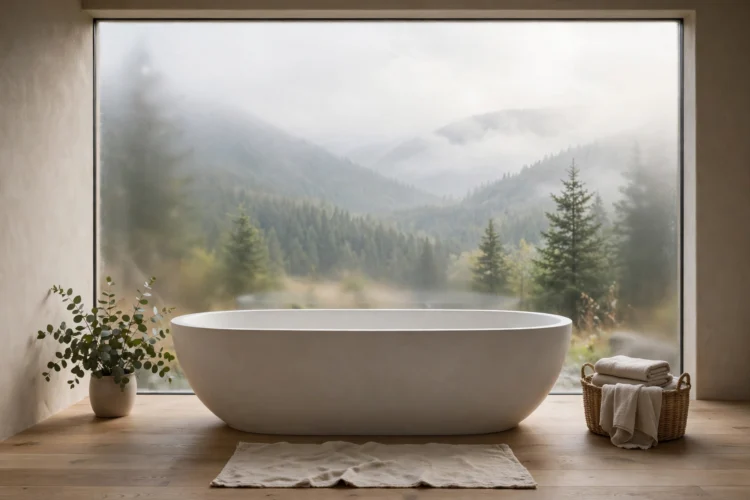
Placing a tub in the center of a large bathroom turns it into a sculpture. This layout needs a big room, at least 10 by 12 feet, so the tub has clear space on all sides and the rest of the fixtures still fit. A center tub works best with a floor drain nearby and a filler that rises from the floor, since no wall is close enough for wall plumbing. The payoff is a bathroom that feels like a spa suite rather than a utility room.
A center tub demands good lighting from above, since no wall light will reach it well. A pendant or a small chandelier over the tub anchors the arrangement and gives the bather light for reading. Keep the floor material consistent across the whole room so the tub zone reads as part of the bathroom, not a separate stage. This is the boldest of these freestanding tub ideas, and it only works when the room is large enough to give the tub breathing room.
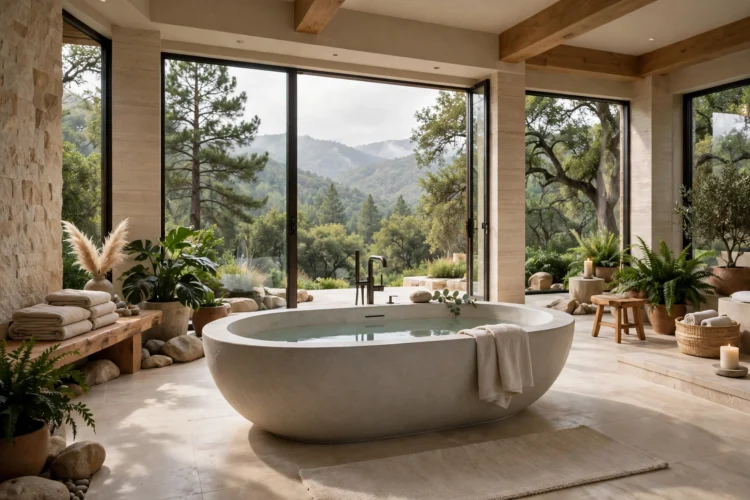
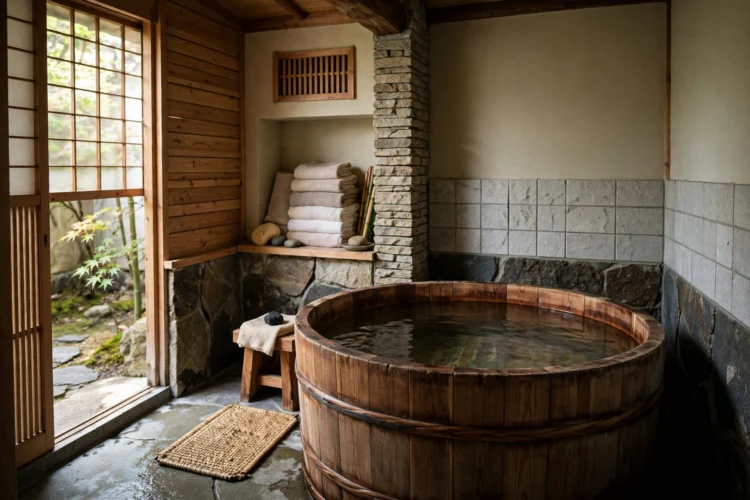
A Japanese-style soaking tub is deeper and shorter than a Western tub, designed for upright soaking up to the shoulders. The compact footprint, often near 47 inches square, fits small bathrooms and corner spots where a long tub cannot go. A built-in seat inside the tub supports upright sitting, and the deep water covers the shoulders, which is the whole point of the design. Wood versions in cedar or hinoki add scent and warmth, while acrylic versions cost less and need less care.
Deep tubs need a step or a sturdy stool for safe entry, since the rim sits higher than a standard tub. A floor drain near the tub catches splashes from stepping in and out, and a handheld showerhead helps with rinsing before and after the soak. If your bathroom is small, a deep soaking tub gives you a genuine spa soak in a footprint that a standard tub cannot match.
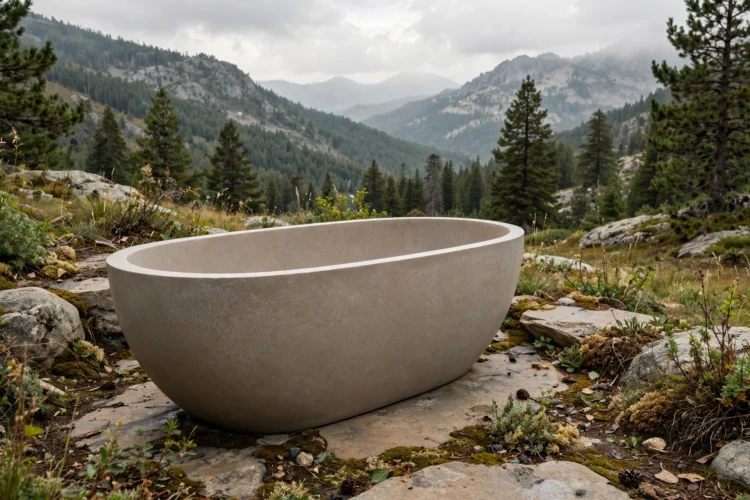
Stone and solid-surface tubs bring a matte, natural texture that acrylic cannot match. A stone resin tub looks carved rather than molded, and its weight keeps it planted firmly on the floor. These tubs suit bathrooms with natural materials like wood vanities, stone tile, and linen curtains, where the tub joins a palette rather than standing apart. Solid-surface tubs also resist staining and feel warm to the touch, unlike cold cast iron.
Weight is the main constraint. A stone tub can weigh several hundred pounds empty, so confirm the floor can carry it plus water plus a bather. Delivery also needs planning, since a heavy tub may not fit through a narrow hallway or up a tight staircase. Once installed, a stone tub needs little care beyond normal cleaning, and its matte finish hides water spots well.
The tub is only half the spa equation. A bath tray across the rim holds a book and a drink, a teak stool beside the tub holds a towel and a candle, and a wall-mounted dimmer lets you lower the lights for an evening soak. Warm towels from a heated rail, a small plant that tolerates humidity, and a bath salt jar on a shelf all add spa cues without any construction. These details cost little and change how the tub feels every time you use it.
Lighting deserves the most attention. A dimmer on the bathroom lights, a candle-safe dish, and a small lamp on a timer create the evening mood that makes a spa style bathroom work. For more ideas on lighting a bathroom zone well, pendant light ideas for islands, recessed lighting ideas for clean ceilings, kitchen chandelier ideas, and kitchen sconce ideas for walls all show how one fixture choice sets the mood of a room. In a bathroom, the same rule applies: the tub gets the credit, but the light does the work.