Physical Address
304 North Cardinal St.
Dorchester Center, MA 02124
Physical Address
304 North Cardinal St.
Dorchester Center, MA 02124

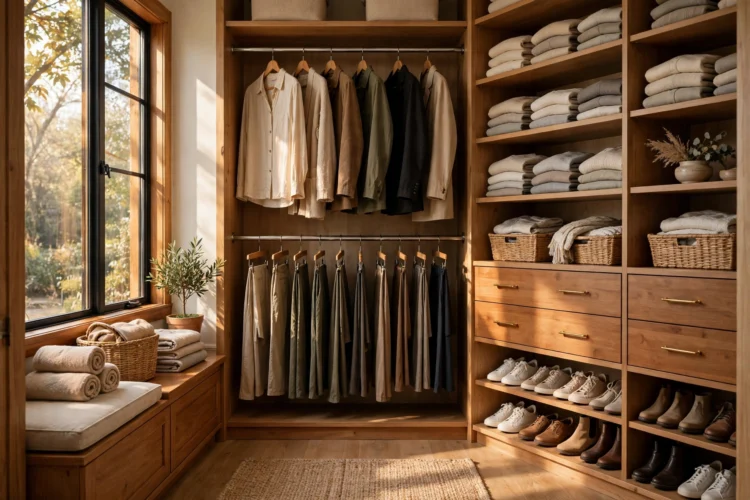
A walk-in closet works best when every wall earns its keep. These 12 ideas cover hanging space, drawers, shoes, and lighting for small and large rooms alike.
Walk in closet ideas work best when you sort clothes by length before you buy a single rod or shelf. Short items like shirts, folded pants, and jackets hang in half the height of dresses and coats, so a single tall rod wastes the space below them. Measure your longest dress or coat first, then give that section one tall rod and put double rods everywhere else.
Two rods stacked on one wall roughly double your hanging space without changing the footprint. Leave about 40 inches between the rods so shirts on the top rod clear the hangers below. This one change often frees an entire wall for shelves or drawers, and it pairs well with small closet organization ideas that double storage in tight rooms.
Dresses, long coats, and jumpsuits need one uninterrupted drop of about 60 inches. Keep this section narrow, near a corner or at the end of a run, so it does not eat into your double-hang zone. If you own very few long pieces, a single tall bay is plenty and the rest of the wall stays flexible.
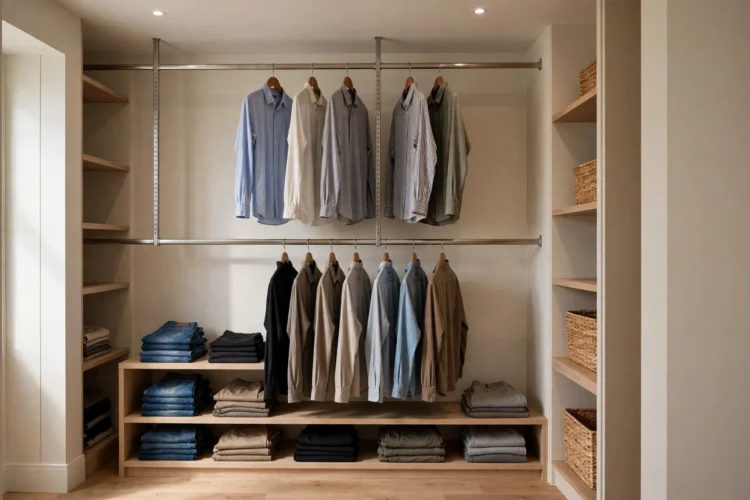
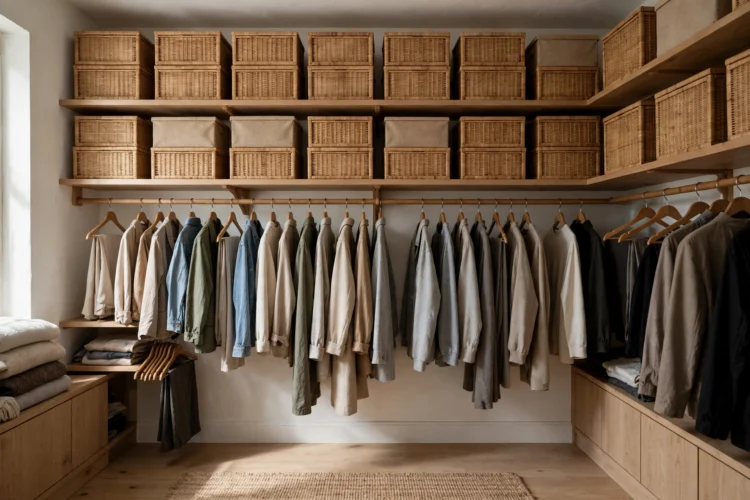
Most closets waste the top 18 inches above the rod. That band is perfect for items you reach for rarely, and it keeps bulky things off the floor where they block access to daily clothes.
A shelf 12 to 16 inches deep above each rod holds bins for out-of-season clothes, spare bedding, and bags. Label the bins so you can grab the right one without pulling everything down. Clear bins work well here because you can see what is inside from the floor.
High shelves only help if you can reach them safely. A slim folding stool that hangs on the inside of the door or tucks beside a drawer unit turns that top shelf into real storage instead of a dead zone. Pick one with a wide top step so you can steady yourself with one hand while you lift a bin.
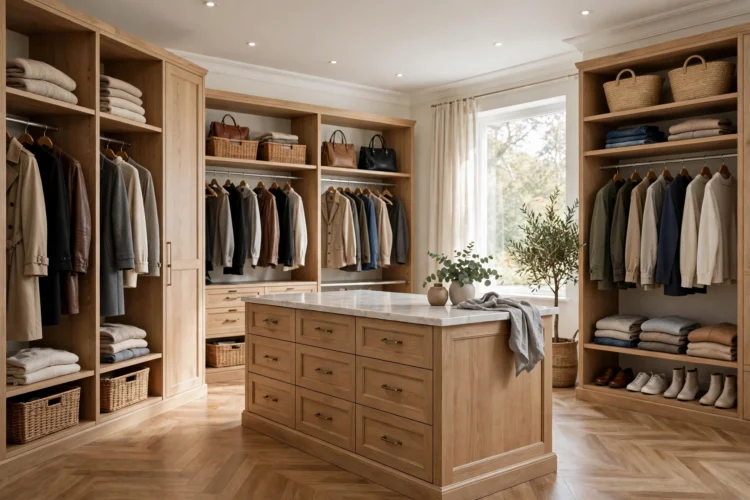
A big walk-in closet with empty floor space in the middle feels unfinished and invites clutter. A low piece in the center gives you a surface for folding and a place to sit while you put on shoes.
A small island or a low dresser in the center holds accessories, folded knitwear, and underwear in shallow drawers. Top it with a tray for the watch, keys, and sunglasses you grab each morning. Leave at least 30 inches of walking space on every side so doors and drawers open freely.
If an island would crowd the room, a storage ottoman does the same job at half the size. It gives you a seat, hides off-season accessories inside, and can move out of the way when you need floor space for packing a suitcase. Choose a flat top so it doubles as a folding surface.
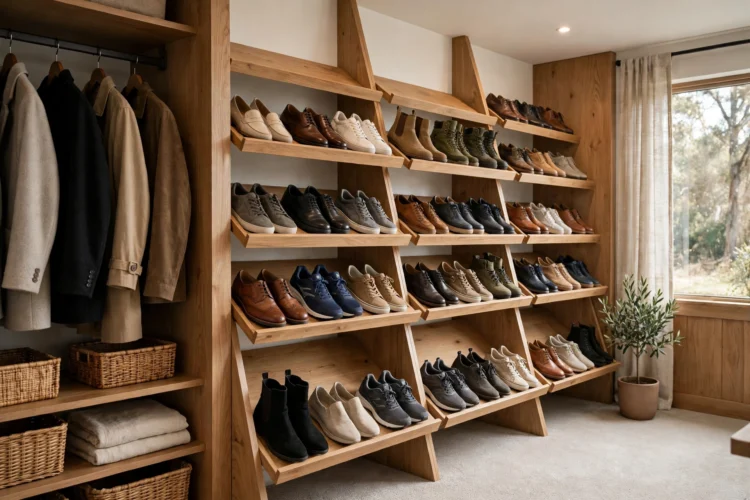
Shoes piled on the floor are the fastest way to make a closet look messy, and they make pairs hard to find. A dedicated shoe zone, even a small one, keeps the floor clear and protects the shoes you wear most.
Slanted shelves show each pair at a glance and use shallow depth, so they fit on a narrow wall or inside a door frame. Two or three rows cover everyday shoes, while boots and heels get their own taller shelf. If you rotate shoes by season, keep the current season at eye level and store the rest up high.
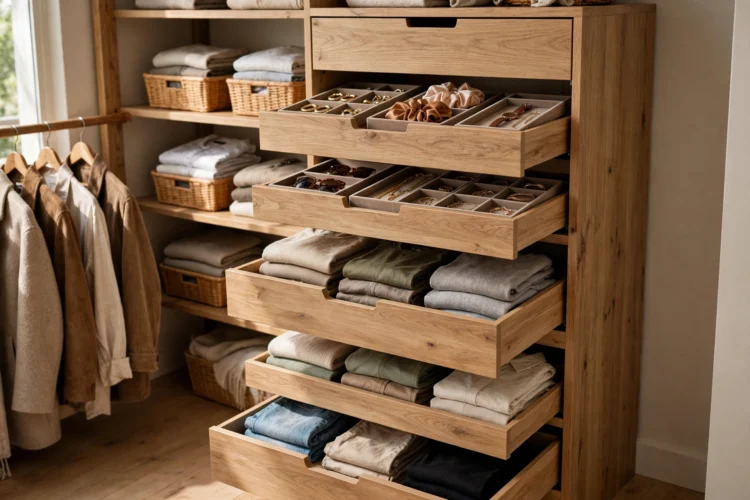
Stacks of folded clothes topple, and the item you want always sits at the bottom. Drawers keep categories separate and let you see what you own without restacking a pile.
A tower of four to six drawers between two hanging runs holds T-shirts, knitwear, gym clothes, and underwear. Shallow drawers work better than deep ones here because clothes stay visible in a single layer. This layout also mirrors classic bedroom wardrobe ideas that mix hanging and drawer storage in one wall.
Belts, scarves, sunglasses, and jewelry tangle in a drawer but stay tidy on shallow pull-out trays. Line the trays with felt or velvet so items do not slide, and give each category its own tray. A tray you can pull out fully is easier to use than a deep drawer you have to dig through.
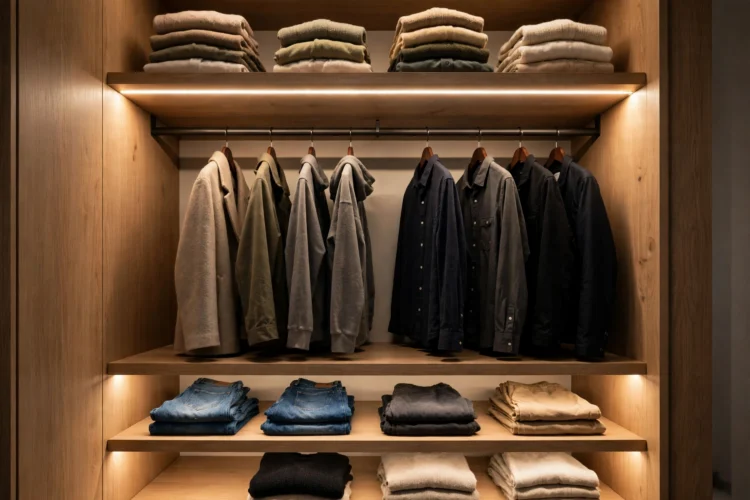
A closet lit by a single bare bulb makes colors hard to judge and dark corners easy to ignore. Good lighting helps you tell navy from black in the morning and makes the whole room feel finished.
Battery or wired LED strips under each shelf wash light down over hanging clothes without adding heat. Warm white light near 3000K shows fabric colors accurately and feels calm. If you rent, adhesive strips with a remote give you the same effect without wiring, and you can take them with you when you move. For the bedroom side of the setup, bedroom lighting ideas with sconces and pendants show how layered light changes a whole room.
Not everything in a closet looks good on display. Cleaning supplies, ironing gear, and spare hangers deserve closed storage so the open sections stay calm.
A pull-out hamper keeps laundry off the floor and out of sight, and a fold-down ironing board mounted inside a tall cabinet means you never hunt for a place to press a shirt. Put the hamper near the door so dirty clothes go straight in when you change, and keep the ironing cabinet near a power outlet.
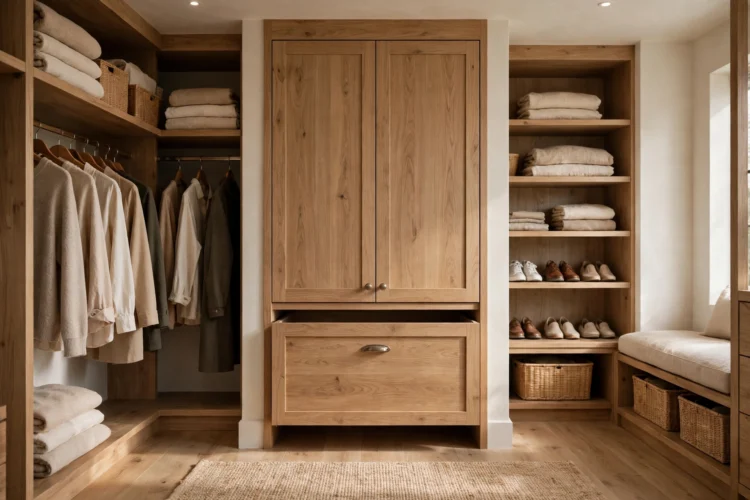
Small walk-in closets fail when a door blocks access or the layout fights the shape of the room. A few swaps can open up a narrow closet without moving a wall.
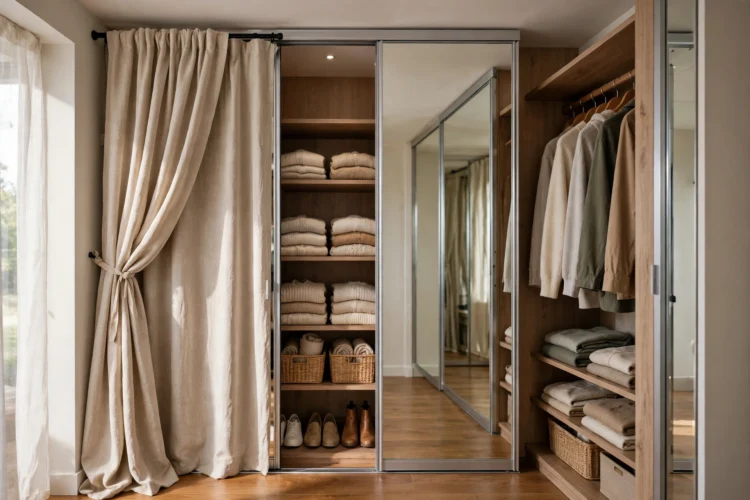
A swinging door eats floor space and blocks one wall. A curtain on a ceiling track costs little, needs no swing clearance, and softens the look of the room. Mirrored sliding panels do the same job while bouncing light around, which helps a narrow closet feel wider. Whichever you pick, keep the entry clear so you can step in and turn around. A calm, organized closet also supports a calmer bedroom, much like the approach in master bedroom ideas for a calm, restful retreat.
Start with the rod layout, then add drawers, shoes, and light in that order. Each change builds on the last, and by the end you have a closet where everything has a place and mornings run smoother.