Physical Address
304 North Cardinal St.
Dorchester Center, MA 02124
Physical Address
304 North Cardinal St.
Dorchester Center, MA 02124

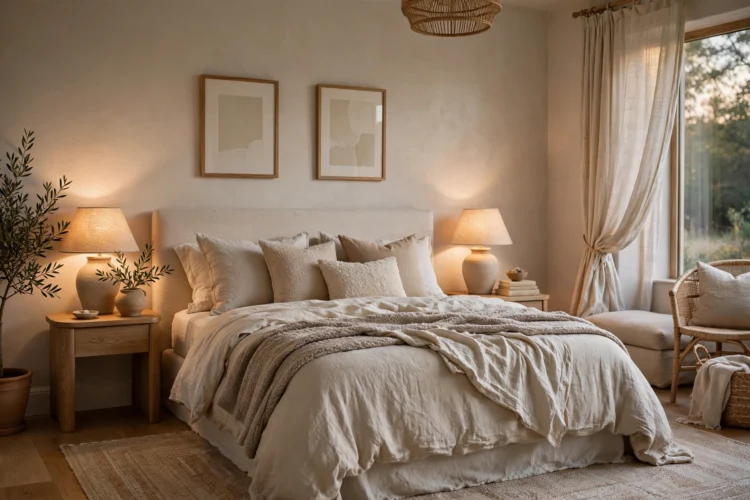
A restful primary bedroom starts with sleep, not showroom styling. These ideas use calm color, soft light, and clear surfaces to turn your bedroom into a nightly retreat.
Master bedroom ideas work best when they start with sleep. A calm, restful retreat is not about matching furniture sets or a hotel lobby look. It is about a room that lowers your heart rate at the end of the day: soft light, quiet color, clear surfaces, and a bed you actually look forward to. The 13 ideas below cover palette, layout, light, and storage, and each one keeps the focus on rest first and decoration second.
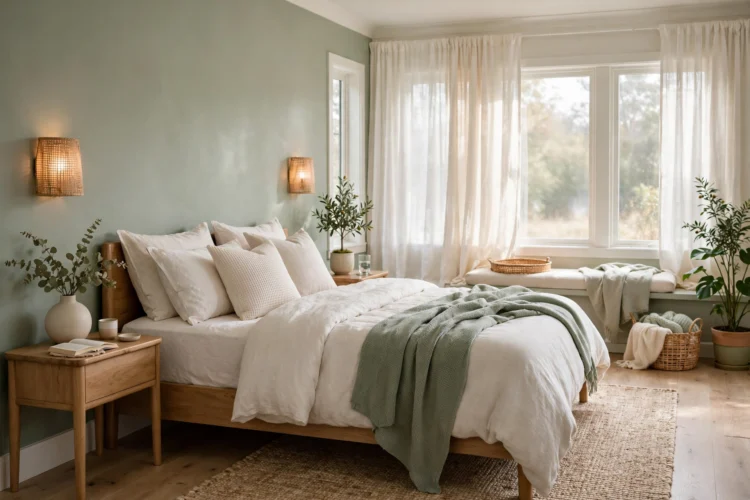
Color sets the tone of a bedroom faster than any other choice. Warm whites, soft sage, dusty blue, and pale clay all recede quietly, which helps the room feel settled rather than busy. Pick one main wall color and one slightly deeper accent for bedding or curtains, then let wood tones and linen add the warmth. When the palette stays narrow, the room reads as calm even when life gets messy.
Test paint in the evening light you actually live with, since a soft gray can turn cold under bright bulbs. Paint two large swatches on different walls and live with them for a few nights before you commit. A calm bedroom palette like this also makes it easier to change the look later, since new bedding or art can shift the mood without a repaint.
The bed is the room, so spend the effort there first. A supportive mattress, breathable cotton or linen sheets, and a duvet weight that suits your climate will do more for rest than any decor item. Layer a light coverlet over the duvet so you can adjust through the night without rebuilding the bed each morning, and keep pillow count low: two sleeping pillows plus one or two decorative ones at most.
Wash bedding on a regular rhythm and the room will smell and feel fresher with no extra styling. Choose a headboard that is comfortable to lean against for reading, padded or upholstered in a washable fabric. When the bed looks inviting and feels good, the rest of the room can stay simple and still feel finished.

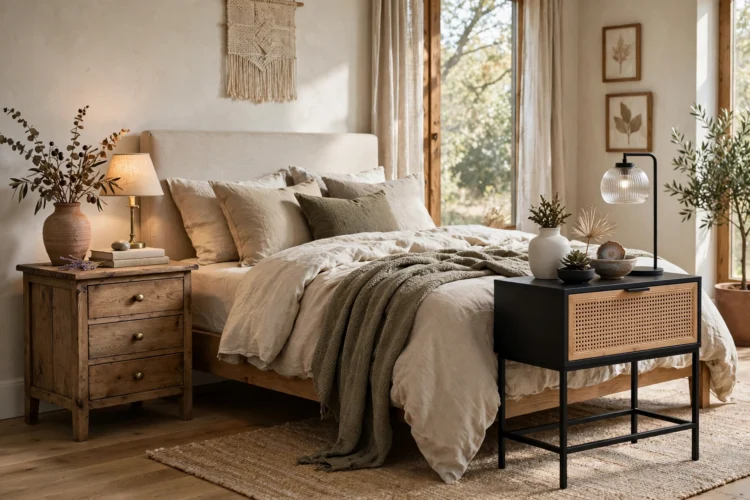
Clutter-free bedroom surfaces change how a room feels at night. From the pillow, you see the nightstand, the dresser top, and the chair in the corner, so those three spots matter most. Give every item a home behind a closed door or drawer, and leave nightstands nearly bare: a lamp, a book, water, and nothing else competing for attention.
Use a small tray to corral the few items that must stay out, like a watch or lip balm, so they read as one tidy group. Run a five minute reset each evening, putting laundry in the hamper and mail on a desk elsewhere. A clutter free bedroom does not need to be empty, it just needs clear landing spots so nothing piles up where you rest your eyes.
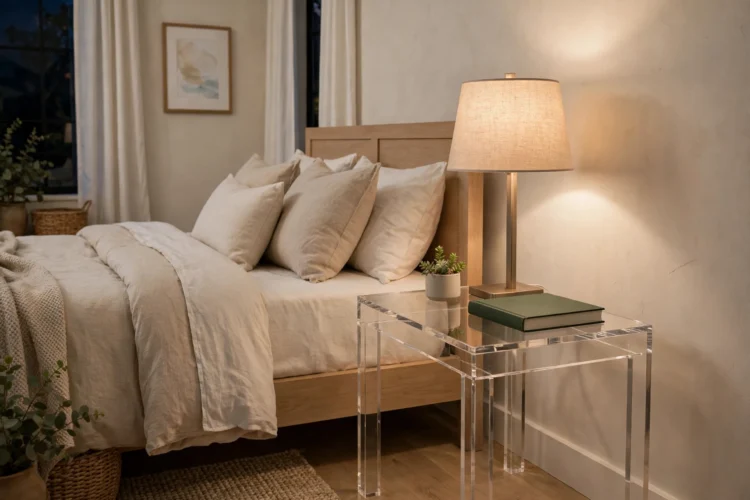
Bedroom light should dim down with you. Overhead light alone feels harsh after dark, so layer three sources: a ceiling light on a dimmer, bedside lamps with warm bulbs, and one low glow source like a small lamp across the room. Warm bulbs around 2700K flatter skin and signal the brain that night is coming, while cool white bulbs do the opposite.
Put bedside lamps on separate switches or smart plugs so each sleeper controls their own side. Keep phone charging off the bed if you can, on a dresser dock instead, so the glow and the urge to scroll stay out of reach. Good light planning is quiet work, and it pays off every single night.
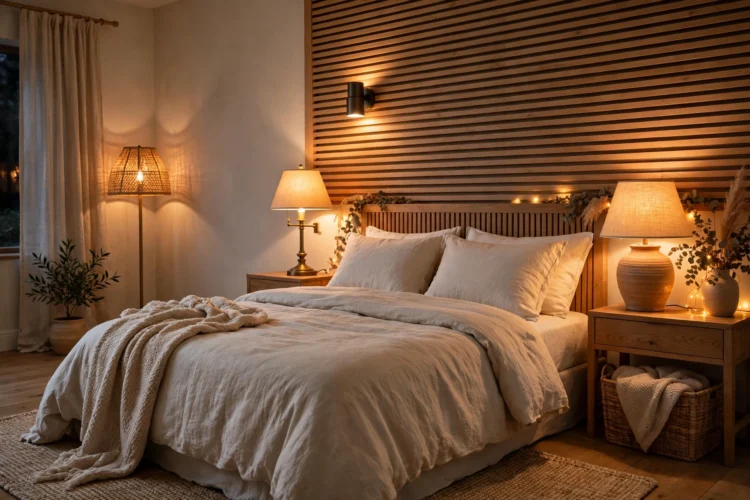
Texture does the decorating in a calm bedroom. A chunky knit throw, a woven rug underfoot, linen curtains, and a cotton quilt add depth without adding color chaos. Layer textures in the same palette family so the room feels rich but still restful, and let one natural material, like wood or rattan, repeat in two or three places to tie it together.
Hang curtains high and wide so they frame the window and soften daylight, and choose a rug large enough to step onto from both sides of the bed. If your floors are hard, a rug also cuts echo, which matters more than most people expect for a sleep friendly bedroom. Soft surfaces absorb sound, and a quieter room is a calmer room.

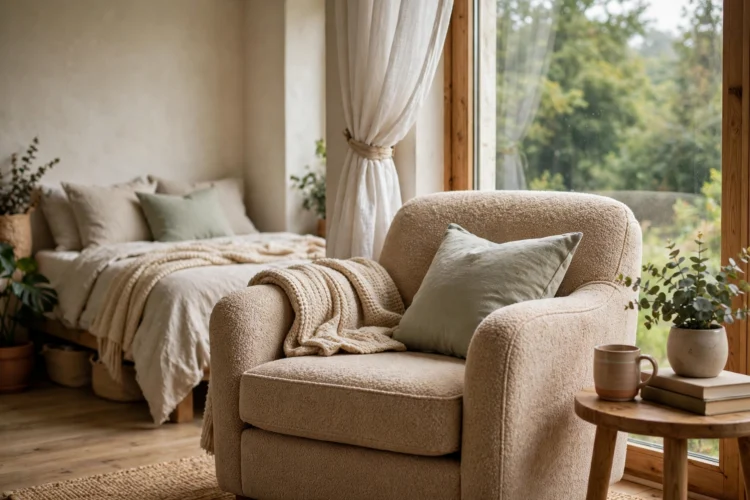
A restful primary bedroom needs a spot that is not the bed. A comfortable chair, a small side table, and a focused reading lamp create a wind-down zone for the last half hour before sleep. Place it near a window if you can, with a basket for books and a throw within reach, so the corner invites use rather than collecting laundry.
Keep screens out of this corner on purpose. When the chair becomes the place for a book and a cup of tea, your brain starts to link it with slowing down. That habit loop is the real point of the corner, more than the chair itself, and it helps the whole room feel like a retreat instead of another room with a television in it.
Calm fails when storage fails. Measure your clothes, shoes, and linens before buying organizers, and give each category a zone: everyday clothes at arm height, off-season items up high, and spare bedding in a lidded bin. Drawer dividers, matching hangers, and labeled boxes sound fussy, but they are what keep a tidy room tidy on a busy Tuesday.
Leave one empty drawer or shelf on purpose. That breathing room absorbs the new sweater, the gift set, or the extra blanket without pushing clutter onto surfaces. A restful primary bedroom is a maintained room, and maintenance gets easier when everything has a place and one place stays free.

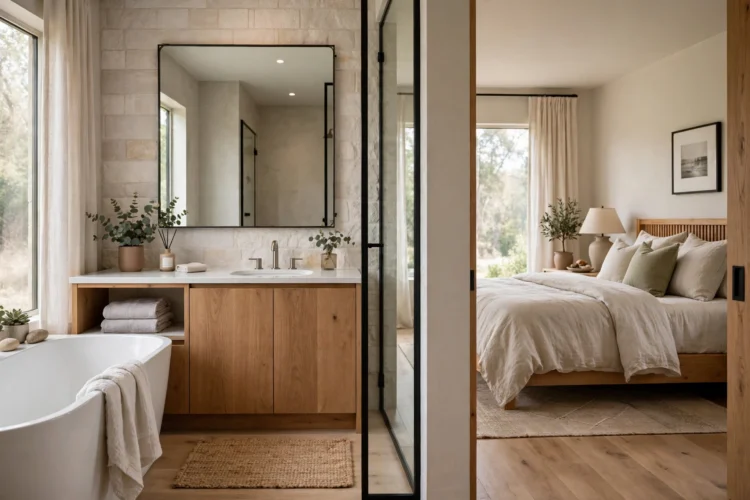
The en suite bathroom shapes how the bedroom feels, since the two rooms flow together morning and night. Carry the bedroom palette into the bath with matching towels, a shared wood tone, and lighting at the same warm temperature, so stepping between rooms feels seamless. Soft-close drawers, a clear counter, and a single scent from soap or a candle keep the bath as quiet as the bedroom.
If your bath needs its own refresh, start with the pieces you touch daily. These spa-like bathroom ideas show how layered light and natural texture calm a bath, while these bathroom paint color ideas help you match the bath walls to your bedroom palette. Finish with a clear mirror zone using these bathroom mirror ideas, and softer bathroom lighting ideas for evenings, and the whole suite will wind down together.
Finish the room with scent and sound, the two senses most bedrooms ignore. A single candle or a diffuser with a mild scent, used only in the evening, marks the shift from day to night. Keep the scent light and consistent, since a strong fragrance fights sleep instead of helping it. A white noise machine or a fan on low also masks street noise, which matters in busy neighborhoods and thin-walled homes.