Physical Address
304 North Cardinal St.
Dorchester Center, MA 02124
Physical Address
304 North Cardinal St.
Dorchester Center, MA 02124

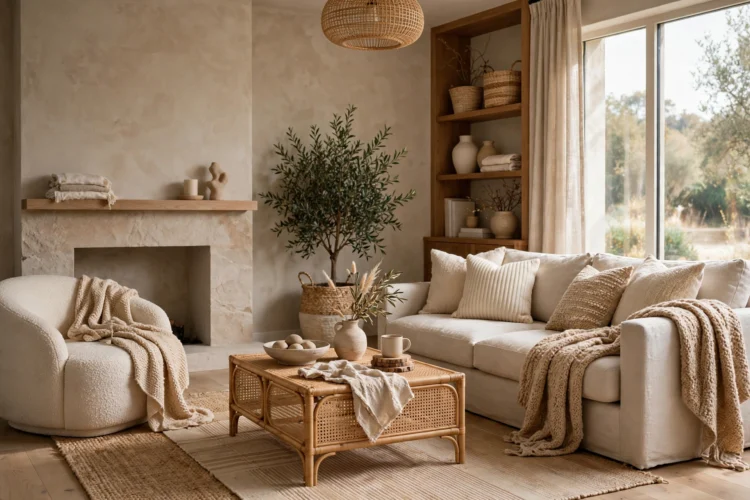
Neutrals go flat when every surface feels the same. Texture does the work color usually does, and a mix of soft, rough, and smooth finishes keeps a neutral room warm.
Neutral living room ideas work best when texture leads the design. A room in cream, beige, greige, and soft brown can feel calm and warm, or it can feel washed out, and the difference is almost always surface. Boucle catches light one way, jute another, leather darkens with use, and wood grain adds lines that paint cannot. Layer those finishes at different heights, from rug to sofa to wall, and neutrals start to feel rich instead of empty.
Choose a warm base before you buy anything else. Warm white walls, a beige or greige sofa, and a wood floor with visible grain give every later layer something to sit against. Cool gray walls can push a neutral room toward cold, especially in a north-facing space, so test paint swatches in morning and evening light. Once the base is warm, you can add cooler accents in small doses without losing the overall feeling. A warm base also makes it easier to swap cushions and throws by season without repainting.
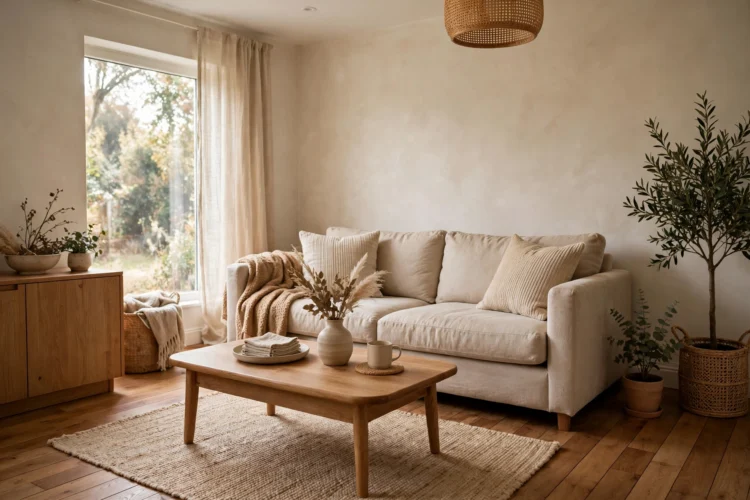
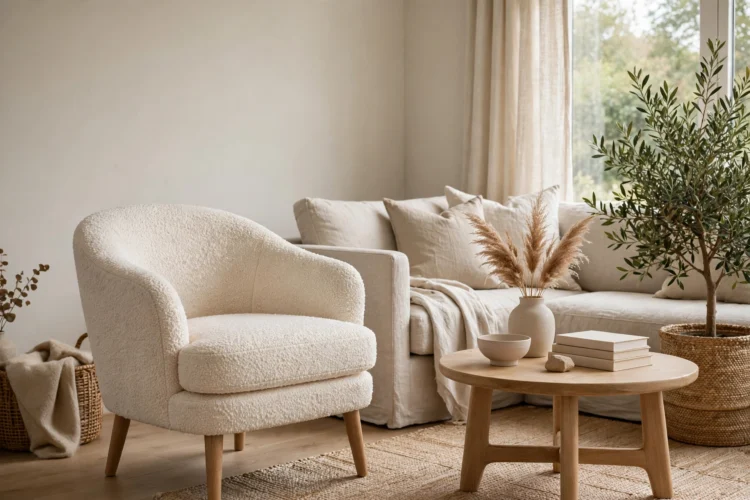
Boucle brings the softest texture in a neutral room, and a little goes a long way. One boucle chair, a pair of boucle cushions, or a boucle throw on a smooth leather sofa adds a cloud-like contrast that invites touch. Keep boucle away from high-traffic edges where it can pill, and pair it with a smoother fabric so the room does not feel fuzzy all over. In a small room, a single boucle accent chair near a window reads as a deliberate focal point rather than a trend purchase.
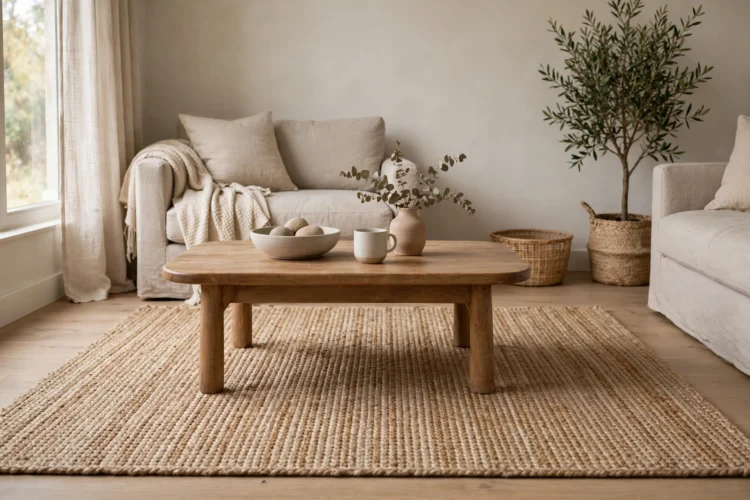
A jute or sisal rug grounds a neutral room with roughness that balances soft upholstery. Natural fiber rugs work under coffee tables, in reading corners, and in entry paths through the living room, and they hide dust better than a pale plush rug. Layer a smaller wool rug on top if bare feet want more softness, and keep the rug large enough for chair legs to rest on it. For floors that need a softer landing, these living room rug layering ideas show how to pair a flat base rug with a plush top layer.
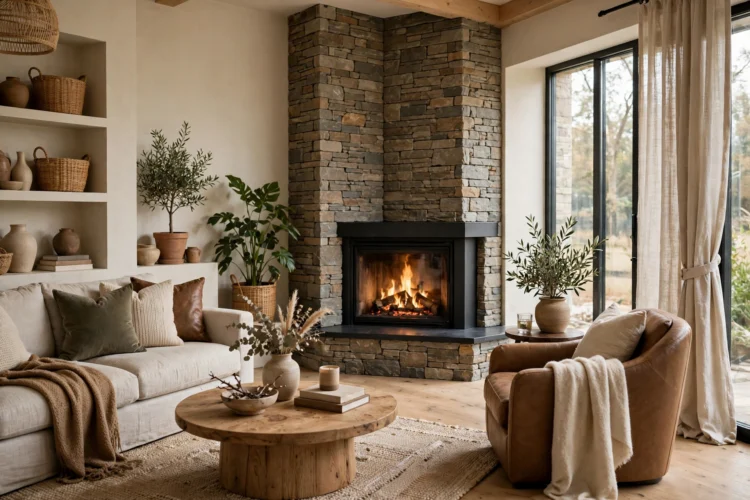
Leather adds depth that fabric alone cannot match. A cognac or tan leather chair darkens and softens over time, and that change becomes part of the room’s story. Pair leather with linen cushions and a wool throw so the seat does not feel hard or cold, and keep leather out of direct sun where it can dry and fade. One leather piece is often enough in a neutral room; two can work if they share a tone family and the rest of the room stays light.
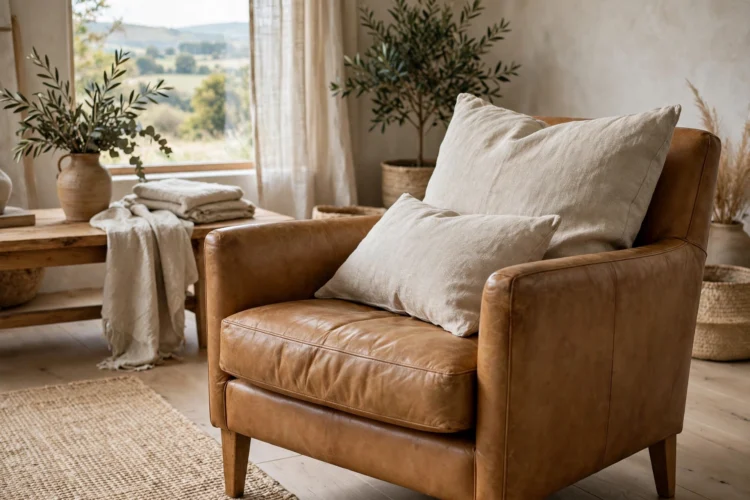
Wood grain gives a neutral room its lines. A walnut coffee table, oak shelves, or a reclaimed wood mantel adds pattern without adding color, and the grain reads clearly from across the room. Mix no more than two or three wood tones so the room stays calm, and repeat the darkest wood at least twice so it looks intentional. If your floors are pale, a mid-tone wood table will anchor the seating group better than another pale surface. Wood also pairs naturally with warm living room decor ideas that rely on natural materials rather than bright color.
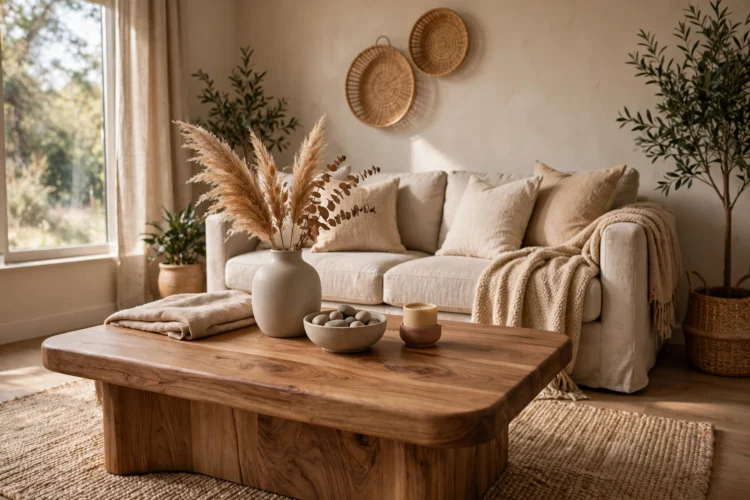
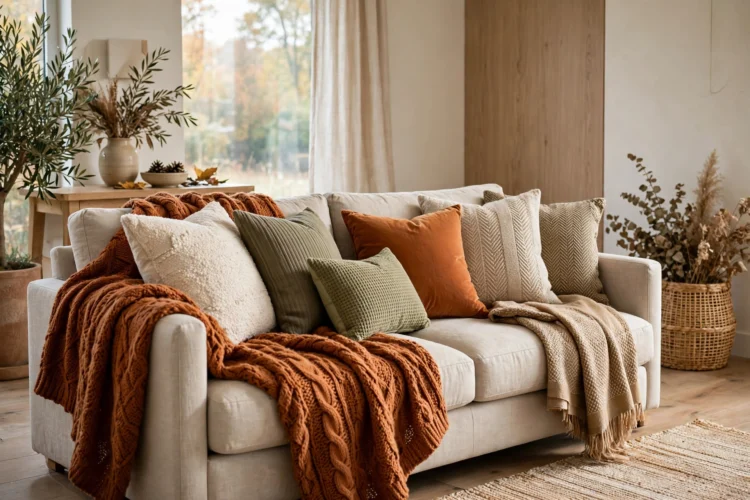
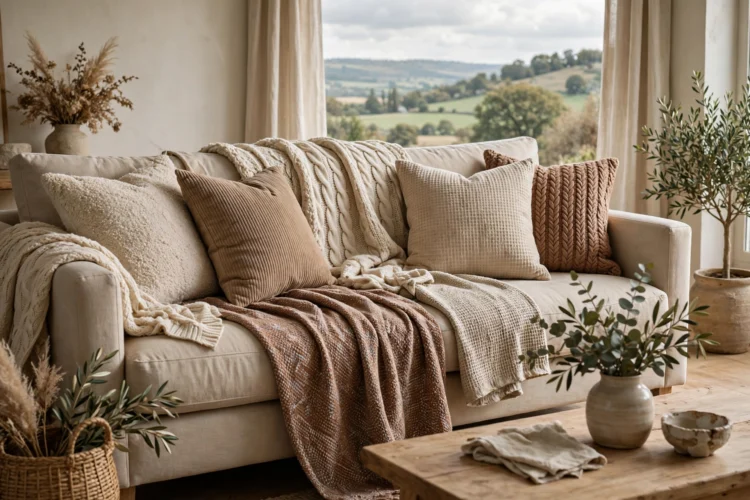
Cushions and throws are the fastest way to test texture in a neutral room. Stay inside one tone family, such as cream, oatmeal, and camel, and vary the weave: linen, knit, velvet, and cotton canvas side by side. Three to five cushions on a standard sofa is plenty, and a throw folded over one arm looks more relaxed than a throw spread flat. Change only the lightest layer when seasons shift, and keep the heavier knit for winter evenings when the room needs extra warmth.
Hard accents stop a soft neutral room from feeling too pillowy. A stone vase, ceramic bowls, a travertine side table, or brushed brass lamps add weight and a cool touch that makes the soft textures stand out more. Use metal sparingly, one finish repeated in two or three places, so it reads as a thread through the room. Ceramic pieces with a matte glaze suit neutral rooms better than high gloss, which can look stark against soft fabric.
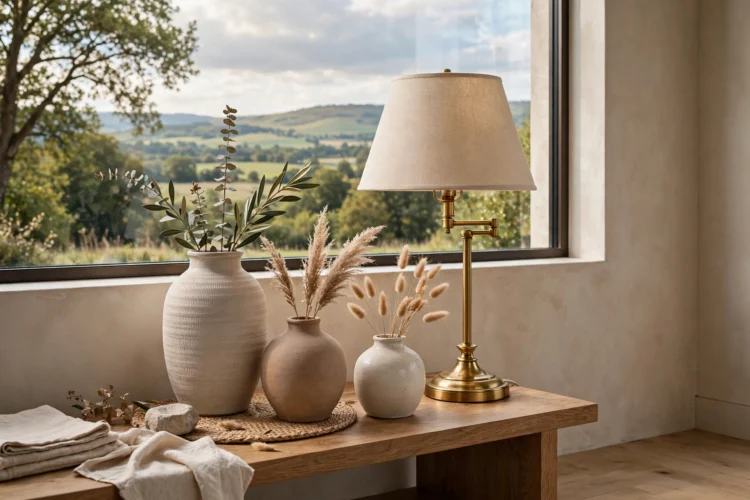
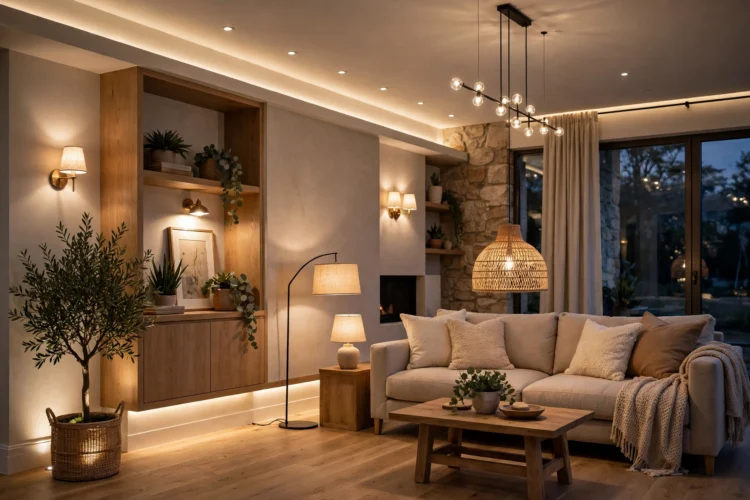
Light changes how every neutral texture looks. Warm bulbs, a lamp at sofa height, and a floor lamp near a reading chair will make beige and cream glow in the evening, while a single overhead light flattens the same room. Add dimmers where you can, and place lamps at two different heights so shadows create depth. If the room still feels flat after texture and light are layered, the answer is usually one more contrast, such as a darker wood frame or a charcoal cushion, rather than a new color. For seating that holds these layers together, see comfortable living room seating ideas and cozy neutral room ideas for arrangements that keep texture at the center.
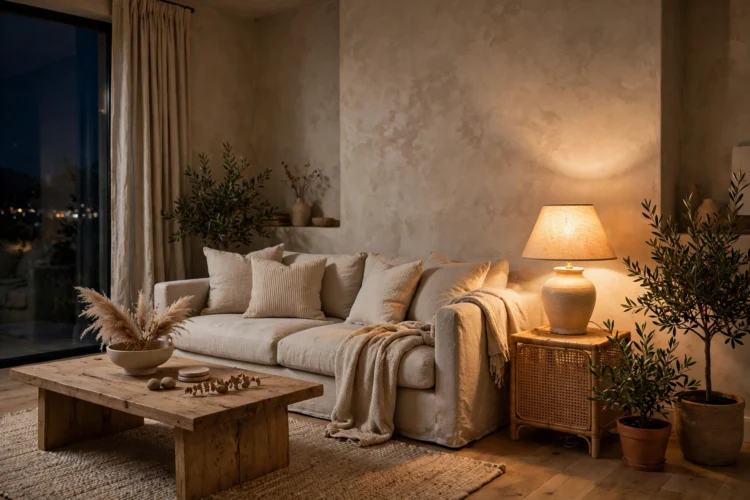
A warm neutral living room can drift toward pale and formless without one darker anchor. A walnut frame, a charcoal cushion, a dark wood side table, or a black metal lamp base gives the eye a resting point and makes the lighter textures around it look richer. Keep the dark accent to one or two pieces so the room stays calm, and repeat the dark tone in a small way, such as a frame and a vase, so it looks planned. This contrast is what stops beige from reading as blank, and it works in both small and large rooms.
Neutral room layering works best when the dark accent sits at a different height from the main seating, for example a dark picture frame above a pale sofa or a dark table beside a light chair. Step back and check the balance from the doorway, since a room that looks layered up close can still look top-heavy or bottom-heavy from the entrance. One well-placed dark piece usually fixes that balance without a new purchase.
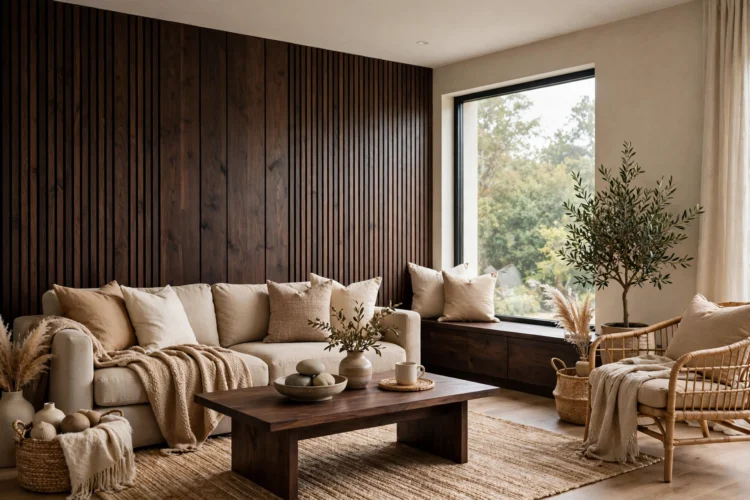
Seasonal swaps keep a neutral room feeling alive without repainting or buying new furniture. In winter, add a chunky knit throw, a wool cushion, and a heavier rug layer, and in summer swap those for linen cushions, a cotton throw, and a bare wood table surface. A boucle living room texture, such as a boucle cushion cover or a small boucle stool, can join the winter layer and leave again in summer, which keeps the texture feeling fresh rather than permanent. Store off-season textiles in a basket or closet so the swap takes minutes.
Change only the top layer each season and leave the sofa, rug base, and wall color alone, since those foundations are what make neutrals timeless. A new cushion color inside the same tone family, such as moving from cream to camel, is enough to signal a new season. This habit also protects the budget, because the room evolves through textiles instead of through large purchases.