Physical Address
304 North Cardinal St.
Dorchester Center, MA 02124
Physical Address
304 North Cardinal St.
Dorchester Center, MA 02124

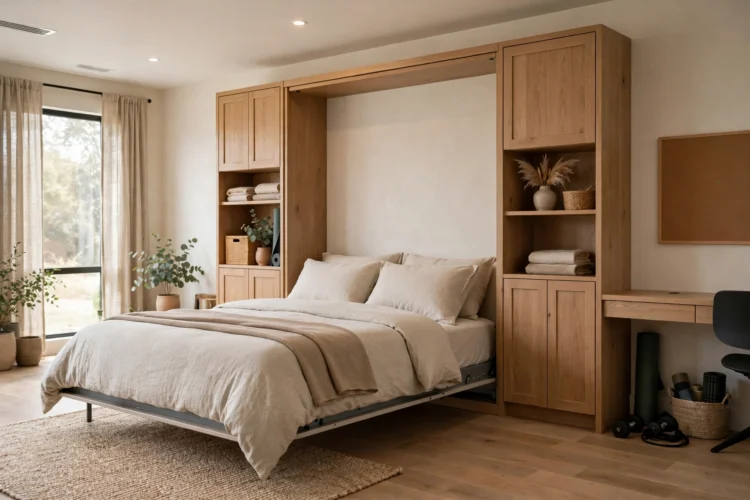
A murphy bed lets one room do two jobs: a guest bedroom at night and an office, playroom, or lounge by day. These 10 ideas show how to hide the bed well.
Murphy bed ideas start with the wall, not the mattress. The wall must carry the weight of the bed and frame, and it must have enough clear floor space in front for the bed to fold down. Measure both before you order anything.
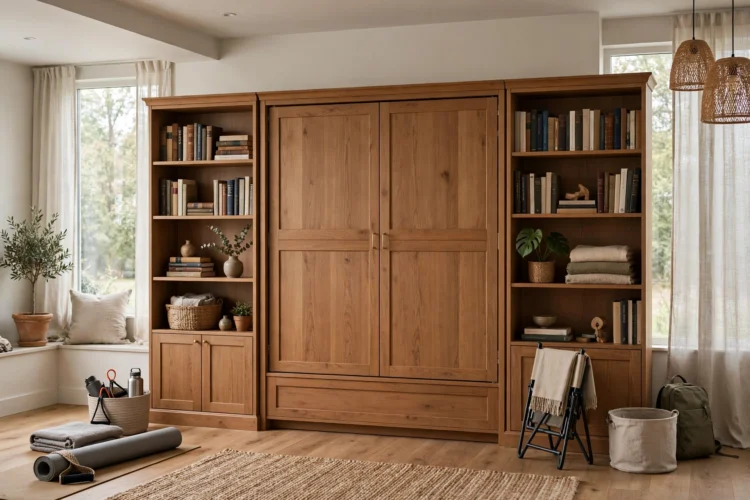
A cabinet-style wall bed hides behind doors that match your trim or bookcases, so the room reads as a living room or office when the bed is up. Shaker-style doors suit most homes, and a painted finish that matches the wall helps the cabinet disappear. Leave a few inches of clearance on each side so the doors open without scraping.
Bookcases on both sides of the bed cabinet make the unit look built in and give you storage for books, files, and decor. The shelves also hide the side gaps of the mechanism, which is the part that usually gives a wall bed away. Keep heavy items low on the shelves so the unit stays stable.
A wall bed that folds down over furniture you already use saves more space than a bed alone, because the same floor area serves two purposes around the clock.
A sofa attached to the bed frame stays in place when the bed folds down, so guests sit on the sofa by day and sleep above it at night. Check the sofa depth: it must clear the folded bed, and the mattress must fold without crushing the sofa cushions. This setup suits studios and one-bedroom homes where a separate guest room is not an option.
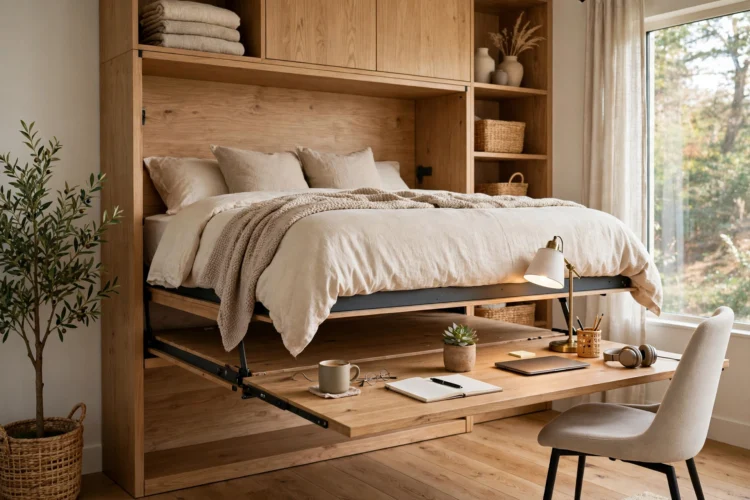
Some wall bed units carry a desk on the front that stays level as the bed comes down, so you never clear your work to host a guest. This is the best option for a home office that doubles as a guest room, and it beats moving a desk every time someone visits. For the desk area itself, a small bedroom layout idea that frees floor space helps you place the desk where it does not block the bed swing.
A wall bed that is too big for the room leaves no space to walk around it once it is down. Size the bed to the guests you actually host, not the guests you imagine.
A full bed sleeps two adults and needs about 60 inches of width and 80 inches of floor depth when open. It fits most spare rooms and offices without crowding the door. A queen needs more swing space, so measure the open footprint with tape on the floor before you commit.
A twin wall bed needs only about 42 inches of width, which leaves room for a desk or dresser beside it. It suits a child’s room that doubles as a playroom, a studio, or a home office that hosts one guest at a time. A twin unit also costs less and weighs less, which simplifies installation.
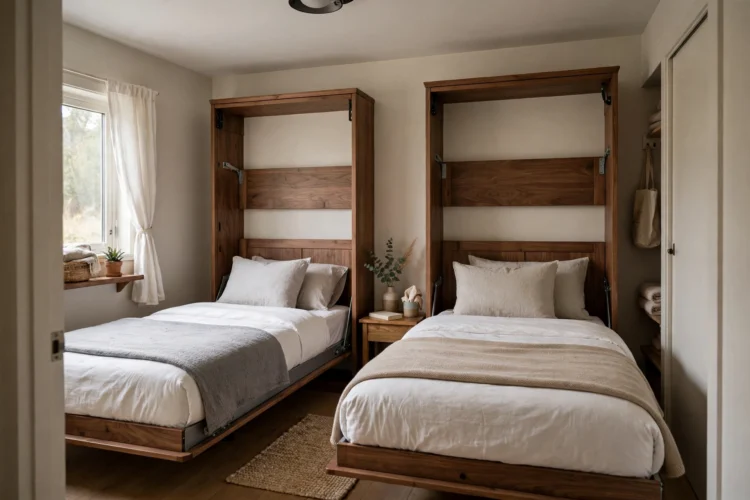
Guests remember a wall bed by how they slept, not by how clever the cabinet looked. A thin, cheap mattress undoes the whole idea.
Most wall bed mechanisms accept mattresses 8 to 10 inches thick, which is enough for a comfortable night. Memory foam works well because it folds without damage and needs no box spring. Test the mattress on the frame before guests arrive, and check that the bed closes with bedding attached or plan to store bedding in the cabinet.
A clip-on or wall-mounted light on each side of the bed lets guests read without waking the room, and a small shelf or pocket holds a phone, book, and glass of water. These details cost little and make a wall bed feel like a real bedroom. Pair them with a simple bedside setup like the ones in nightstand ideas beyond the matching pair if the room has space for a small table.

A wall bed mechanism needs a test run long before a guest tries it for the first time. Open and close the bed fully at least three times after installation, and listen for grinding, sticking, or uneven movement. Check that the mattress stays strapped in place when the bed is vertical, and that the locking mechanism holds without you holding it. If anything feels stiff, adjust the piston tension following the manual rather than forcing the frame.
Walk the open footprint after the test. Lie on the bed and check that you can sit up without hitting a shelf, and that the door still opens with the bed down. Clear the swing path of rugs with thick pile, low tables, and anything a guest could trip over in the dark. Leave a small basket of fresh bedding, a towel, and a phone charger inside the cabinet so guests find everything without asking. A bed that opens smoothly and a room that is ready on arrival is what turns a clever mechanism into a room guests actually enjoy.
Once the mechanism passes the test, the room is ready for real use. The bed becomes a normal part of the house instead of a project you worry about each time someone visits.
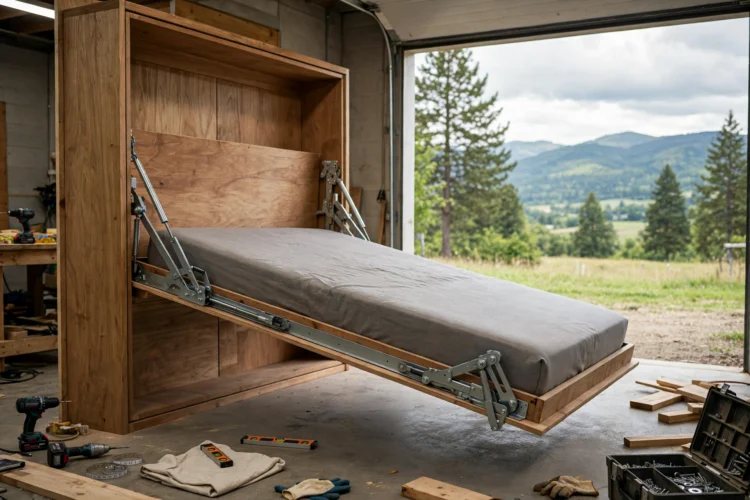
A multipurpose room fails when the bed cabinet blocks the room’s daytime job. Plan the daytime layout first, then fit the bed around it.
If the room is an office by day, put the bed cabinet on the wall opposite the desk so the desk stays usable. If it is a playroom, put the cabinet where toys already live so the play area stays open. A cabinet that faces the door makes the bed the first thing guests see, which is fine for a dedicated guest room but wrong for an office. Storage planning matters here too, and bedroom wardrobe ideas show how a cabinet can hold guest clothes as well as bedding.
A rug under the open bed marks the sleeping zone and protects the floor from the bed legs. Pick a low-pile rug that the bed can fold over without bunching, and size it to the open bed plus a step of walking space on each side. When the bed is up, the rug still anchors the daytime furniture, so the room never looks half empty. A clean platform look also helps the room feel calm by day, as in platform bed ideas for a clean, modern look.
Start with the wall and the open footprint, then pick a bed size and a daytime job for the room. Get those right and the wall bed earns its place.