Physical Address
304 North Cardinal St.
Dorchester Center, MA 02124
Physical Address
304 North Cardinal St.
Dorchester Center, MA 02124

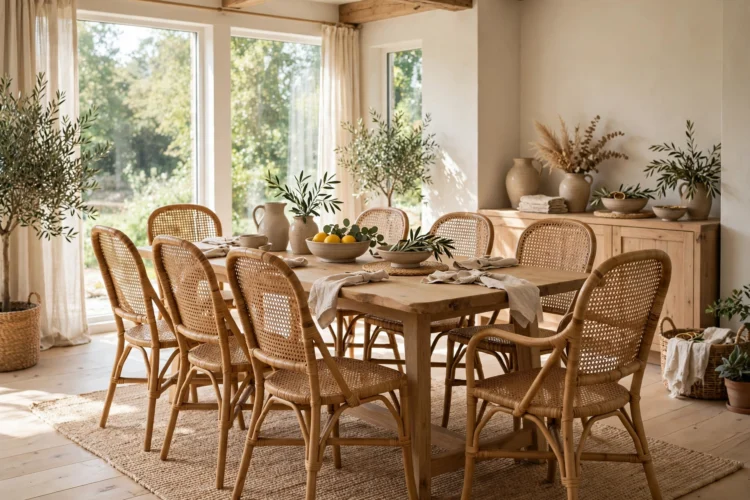
Nine rattan and cane dining chair ideas compared for durability and comfort, with the tables and rooms each style suits best.
Rattan dining chairs bring easygoing texture to a room that can feel stiff. Cane webbing, bentwood curves, and woven seats soften a hard dining table, and the natural material warms up white walls and dark wood alike. Not every rattan chair suits every table, though, and some weaves hold up to daily use while others sag within a year. This guide compares nine rattan dining chairs for durability and comfort, and matches each style to the tables and rooms it suits best. Pick the weave that fits your meals, and the chairs will look good long after the novelty wears off.
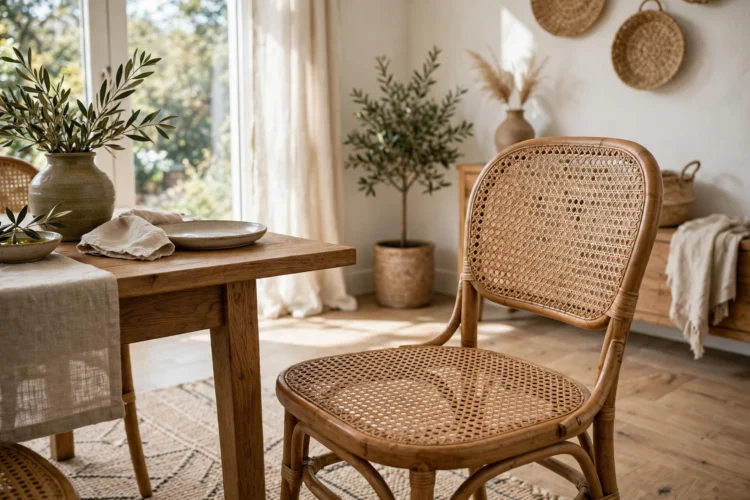
Cane webbing is the look most people picture when they hear rattan: an open hexagonal weave stretched across a wooden frame. Cane dining chairs breathe in warm rooms and flex slightly under weight, and they give a dining chair a light, airy feel that suits a bright dining room. The weave also shows the chair construction, so good joinery matters more here than on a solid seat.
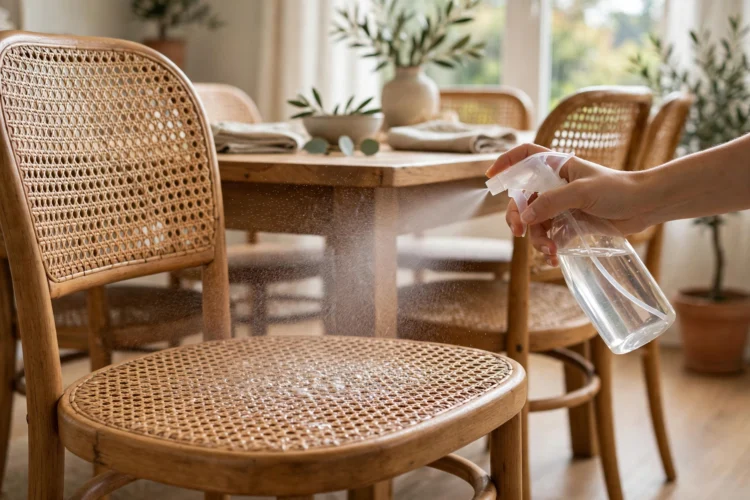
Check the cane before you buy by pressing the center of the seat. It should give a little and spring back, not sag or crackle. Cane lasts for years when it stays dry and out of strong sun, and it tightens again with a light mist of water if it ever loosens. Keep cane chairs away from radiators, which dry the fibers and make them brittle.
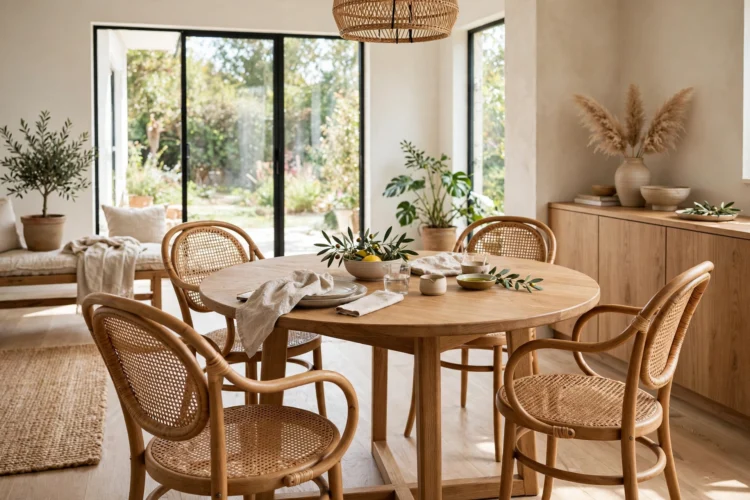
A bentwood frame starts as a straight piece of wood steamed until it bends, which gives the chair its curves without joints at the stress points. That matters at a dining table, because the chair takes weight shifts, pushes, and pulls every day. Bentwood dining chairs feel solid in a way a nailed-together chair rarely does.
Look for a frame that feels rigid when you twist it gently in the shop. A little flex is normal, but a wobble means the joints are loose. Bentwood suits a round dining table especially well, because the curves echo the table shape and the chairs tuck in neatly around it.
A woven seat spreads weight across many strands instead of one panel, which makes it comfortable for long meals. The weave has a little give, so the seat feels softer than wood without needing a cushion. Daily use suits a tight weave better than an open one, because the strands support each other and resist sagging.
Run your hand across the seat before you buy. The weave should feel even, with no loose ends or sharp strand tips poking up. A cushion helps on a woven seat, and a thin one in a washable fabric keeps the texture visible while adding comfort. Woven dining chairs suit a family table that gets used three times a day.
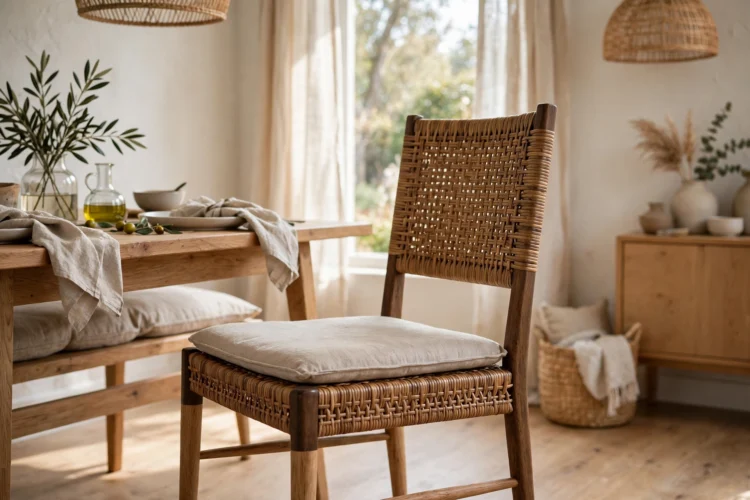
A rattan armchair at each end of the table gives the hosts a little more room and a little more presence, and the arms make long meals easier on the shoulders. The open weave keeps the armchair from looking heavy, which matters because armchairs take up more floor space than side chairs.
Measure the arm height against the table apron before you buy, because arms that hit the table keep the chair from tucking in. Leave enough space behind the chair to pull it out without hitting a wall or sideboard. Two rattan armchairs and four matching side chairs give a dining room a finished, deliberate look.
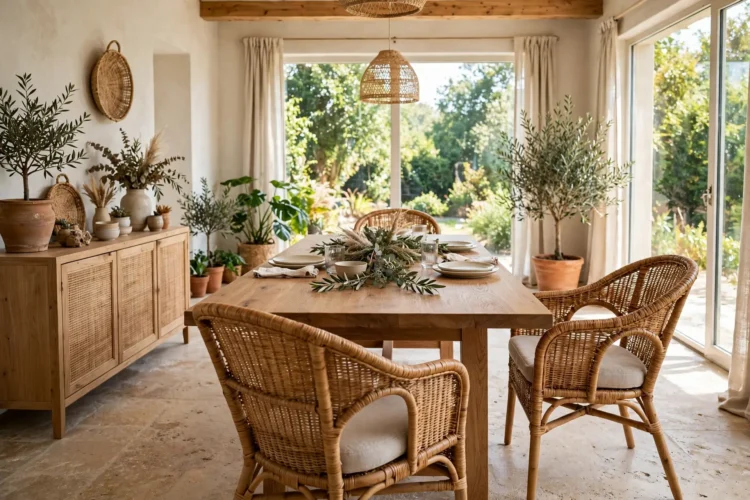
Natural rattan is not the only option. A dark stain turns the same weave into a moody, grounded piece that suits a dark dining table and a room with deep wall color. The stain hides scuffs and food marks better than pale rattan, which makes it a practical choice for a table that sees red sauce and coffee.
Check that the stain reaches into the weave, not just the surface, because a surface-only stain wears off where hands grip the chair. Dark rattan pairs well with brass and black metal, and it keeps a room with a farmhouse dining table from feeling too pale and washed out.
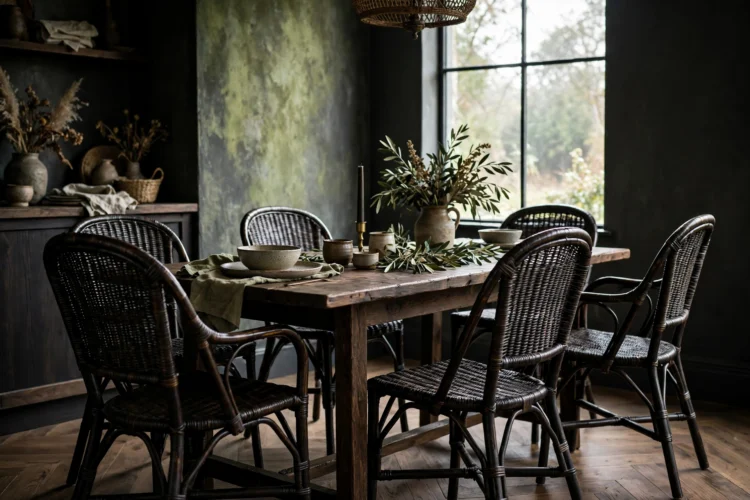
Natural rattan in a pale honey tone is the lightest-looking dining chair you can buy, and it suits rooms that need warmth without weight. The pale finish bounces light around a small dining room, and the texture adds interest to a plain white or pale grey wall. It is the easiest rattan to match with other furniture, because the tone sits near most light woods.
Pale rattan shows marks more than dark rattan, so keep a soft brush handy for dust and a damp cloth for spots. Avoid placing pale rattan in direct sun for long stretches, because the color fades unevenly. A pale rattan chair with a linen cushion reads calm and collected, and it suits a coastal or Scandinavian dining room best.
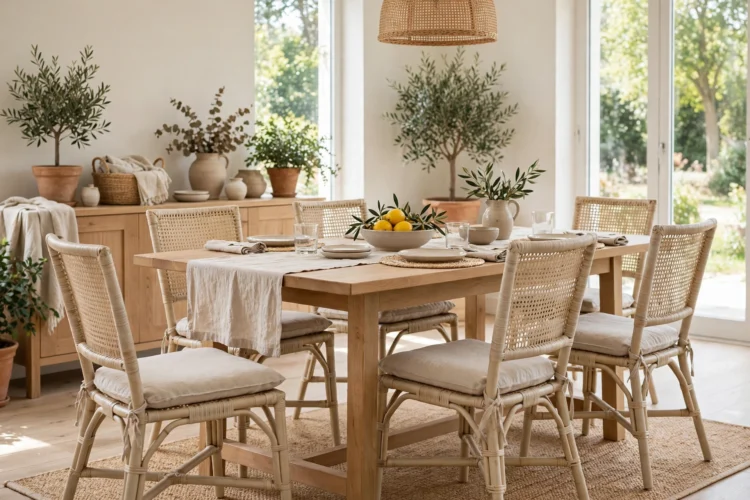
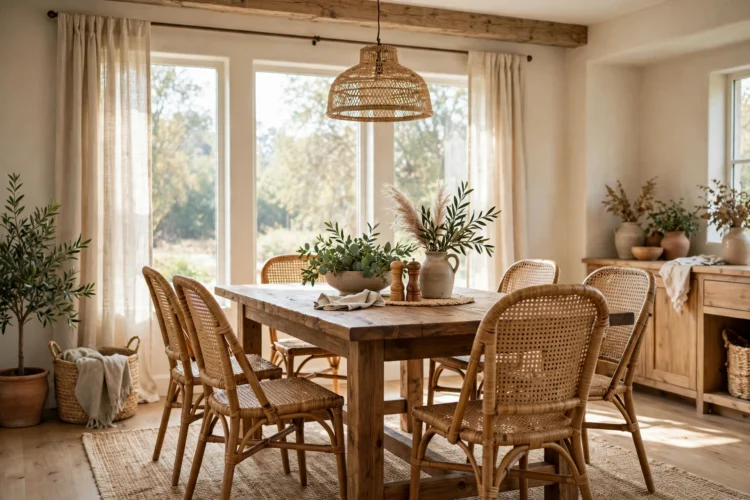
Rattan chairs and a solid wood table are a natural pair, because the weave softens the hard tabletop and the wood grounds the light chairs. The mix works best when the wood tones sit near each other, so a honey rattan chair suits a warm oak table better than a dark walnut one. The contrast should feel calm, not clashing.
Test the pairing by looking at the room from the doorway, where guests first see it. If the chairs and table read as one group, the tones work. A farmhouse dining room shows this mix at its best, with rattan chairs softening a long wood table and a simple centerpiece tying the two together.
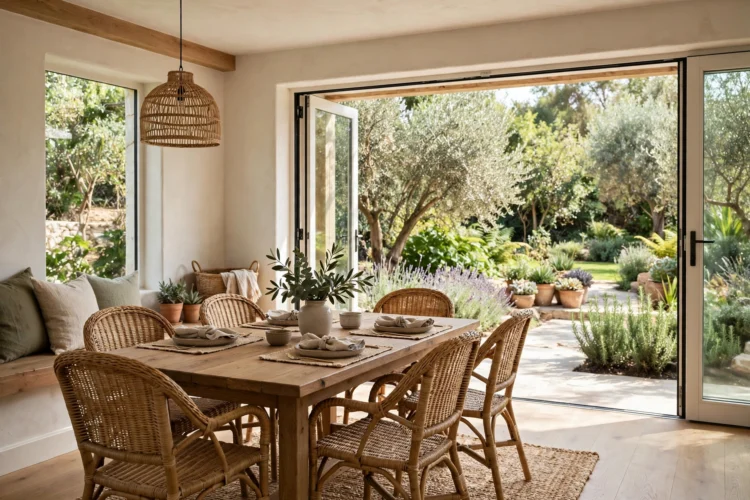
Outdoor-grade rattan uses synthetic strands woven over an aluminum frame, which makes it tougher than natural cane and immune to humidity. It suits a dining room that opens onto a garden, a kitchen diner with steam and splashes, or a household that wants chairs it never has to baby. The weave looks close to natural rattan at a glance.
The tradeoff is feel. Synthetic rattan feels firmer and less warm to the touch than natural cane, and it rarely ages with the same patina. Check the frame before you buy, because a steel frame can rust in humidity while aluminum stays clean. Outdoor-grade rattan also moves outside for summer parties, which doubles its value.
Rattan chair care comes down to moisture. Cane lasts for years with simple attention to it, and most of that attention is about moisture. Dust the weave with a soft brush weekly, wipe it with a barely damp cloth monthly, and mist it lightly if the cane ever feels loose or sounds dry. The fibers tighten as they dry, which is the oldest trick in cane care.
Keep cane chairs out of direct sun and away from radiators, because heat and dry air make the fibers brittle. Fix a sagging seat early by misting it and letting it dry in the open air, before the sag becomes a tear. With that little routine, a good rattan chair outlasts most dining chairs in the house.
Match the chair to the table and the room, not to a photo. Cane webbing suits bright rooms, bentwood suits daily use, and dark stain suits busy tables. Get the pairing right, and the chairs will earn their place at every meal.