Physical Address
304 North Cardinal St.
Dorchester Center, MA 02124
Physical Address
304 North Cardinal St.
Dorchester Center, MA 02124

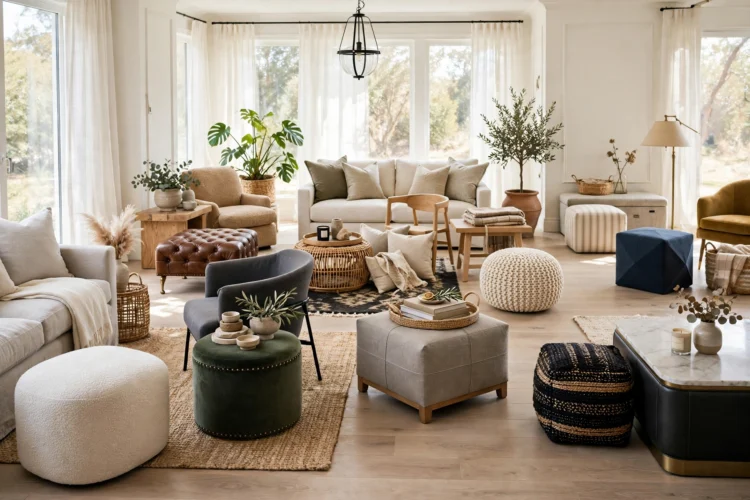
Nine ottoman styles that replace a coffee table with a footrest, hidden storage, and extra seating in one soft piece.
Living room ottoman ideas beat the standard coffee table in rooms where comfort matters more than a hard surface. An ottoman gives you a footrest, a soft edge for kids and shins, and often hidden storage inside. The trick is picking the right shape and size for your sofa, then styling the top so it still works for drinks and books. These nine ideas cover storage, small rooms, leather, and statement pieces, so you can swap the table without losing the function it gave you. This is the simplest ottoman coffee table alternative, because you swap one piece and keep the whole seating arrangement in place.
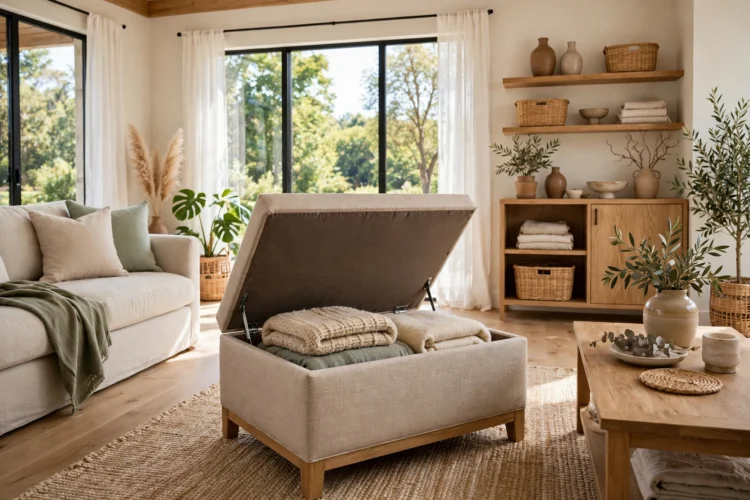
Every living room collects remotes, chargers, coasters, and board games, and a storage ottoman swallows all of it. A storage ottoman living room setup works because the lid hides the clutter instead of organizing it in plain sight. Look for a hinged lid that stays open on its own and a base deep enough for a throw blanket. The lid should feel firm when you sit on it or rest a tray on it. Measure the inside before you buy, because some ottomans look deep and hold almost nothing. Keep one small basket on top for the two remotes you actually use, and everything else goes inside. The room looks calmer the same day you bring it home.
In a tight room, the ottoman has to earn its floor space twice. A cube ottoman around 18 inches square tucks under a console or beside the sofa when you do not need it. Two small cubes beat one large ottoman in a small room, because you can split them for extra seats and push them together for a footrest. Living room ottoman ideas for small spaces work best when the piece moves easily, so check the weight before you commit. If you cannot lift it with one hand, it will stay where it lands and start to feel like an obstacle.
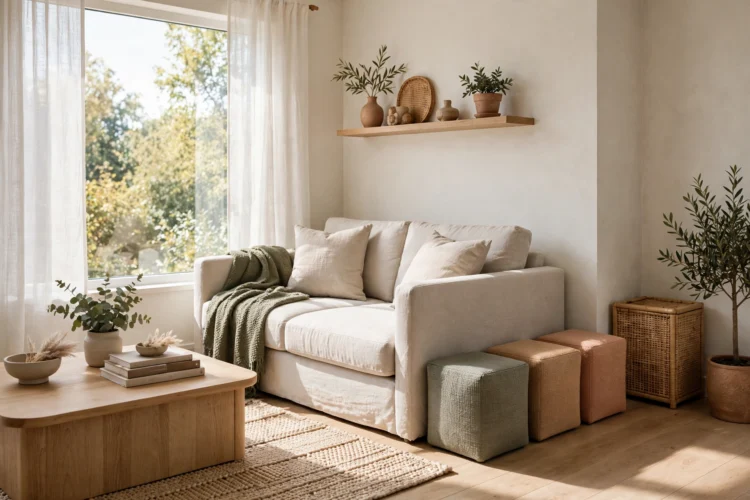
Two matching cubes are the most flexible seating in a living room. Pull them out when friends visit, push them together as a coffee table stand-in, or slide one beside the sofa as a side table with a tray. Pick cubes in a performance fabric if you have kids or pets, because they will get sat on, spilled on, and dragged across the floor. A pair in a solid color reads as intentional, while two different patterns can look like leftovers. The accent chairs in your room set the tone, so match the ottoman fabric weight to the chairs, not just the color.
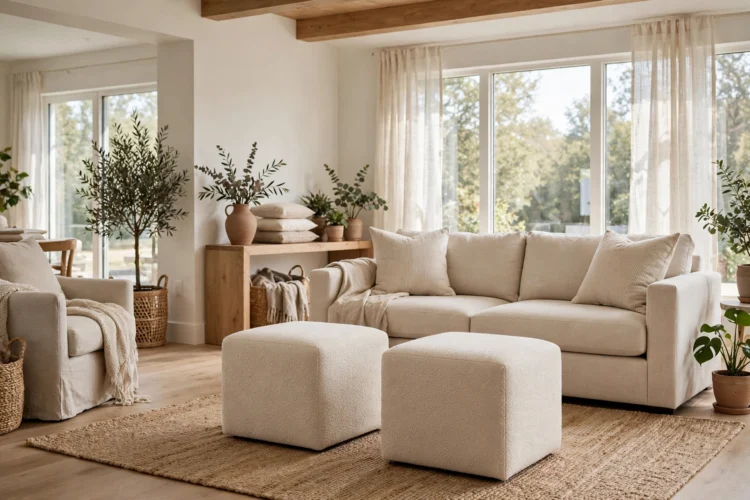
A single oversized ottoman, roughly two thirds the length of your sofa, can replace a coffee table completely. It turns the whole center of the room into a soft surface for feet, books, and trays. This works best with a sectional or a long sofa, where the ottoman mirrors the seating line. Add a large wooden tray for drinks and a smaller tray for the remote, and the top stays organized. The catch is the footprint, so measure the walking path around it and keep at least 18 inches clear on the sides people use most.

Leather is the practical choice when the ottoman will take daily abuse. Spills wipe off, claws leave less damage than they do on woven fabric, and the surface ages into a patina instead of looking worn out. A leather ottoman in cognac or dark brown warms up a pale room, and it pairs well with fabric sofas because the textures contrast. If the room already has a leather sofa, pick an ottoman in a different leather tone or a fabric, so the room does not turn into a matching set. Condition the leather twice a year and it will outlast the sofa.
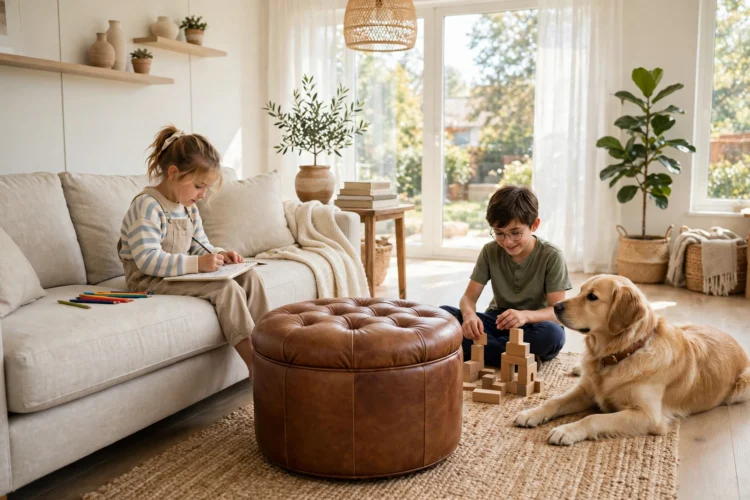
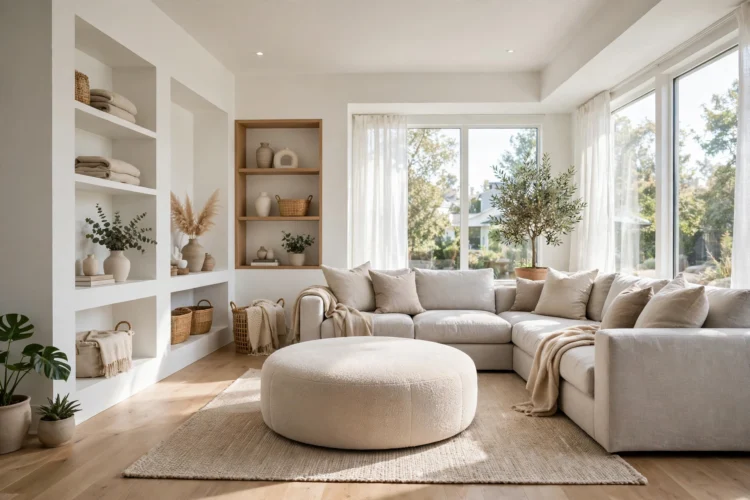
Rooms full of rectangles, sofa, rug, TV, shelves, feel stiff, and a round ottoman breaks that pattern in one move. The curve gives the eye somewhere soft to rest and makes the walking path around it easier, because there are no corners to bump into. A round ottoman works well in front of a curved sofa or beside a round side table, but it also works alone in a square room that needs one soft shape. Keep the diameter under 36 inches or it will dominate the seating group. A tray on top needs to be round too, or it will slide around.
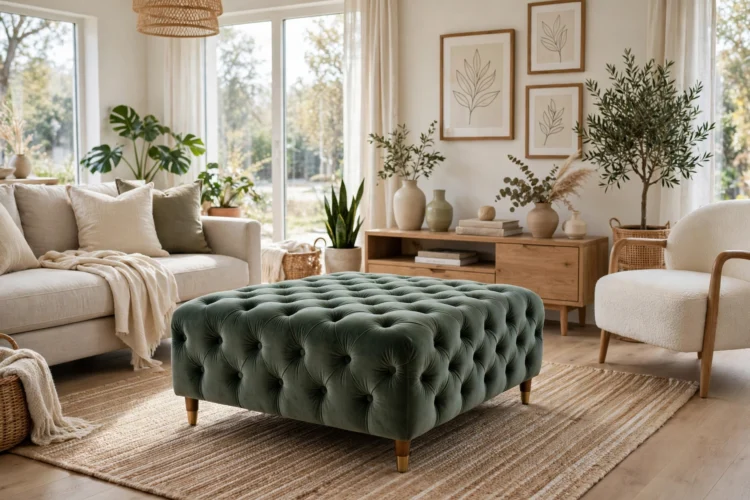
Tufting turns an ottoman from a footrest into the best-dressed piece in the room. Deep button tufting in velvet reads formal, while a shallow tuft in linen reads relaxed. The trade-off is cleaning, because crumbs collect in the tufting, so keep a small brush nearby if you eat in the living room. A tufted ottoman suits a room that already has one formal note, like a framed mirror or a tailored sofa. If everything else is casual, a tufted piece can look like it wandered in from another house.
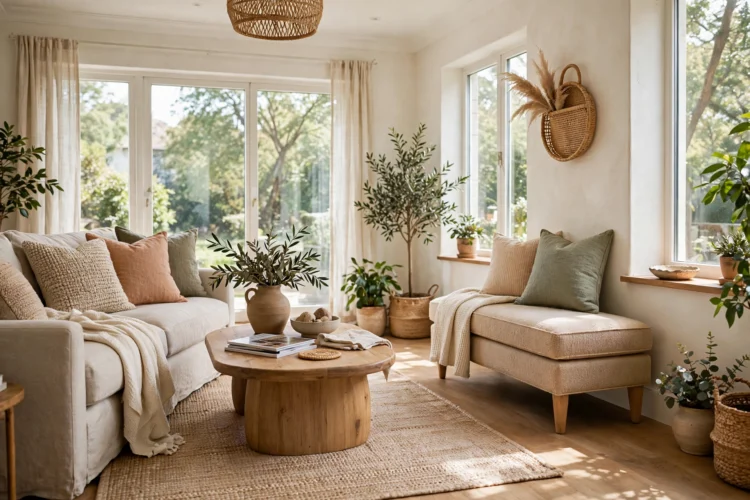
A long bench ottoman, about 48 inches wide, works as a footrest for two people and as a spare seat when the room fills up. Place it across from the sofa instead of beside it, so it faces the seating and reads as part of the group. A bench with short legs looks lighter than one that sits on the floor, and the gap underneath keeps the room feeling open. This is the best choice for a cozy living room that hosts game nights, because it slides out of the way when the board comes out and slides back when everyone sits down.
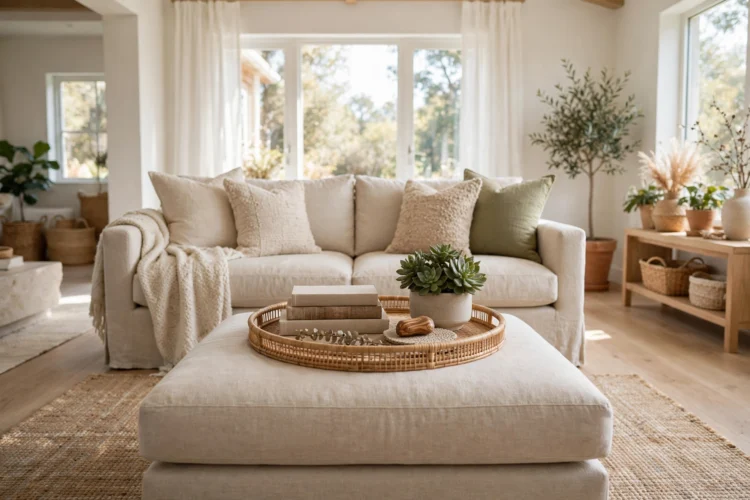
An ottoman fails when its top gets so styled that nobody dares put their feet on it. An upholstered ottoman footrest invites feet up in a way a hard wooden table never will, and the soft top is kinder to shins in a room people walk through all day. Keep the rule simple: one tray, one low object, and nothing else. The tray holds drinks and the remote, the low object is a small plant or a stack of two books, and the rest of the surface stays free for feet. A tray with handles is easy to lift off when you want the whole top clear. If you are setting up a living room layout without a TV, the ottoman top becomes the visual center, so pick a tray in wood or metal that matches the room instead of plastic.
Start by measuring your sofa and the walking path around it, then pick the ottoman shape that fits the gap. In the ottoman vs coffee table debate, the ottoman wins on comfort and storage, while the table wins only on a flat, hard surface for drinks. A storage cube, a leather bench, or one oversized piece can all replace a coffee table, and the right one will get used every single day. Measure twice, buy once, and let the ottoman earn its place in the center of the room.