Physical Address
304 North Cardinal St.
Dorchester Center, MA 02124
Physical Address
304 North Cardinal St.
Dorchester Center, MA 02124

The television wall is the hardest wall in the living room to decorate. Treat it as a design problem with a spectrum of answers, from camouflage to celebration.
TV wall ideas living room owners actually use fall on a spectrum. At one end, the television disappears into a gallery wall or behind cabinet doors. At the other end, it becomes the centerpiece of a built-in wall unit that looks designed rather than accidental. Most rooms land somewhere in the middle, and the right spot depends on how much you watch, how big the screen is, and whether the wall is the room’s natural focal point or just the only wall that fits a sofa opposite it.
Start with the viewing basics before the decorating. The center of the screen should sit roughly at eye level from your seated position, which usually means the mount goes lower than people expect. Sit on the sofa, measure your eye height, and mark the wall before you drill anything. A screen mounted too high causes neck strain and makes the whole wall feel top-heavy.
This single decision shapes every other choice on the wall. Hiding the TV suits rooms where the television is used occasionally and the fireplace, art, or window deserves the spotlight. Showing it off suits dedicated media rooms and households where the screen runs daily, since camouflage that gets opened and closed constantly becomes an annoyance rather than a feature.
Be honest about your household’s habits. A camouflage television wall with art that slides aside sounds elegant, but if the TV runs every evening, the sliding panel will spend most of its life open anyway. In that case a clean built-in or a well-composed gallery wall serves you better than a hiding mechanism you stop using after a month.
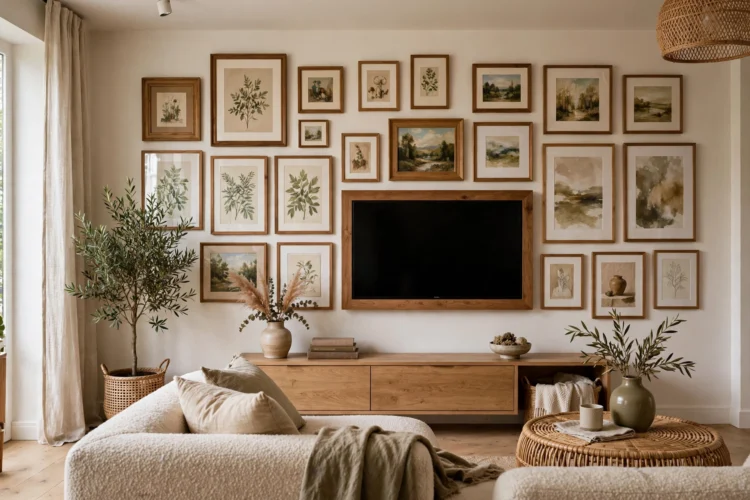
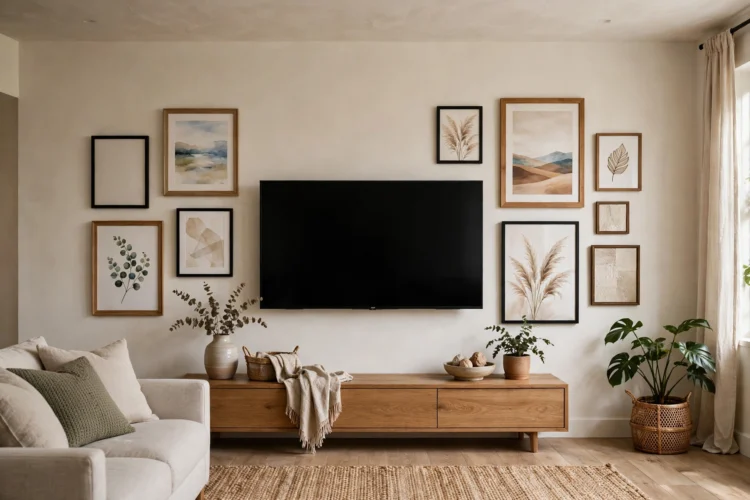
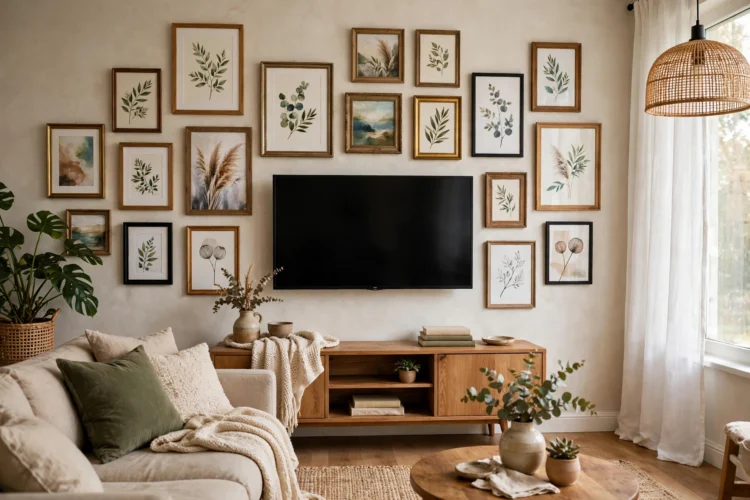
A gallery wall around tv works because the black rectangle stops reading as a screen and starts reading as one more frame among many. Mix frame sizes, art styles, and a few three-dimensional pieces like small shelves or woven hangings, and keep the spacing tight, about two to three inches between frames, so the arrangement reads as one composition rather than scattered pictures.
Build the gallery around the TV rather than fitting the TV into a finished gallery. Hang the television first, then arrange frames outward from it, keeping larger pieces at the edges to balance the screen’s visual weight. A consistent frame color or a limited palette ties mixed art together, and the same balance principles appear in bedroom wall molding ideas, where repeated trim creates order across a whole wall.
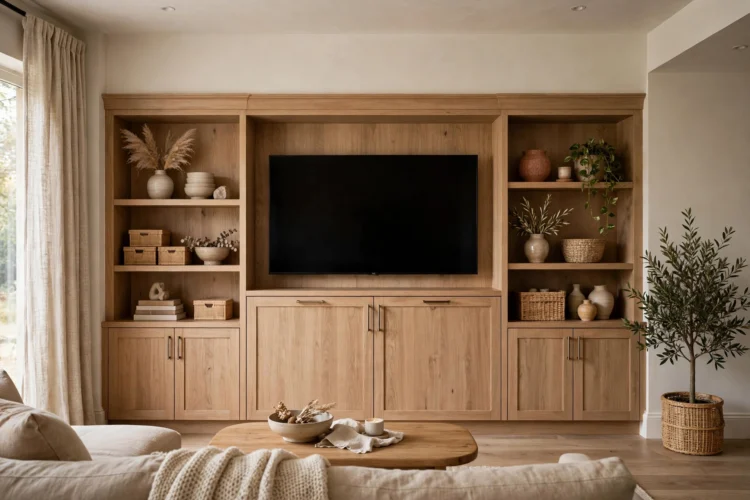
A tv built-in wall unit is the most polished answer to the television wall, and it earns its cost by adding storage at the same time. Flanking cabinets hide consoles, game systems, and media collections, while open shelves above or beside the screen hold books and objects that soften the electronics. The television sits in a recess sized for it, so the wall reads as furniture rather than a screen bolted to drywall.
Measure the television plus ventilation space before ordering or building anything. Screens run warm, and a tight recess without airflow shortens their life and traps heat behind closed doors. Leave an inch or two on each side and a vent path at the back, and plan cable routes through the cabinet so nothing dangles. If a full built-in is out of budget, a pair of tall bookcases flanking a low console gives a similar framed effect for far less.
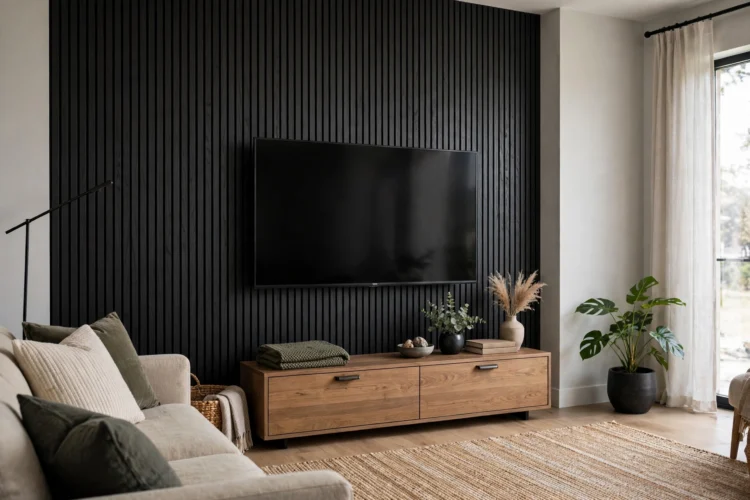
A tv accent wall in a deep color does something counterintuitive: it makes the black screen less noticeable. Against a white wall, a television stands out as a dark rectangle. Against charcoal, navy, or deep green, the screen blends into the wall when off, and the wall itself becomes the feature when the TV runs. The effect costs one can of paint and a weekend afternoon.
Keep the rest of the room lighter so the dark wall reads as an accent rather than a cave. Pale sofa cushions, a light rug, and warm lighting keep the balance, and a matte paint finish avoids glare from lamps and windows. If painting feels permanent, removable panels or peel-and-stick wood planks give the same dark backdrop without the commitment, and they come off cleanly when you move.
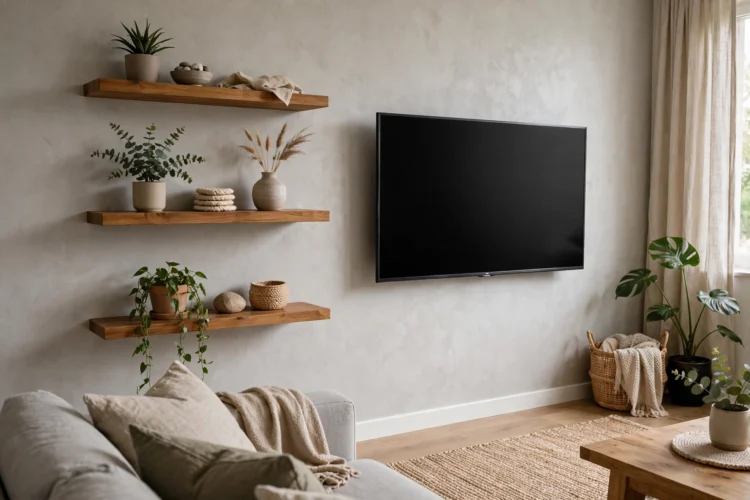
Floating shelves beside and below the television give you display space without the bulk of a full unit. Two shelves on each side hold books, plants, and objects, while a single long shelf under the screen hides a soundbar and a couple of small devices. The wall stays visually light because the eye can travel past the shelves to the wall behind them.
Style the shelves with restraint. A shelf crammed edge to edge with objects competes with the screen and makes the wall feel busy. Leave breathing room between groupings, mix heights, and repeat one or two materials, like wood and ceramic, across all the shelves. The goal is a wall that looks curated when the TV is off and does not distract when it is on.
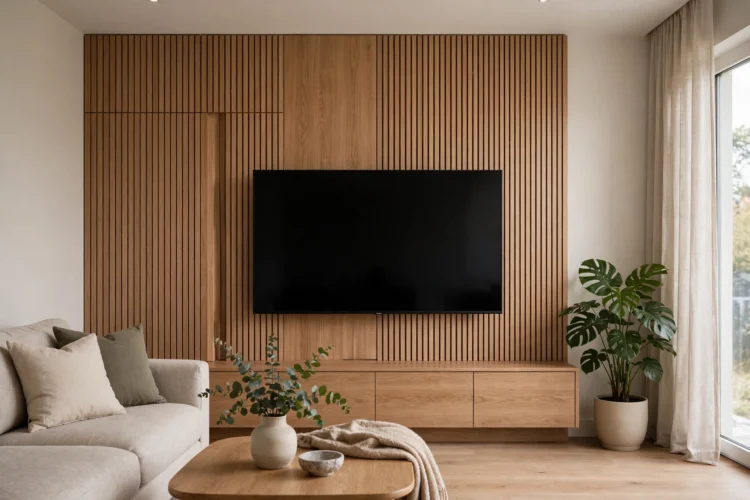
Wood slats, shiplap, or simple picture-frame molding turn a flat television wall into a textured backdrop. Vertical slats draw the eye upward and make a low ceiling feel taller, while horizontal planks widen a narrow room. The texture also breaks up the flat black screen, so the television feels like part of a designed wall rather than an appliance hung on one.
Slat walls are a manageable weekend project with pre-cut kits, but measure the television mount carefully first. The mount needs to anchor into studs behind the paneling, not just into the slats themselves. Plan the slat layout around the mount position so no slat lands awkwardly behind the screen bracket, and paint or stain the wall behind the slats dark so gaps read as shadow rather than unfinished drywall.
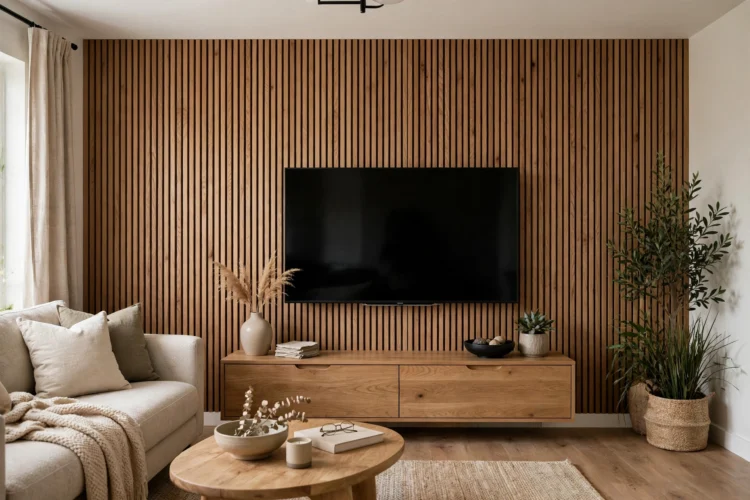
A low media console under a wall-mounted television grounds the composition. Without it, a floating screen can look stranded, especially on a large wall. The console should be wider than the television, roughly by a quarter on each side, and low enough that the screen still sits at eye level above it. That proportion keeps the wall balanced from floor to ceiling.
Use the console for closed storage so remotes, chargers, and game controllers disappear behind doors. Open shelving below a television collects dust and visual clutter fast, and clutter under a screen draws the eye exactly where you do not want it. A rug that reaches from the sofa to the console ties the seating group to the wall, and the sizing logic in these bedroom rug placement ideas works just as well for living room layouts.
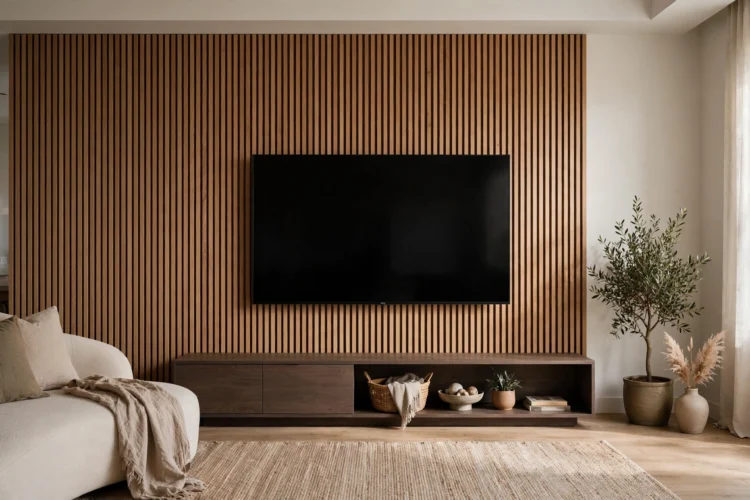
Cables ruin more television walls than bad art does. A single visible cord from screen to console breaks the whole composition, so plan the route before mounting. In-wall cable channels are the cleanest option when you own the home, while paintable cord covers do nearly as well in rentals and come off without damage.
Bundle the remaining cables behind the console with Velcro ties and a small power strip mounted to the back of the furniture. Label each cable if several devices share the strip, so swapping a console or adding a streaming box later does not turn into a tangle. Good lighting completes the wall: a soft bias light behind the screen reduces eye strain in the evening, and the layered approach in these bedroom lighting ideas shows how a single low glow can change how a whole room feels after dark. Finish the cables, dim the lights, and the wall finally looks finished.