Physical Address
304 North Cardinal St.
Dorchester Center, MA 02124
Physical Address
304 North Cardinal St.
Dorchester Center, MA 02124

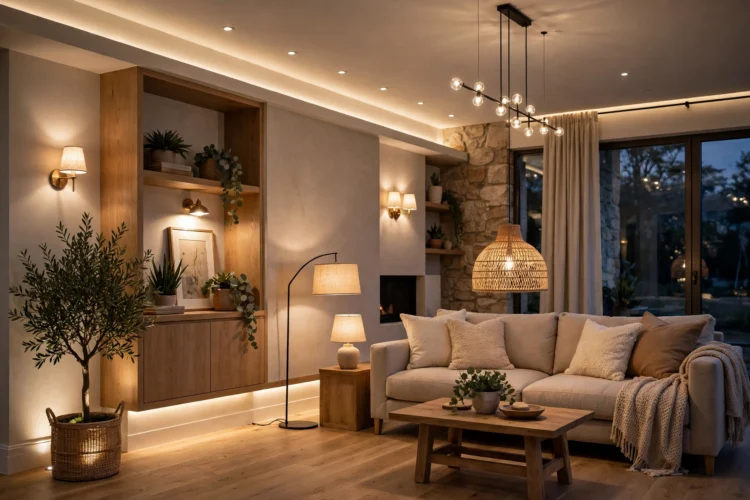
One ceiling light cannot serve reading, television, and conversation. A layered plan gives each activity its own light, from floor lamps to ceiling fixtures.
Walk into most living rooms at night and you will find one ceiling light doing all the work. It flattens faces, throws shadows into corners, and suits no activity very well. These living room lighting ideas replace that single source with layers, so the room can shift from bright and practical to soft and quiet without changing any furniture. A layered plan uses three kinds of light, ambient, task, and accent, spread from the floor to the ceiling. Each layer has a job, and together they make the room work for reading, television, and entertaining.
Ambient light is the general glow that lets you move around safely and see the room as a whole. It should come from more than one place, even if the ceiling fixture is the main source. A ceiling light paired with a floor lamp or a pair of wall lights spreads the glow evenly, so corners stop falling into darkness.
Keep ambient light soft rather than bright. A room lit evenly at a moderate level feels larger and calmer than a room with one harsh bright spot. If your ceiling fixture has a dimmer, use it as the first control you reach in the evening. Ambient light sets the base level, and every other layer builds on it, so getting this base right matters more than any single lamp you buy. For a simple starting plan, see these living room lighting basics for even, comfortable coverage.
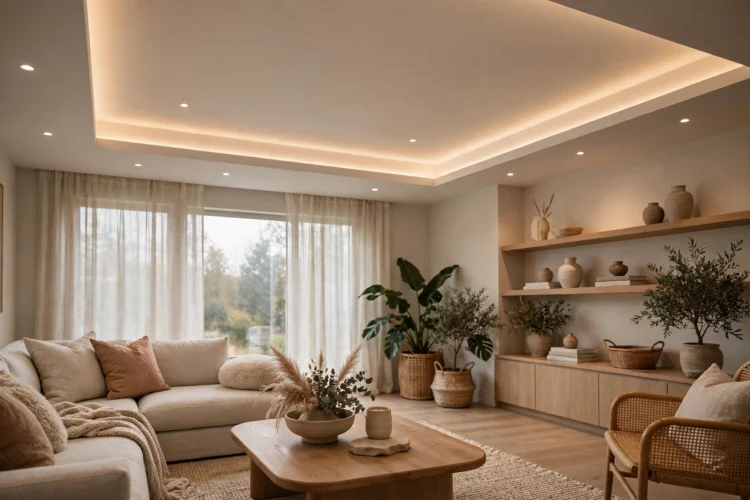
Task light is bright, focused light placed exactly where an activity happens. A reading chair needs a lamp that shines over a shoulder onto the page. A desk corner needs a lamp that lights the work surface without glare on a screen. A sofa where people do puzzles or crafts needs a lamp close enough to see details.
Place task lamps by sitting in the seat and checking where the light falls. A lamp behind the chair usually beats a lamp beside it, since it avoids shadows from your own body. Living room lamp placement like this turns a chair into a usable reading spot, while a lamp placed for looks alone often leaves the reader in shadow. Adjustable arms and swivel heads help, since one lamp can then serve two nearby seats.
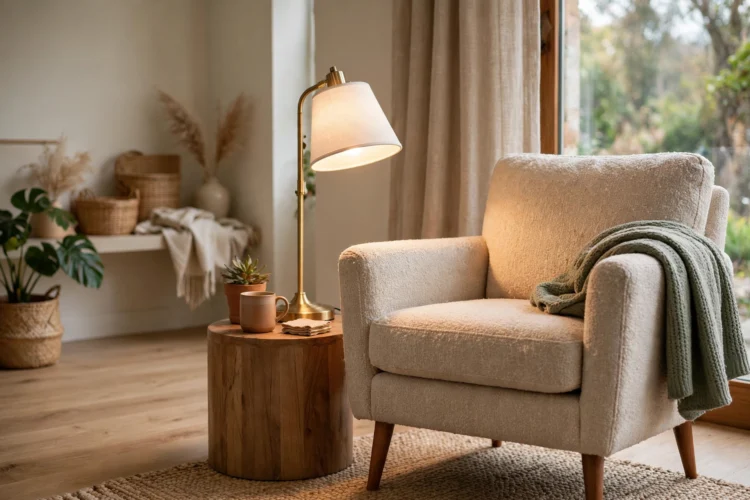
Accent light highlights one feature, such as art, a bookshelf, or a plant, and gives the room depth. A small picture light, a shelf light, or a directional spot aimed at a feature wall draws the eye and makes the room feel curated. Accent light should be brighter than the surrounding ambient light, or the feature will not stand out.
Use accent light sparingly. One or two lit features per room is enough. Light every object and nothing stands out, while the room starts to feel like a display case. A plant lit from below, art washed from above, or a bookshelf strip light all work, but pick the features you actually want guests to notice. These accent lighting ideas show how a single lit feature changes a whole wall.
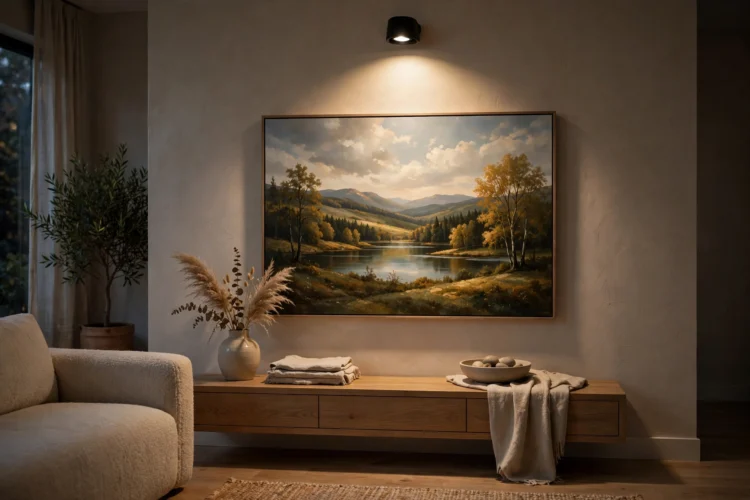
Light at different heights is what makes a room feel layered rather than flat. Floor lamps wash light upward and fill the middle of the room. Table lamps glow at seated eye level and make conversation feel warm. Low lights, such as a lamp on a low shelf or a candle-height glow, anchor the bottom of the room and stop it from feeling top-heavy.
Plan the heights deliberately. A room with only ceiling light feels like a stage, while a room with light at floor, table, and ceiling height feels like a place people live in. Layered living room lighting does not need many lamps, just lamps at different heights. Three lamps at three heights usually beat five lamps all at the same level. Check the room from the doorway after dark to see whether light reaches every height.
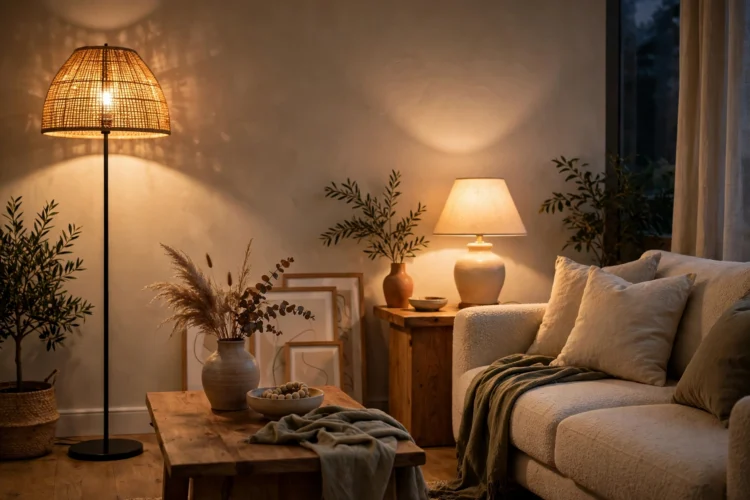
The ceiling layer deserves more thought than a single fixture in the center. A pendant over a coffee table or a seating group pulls light down to where people gather, while recessed lights around the edges wash the walls and make the room feel wider. A chandelier suits a formal seating area, but it should hang low enough to feel part of the room, not lost near the ceiling.
Ceiling fixtures also need the right brightness for their job. A pendant over a table can be brighter, since it lights a small area, while general ceiling lights should stay moderate. If the ceiling is low, choose flush or semi-flush fixtures that hug the ceiling and avoid hanging pieces that crowd headroom. A ceiling lighting guide covers fixture heights for different ceiling types.
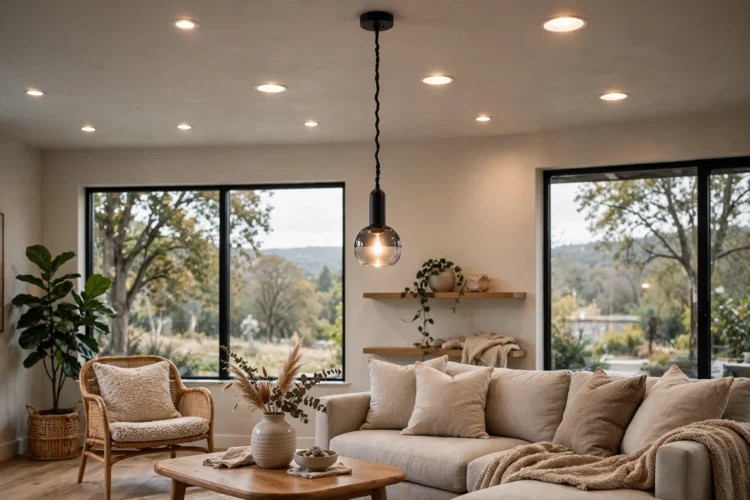
Color temperature describes whether light looks warm and yellow or cool and white. Mixing warm lamps with cool ceiling lights makes a room feel uneven, even when brightness matches. For living rooms, warm light suits evenings and relaxation, while a slightly neutral warm tone suits rooms used for work during the day.
Check the bulbs in every lamp and fixture and bring them into the same family. You do not need identical bulbs, but the layers should not fight each other. Ambient task accent lighting feels unified when all three layers share a warm tone, and the room reads as one space instead of a collection of lamps. Replace one mismatched bulb at a time if budget is tight, starting with the most visible fixture.
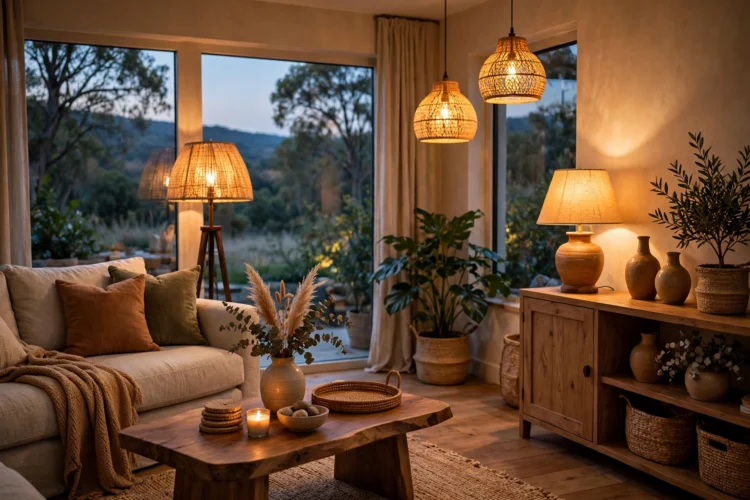
Layers only help if you can control them separately. A room where every lamp shares one switch cannot shift from reading mode to movie mode, since turning one layer on turns them all on. Dimmers on the main fixtures, separate switches for lamps, and a few smart plugs for table lamps give you real control without rewiring the whole room.
Label the controls or group them in a way guests can understand. A simple setup, such as one dimmer for ceiling light, one switch for floor lamps, and one for accent lights, covers most evenings. Smart bulbs add another option, letting you preset scenes for reading, television, and guests. The goal is a room you can adjust in seconds, not a lighting system that needs instructions. For control ideas, see these lamp control and dimmer tips.
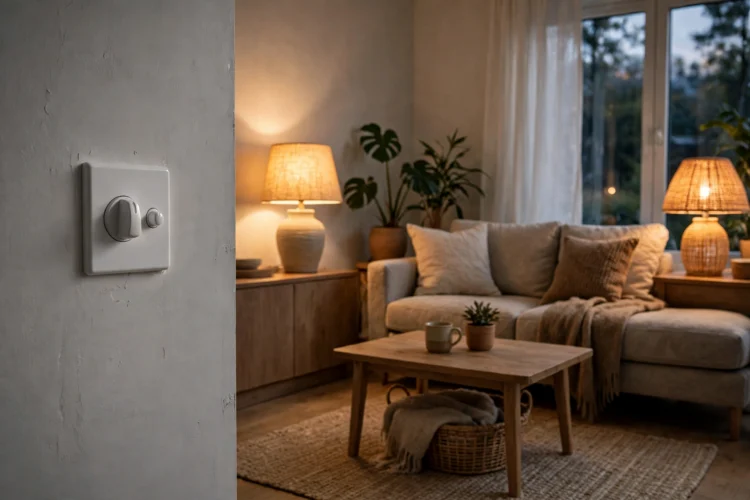
Once the layers exist, tune them for the three main evening activities. For reading, raise task light at the chair and lower ambient light elsewhere, so the page stays bright while the room stays calm. For television, dim the ceiling light, keep a soft lamp behind viewers to reduce eye strain, and turn accent lights low so the screen holds attention.
For guests, raise ambient light slightly so faces are easy to see, turn on accent lights to give the room points of interest, and keep table lamps glowing at seating level. Walk the room in each mode and adjust one layer at a time until the mood feels right. A layered room rewards this small effort every night, since the same furniture and the same lamps can serve a quiet evening alone and a lively evening with friends, simply by changing which layers lead.