Physical Address
304 North Cardinal St.
Dorchester Center, MA 02124
Physical Address
304 North Cardinal St.
Dorchester Center, MA 02124

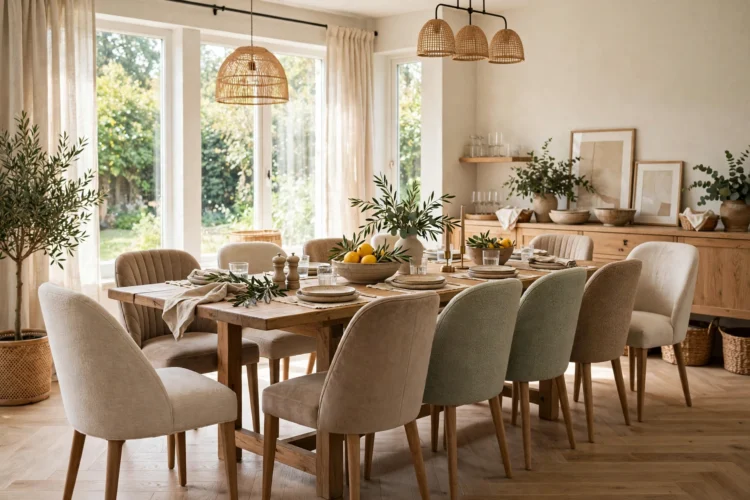
Ten upholstered dining chair ideas judged on comfort over long meals and how each fabric handles food spills, from slipcovers to leather.
Upholstered dining chairs change how long dinner lasts. A hard wooden seat hurries people away from the table, while a padded seat keeps them talking through dessert and a second cup of coffee. The catch is the fabric, because dining chairs meet red sauce, coffee, and kids with sticky hands. This guide compares ten upholstered dining chairs on comfort over long meals and on how each fabric handles real spills. Fully padded, half-upholstered, and slipcovered options all make the list, so you can pick the chair that fits your table and your tolerance for stains.
A fully padded seat and back is the most comfortable option for long dinners, and it is the easiest to judge in a shop. Sit for five minutes, not five seconds, and notice whether the seat stays supportive or sags toward the front edge. Good foam holds its shape, while cheap foam flattens within months and leaves a chair that looks fine but feels tired.
Ask what sits under the fabric before you buy. High-density foam lasts longer than fiber fill, and a seat with a sinuous spring base keeps its bounce. Fully padded chairs suit a dining room that hosts long meals, and they pair well with a dining room rug that softens the floor under the table.
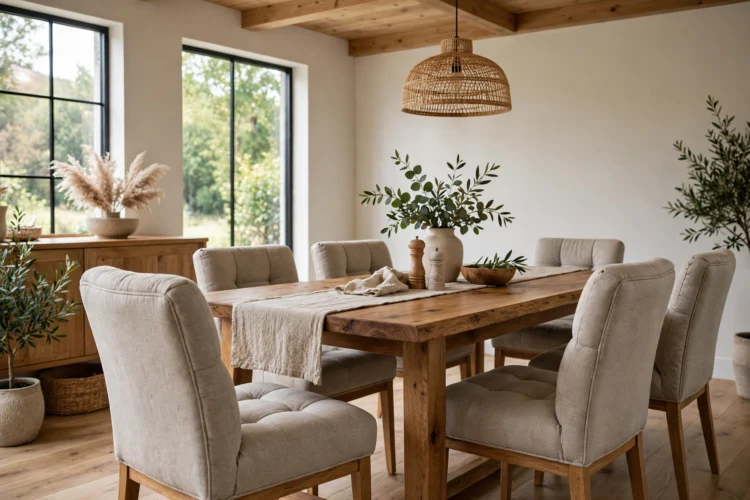
A half-upholstered chair pads the seat and leaves the back in wood, which splits the difference between comfort and cleaning. The seat stays soft where your body meets it, and the wooden back wipes clean after a meal. This is the chair for households that love padding but dread scrubbing a fabric backrest.
The wooden back also keeps the chair visually light, so a small dining room does not feel crowded. Look for a seat cushion that removes with screws or Velcro, because a removable cushion can be recovered or cleaned without taking the whole chair apart. Half-upholstered chairs suit everyday family dinners better than any other style here. Upholstered chair cleaning stays simple when the cushion lifts out, because you can treat the cushion alone instead of the whole chair.
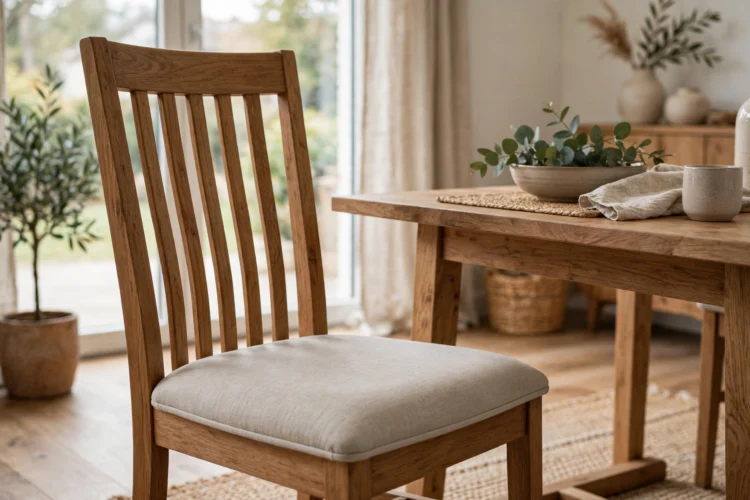
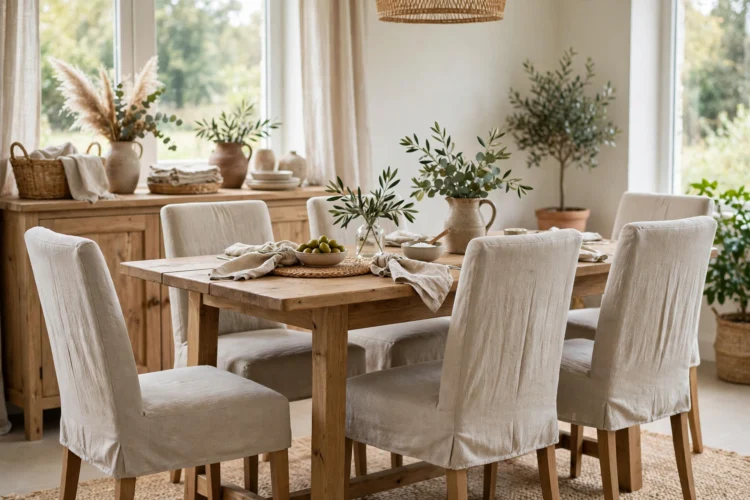
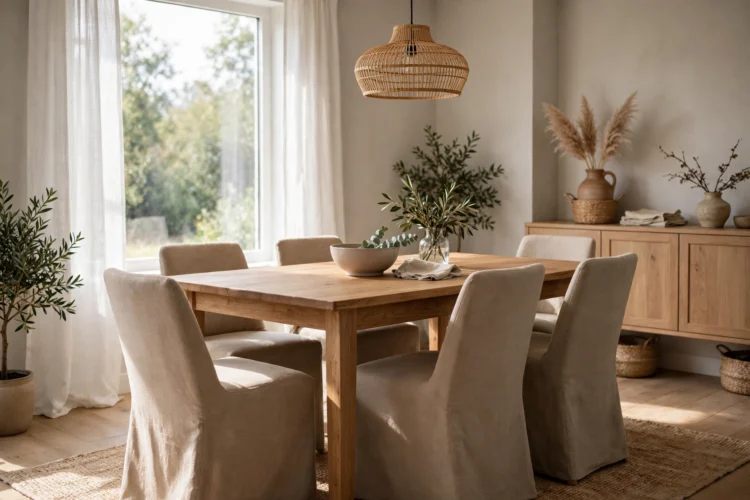
Slipcovered dining chairs solve the stain problem by letting you remove the problem. The cover comes off, goes in the wash, and goes back on, which means red sauce and chocolate stop being emergencies. White and pale slipcovers work in a dining room with kids, which sounds brave until you remember the cover washes.
Buy a second set of covers if the chairs are daily drivers, so one set can wash while the other stays on the chairs. Choose a cover with a snug fit and ties or Velcro at the back, because a loose cover slides and bunches under guests. Slipcovered chairs look relaxed by design, so they suit a casual dining room better than a formal one.
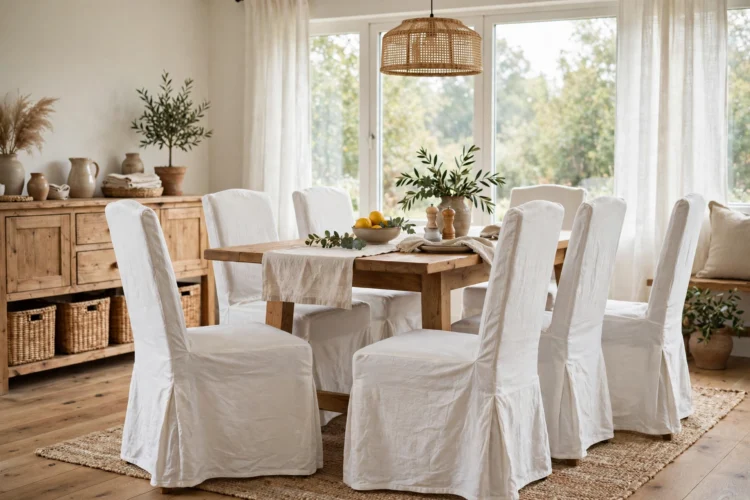
Velvet looks precious, but modern velvet is tougher than its reputation. A synthetic velvet resists stains better than cotton velvet, and a quick blot with a damp cloth lifts most dinner spills before they set. The nap of the fabric hides small marks, which is why velvet chairs still look good after a year of weeknight dinners.
Test velvet with a glass of water before you commit. Drip water on a sample, blot it, and see whether a ring remains. If the sample passes, the chairs will survive most dinners. Keep velvet away from direct sun if you can, because strong light fades the color unevenly over time.
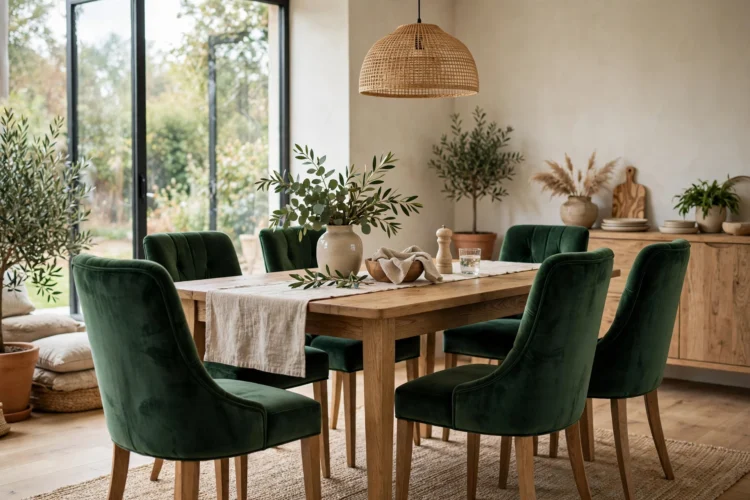
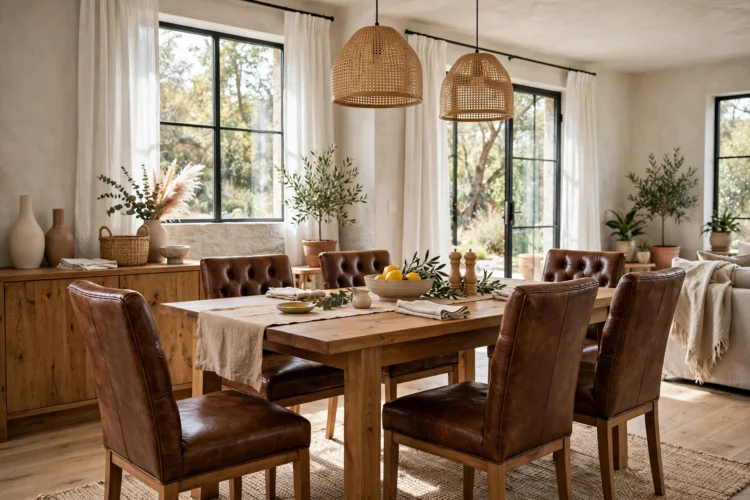
Leather is the most forgiving dining chair fabric of all, because spills wipe off instead of soaking in. A damp cloth handles tomato sauce, coffee, and juice, and the leather gains character as it ages. Faux leather does the same job at a lower cost, though it can feel warm in summer and crack after years of heavy use.
Real leather needs a conditioner every few months to stay supple, while faux leather needs nothing but a wipe. Either one suits a table where kids eat, where red wine flows, or where nobody wants to think about fabric care during dinner. Pair leather chairs with a wood table and the room stays warm without looking heavy.
Performance fabric is a real category, not a sales word, and it earns its name with a tight weave and a stain-resistant finish. Spills bead on the surface instead of soaking in, which gives you time to blot them away. The fabric still feels like fabric, not plastic, and most performance weaves come in colors that suit a dining room.
Read the care label before you believe the sales pitch. Some performance fabrics clean with water alone, while others need a specific cleaner. Ask for a sample and test it with coffee and sauce at home, because a shop test tells you little. Performance fabric costs more upfront, and it pays for itself the first time a full glass of red wine tips over.
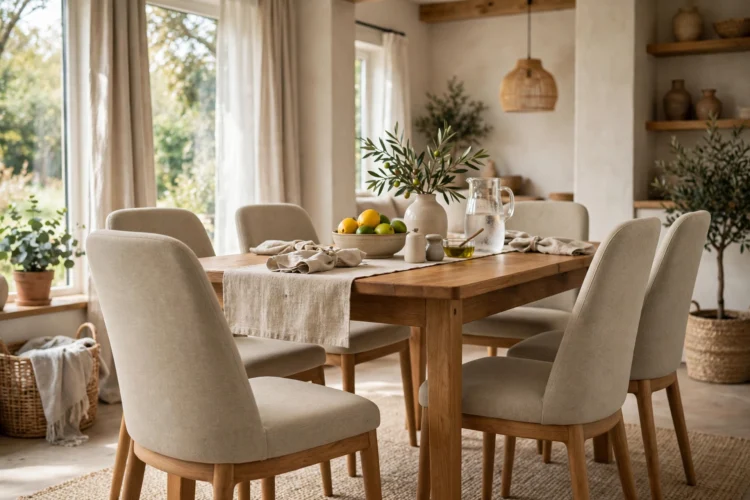
Linen-look upholstery gives a dining room a relaxed, lived-in feel that suits linen napkins and a wood table. The weave has texture, the color stays soft, and the chairs look better slightly rumpled than perfectly smooth. This is the fabric for a dining room that hosts friends more than formal dinners.
Real linen wrinkles and stains easily, so most dining chairs use a linen-look blend that keeps the texture and adds stain resistance. Check whether the covers remove for washing, because a fixed linen-look seat will show every spill. Keep a fabric protector spray on hand, and reapply it after a deep clean.
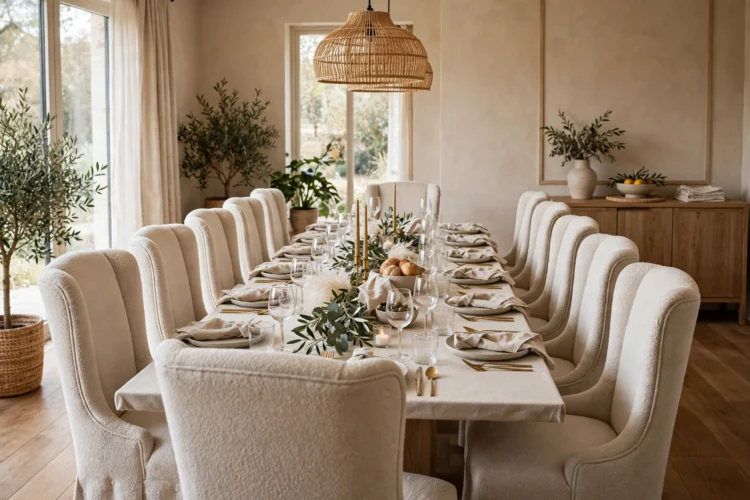
Comfortable dining chairs with high backs change the whole posture of a meal. It supports the shoulders, invites guests to lean back, and turns a quick dinner into a long conversation. High-backed upholstered chairs suit a dining room that hosts holiday meals and dinner parties, where nobody is in a hurry to leave the table.
Measure the chair against the table before you buy. A high back needs clearance from a sideboard or wall behind it, and the chair should slide under the table without the back hitting the table edge. In a small dining room, high backs can crowd the space, so save them for rooms with room to breathe.
Armless upholstered chairs slide fully under the table, which saves floor space and keeps a small dining room feeling open. They seat more people along each side, and they let guests pull up close without armrests getting in the way. The tradeoff is support, because there is nothing to lean an elbow on during a long meal.
Use armless chairs on the sides of the table and save armed chairs for the ends, where hosts sit longest. That mix gives the room a tailored look and gives the people who sit longest the most support. Armless chairs also cost less than armed ones, so the mix saves money too.
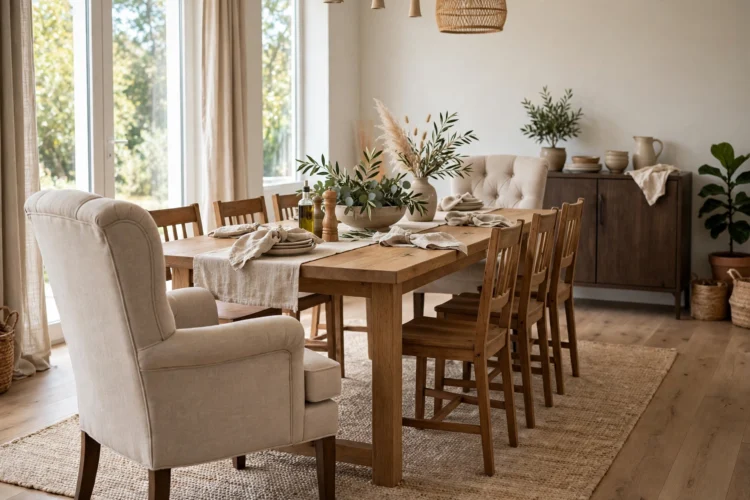
The classic mix puts upholstered chairs at the heads of the table and wood chairs along the sides, and it works because it gives comfort where it matters most. Hosts sit longest, so they get the padding, while side chairs stay light, easy to move, and easy to clean. The mix also costs less than padding every seat.
Keep one element consistent so the mix looks deliberate: the same wood tone, the same leg shape, or the same fabric color across the room. A dining bench on one side adds another layer to the mix and seats kids shoulder to shoulder without a fuss. If you want more ways to combine chairs, these mix and match dining chair ideas show how far the pairing can go.
Pick the chair for the meals you actually eat. Slipcovers suit sticky hands, leather suits red wine, and a fully padded seat suits long Sunday dinners. Test the fabric with a real spill before you buy, and the chairs will still look good when the table clears.