Physical Address
304 North Cardinal St.
Dorchester Center, MA 02124
Physical Address
304 North Cardinal St.
Dorchester Center, MA 02124

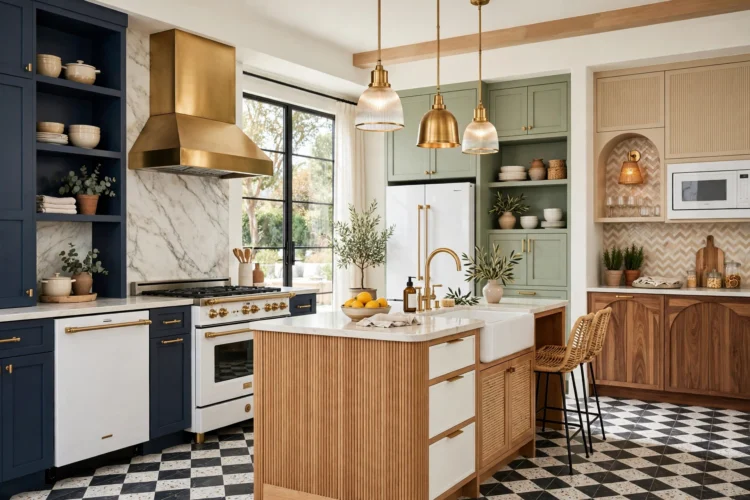
White appliances look deliberate when the room around them is designed with intent. These eleven ideas use cabinet color, warm metal, and pattern to make white feel like a choice.
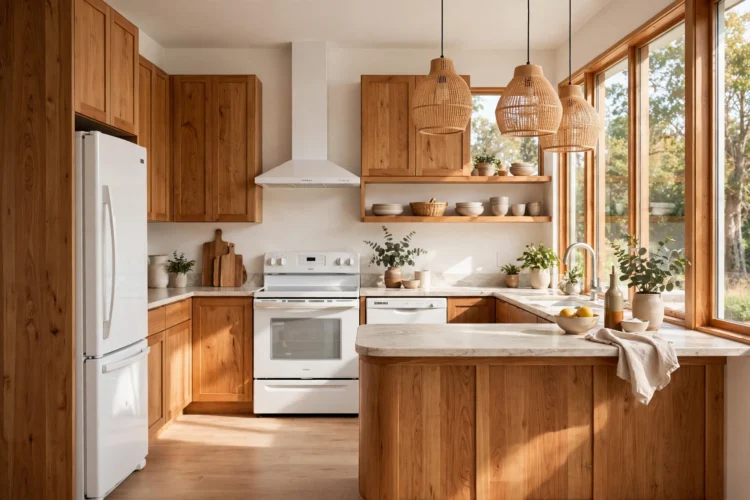
White appliances get treated like a compromise, a leftover from the last owner or a budget pick that never got replaced. These kitchen ideas for white appliances take the opposite view: white can read as a clear design choice when the cabinets, hardware, and styling around it are picked with intent. The trick is contrast and repetition. Give the white something to sit against, repeat the tone in two or three places, and keep the finish consistent from fridge to range. The eleven ideas below cover cabinet color, metal finishes, backsplashes, and small styling moves that cost far less than new appliances.
Cabinet color sets the tone for the whole room, and white appliances look best when the cabinets give them a clear backdrop. Deep green, navy, charcoal, or warm wood all push white forward so the fridge reads as a bright panel rather than a blank box. If dark cabinets feel like too much, try a two-tone plan: dark lowers with white or pale wood uppers. The white appliances then tie the two tones together instead of fighting them. Painted lowers also hide scuffs better than white paint, which matters in a hard-working kitchen. For color pairings that hold up over time, look at these kitchen cabinet color ideas and pick a shade you can live with for years, not one season.
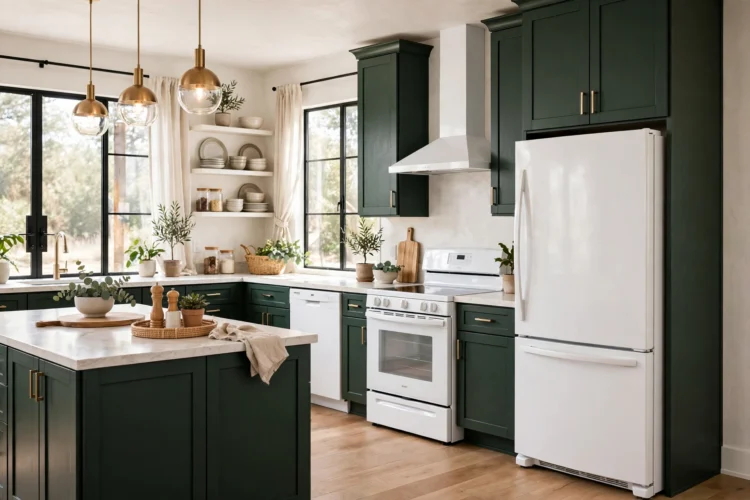
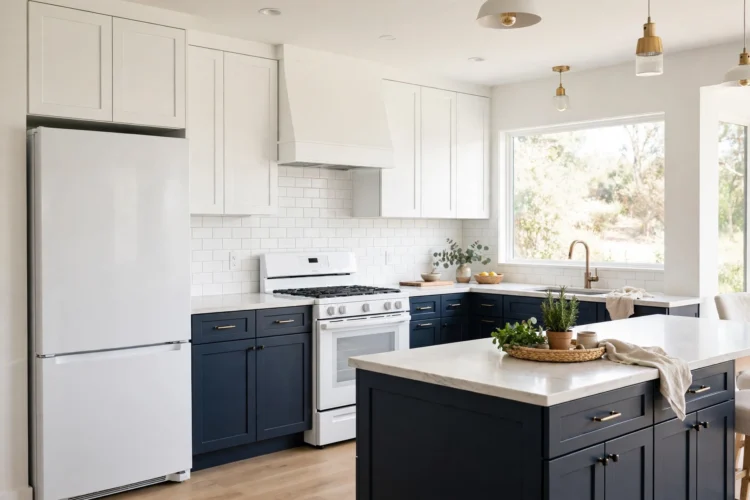
Dark lowers do more than add contrast. They ground the room, so a tall white fridge stops towering over everything else. Navy lowers with brass pulls feel classic, while charcoal or black lowers with matte black pulls lean modern. Keep the uppers light so the room does not close in: white, cream, or pale oak uppers bounce light back across the room. The worktop line becomes the horizon, with dark below and light above, and the white appliances sit right on that line. If you want proof the combination works in real kitchens, these navy blue kitchen cabinet ideas show how white appliances with dark cabinets can frame a cooking wall without making the room feel heavy.
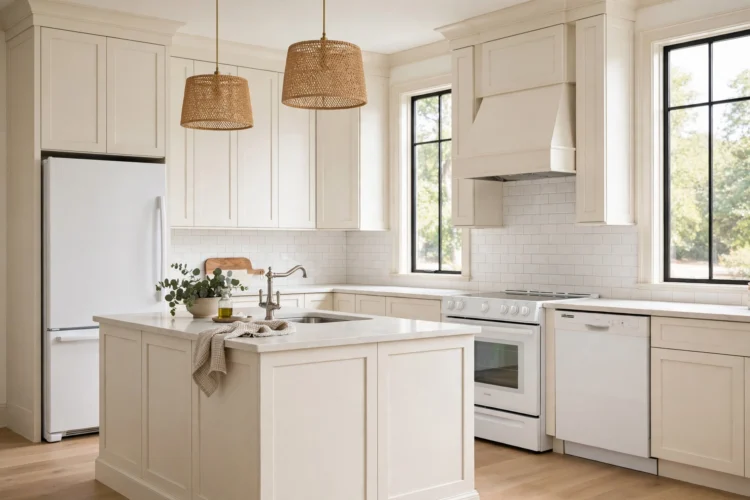
Not all whites match. A fridge in bright cool white next to creamy warm cabinets looks off, even when both are technically white. Hold a paint chip from your cabinet color against the appliance and check it in daylight and under your kitchen lights. If the appliance is cool white, keep the trim, ceiling, and uppers in the same cool family. If it is warm white, shift the room warm: cream uppers, brass hardware, wood tones. When the whites match, the appliances blend into the room instead of standing apart from it. Small mismatches read as mistakes, while a matched white reads as a plan. Modern white appliances also come in matte finishes that show fewer fingerprints than glossy ones, which helps in a busy kitchen.
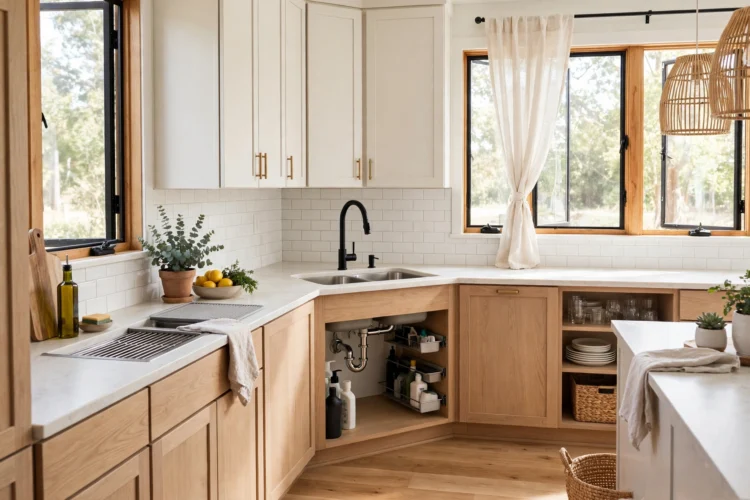
Hardware is the cheapest way to change how white appliances read. Chrome and nickel echo the coolness of white and can leave the room feeling flat. Brass, bronze, or copper pulls add warmth and pull the eye to the cabinets instead of the appliances. Match the new hardware to the faucet so the metals repeat across the room. If a full swap is too much at once, start with the pulls nearest the fridge and range, where the eye lands first. A full hardware refresh is a weekend job, and these kitchen cabinet hardware ideas show which pull styles suit different cabinet fronts.
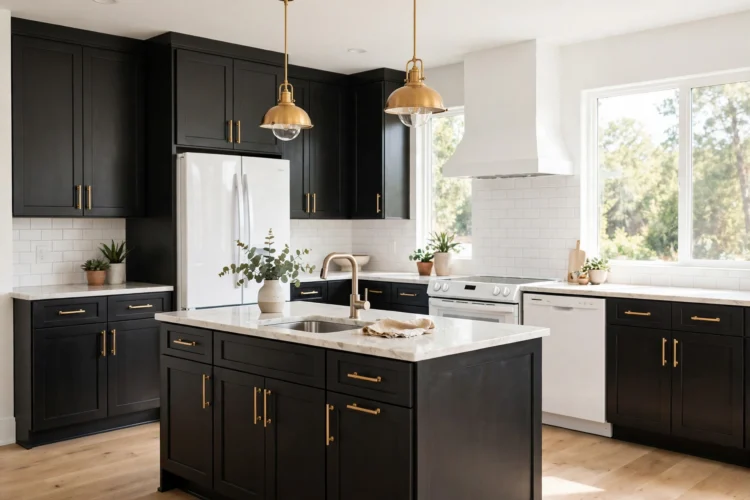
A plain white kitchen with white appliances needs one surface that carries pattern. The backsplash is the right place for it because it sits right behind the range and sink, where the eye already goes. Handmade-look tile, a bold geometric print, or a deep green slab all give the white something to play against. Keep the pattern to the backsplash and let the counters and cabinets stay quiet, or the room turns busy. A bold backsplash also draws attention away from the appliances and toward the work zone. For options that hold up to steam and splashes, these bold backsplash ideas for a plain white kitchen cover patterns that add color without overwhelming the room.
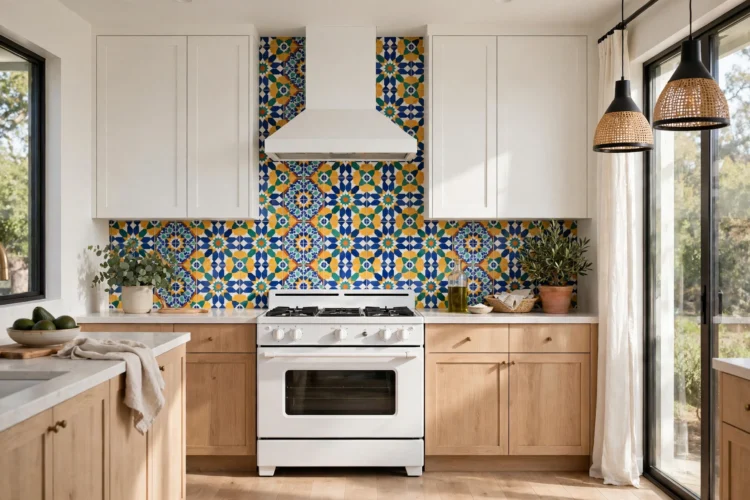
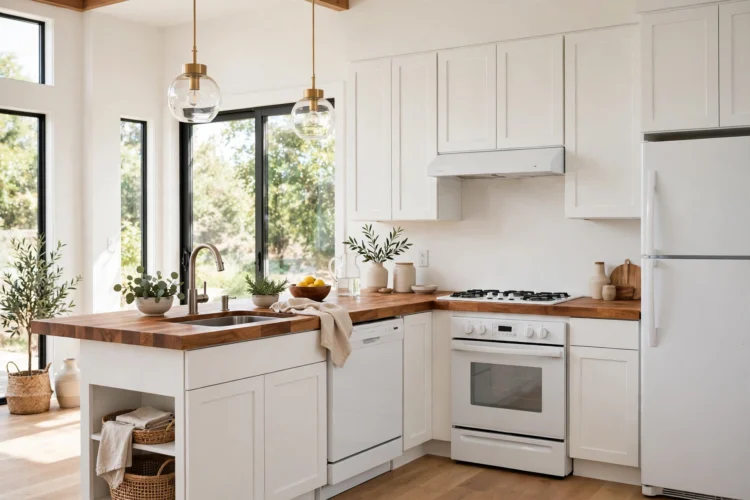
Counters set the temperature of the room. Butcher block, warm wood, or a stone with cream and tan veining softens white appliances in a way that cool gray stone cannot. A white countertop can still work, but pair it with a warmer backsplash or wood shelving so the room does not go all white. Dark counters are another option: they frame a white range the way a dark mat frames a photo. Whatever you pick, repeat the tone once more in the room, in a wood cutting board, a stool seat, or open shelves. For bright options that keep the room open, these white countertop ideas show how pale stone works with white appliances when the rest of the room adds warmth.
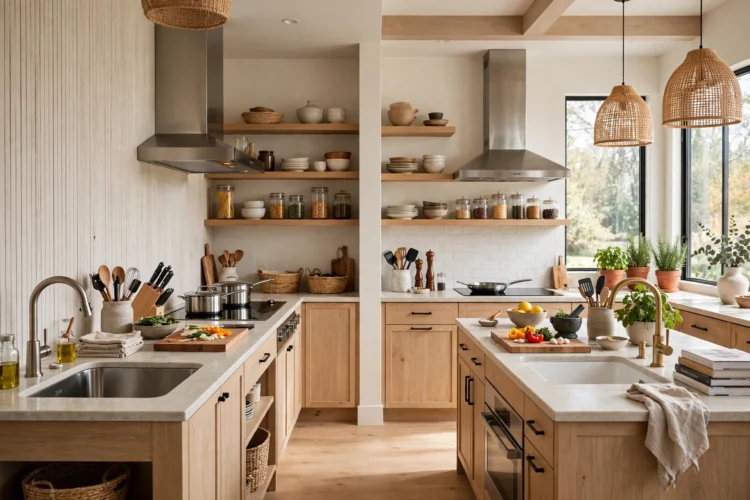
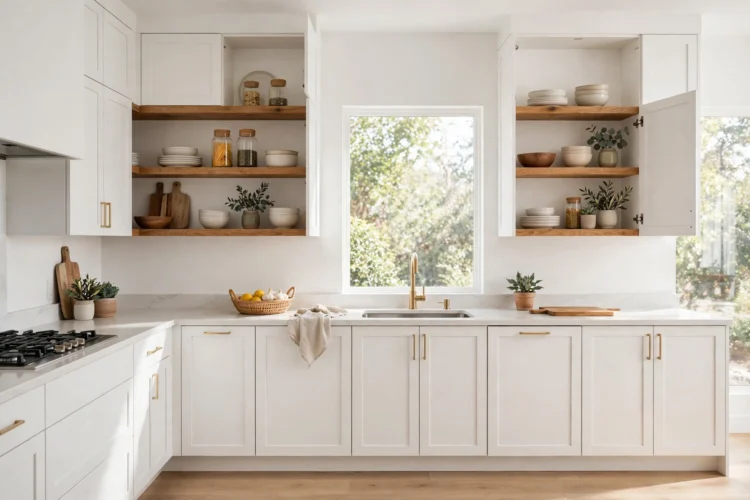
Among kitchen ideas for white appliances, open shelving is one of the cheapest ways to break up a wall of white. A wall of white uppers next to a white fridge reads as one big white block. Replace one run of uppers with open wood shelves and the room opens up at once. The shelves break the white field, add wood tone, and give you a place to show dishes, plants, and cutting boards. Keep the shelf styling loose: a stack of plates, a row of glasses, a small plant. Leave some empty space so the shelves read as storage, not a display case. If the shelves sit near the range, pick wood that can take steam and wipe clean.
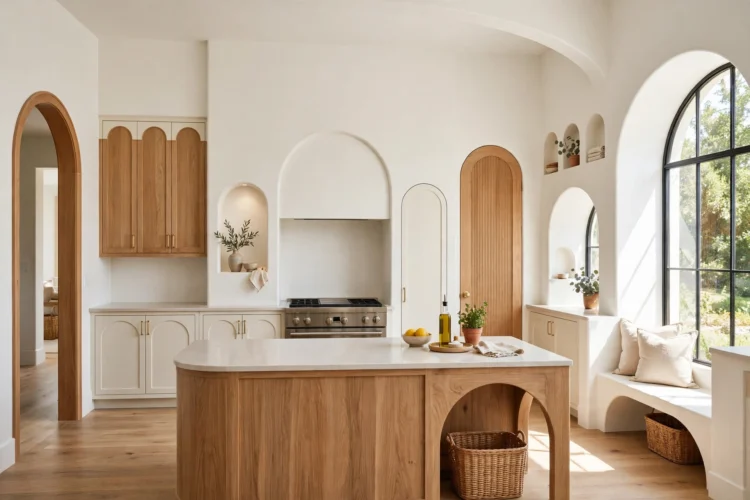
The range hood is the one place where you can spend a little drama without touching the appliances. A plaster hood, a wood hood, or a bold color pulls the eye up and gives the white range a strong neighbor. Match the hood to the cabinet color or make it the one dark element in a pale kitchen. A slim, well-shaped hood also makes a white range look built in rather than freestanding. In a white stove kitchen design, the hood carries more visual weight than the stove itself, so it pays to get the shape and finish right. Keep the hood clean and simple: its job is to anchor the cooking wall, not to compete with the backsplash.
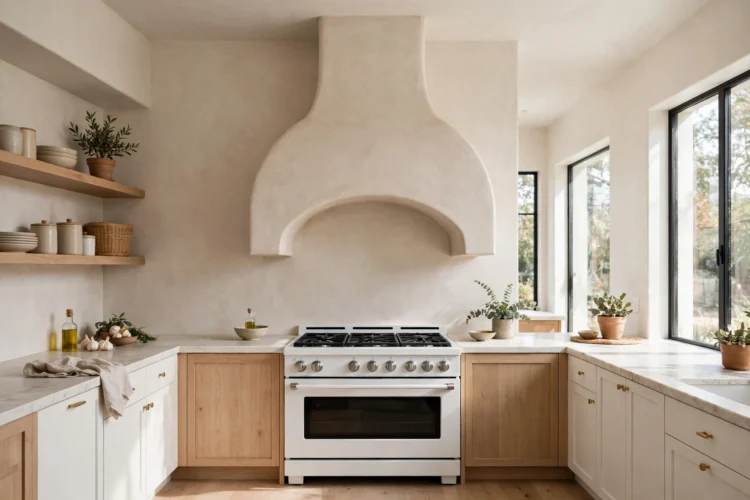
Thin black lines make white appliances look crisp. Black window frames, a black faucet, black shelf brackets, or black bar stools give the eye a frame around the white. The trick is to use black in small, repeated doses rather than one big black object. Three or four touches spread across the room read as a pattern; one black item reads as a stray. Matte black works best because it does not reflect light the way chrome does, and it pairs well with both warm wood and dark cabinets. Start with the faucet and one other touch, then add more only if the room still needs weight.
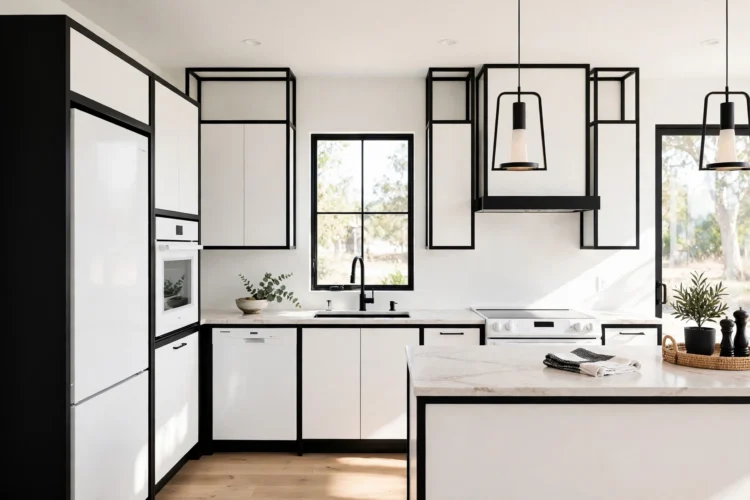
White appliances look deliberate when they match each other. A bright white fridge next to a cream range and a gray-white dishwasher reads as a collection of leftovers. Good white refrigerator styling starts with matching the fridge to the range, not hiding it. When you replace one appliance, check its white against the ones staying. If they clash, a small appliance panel or a matching trim kit can close the gap. The same rule applies to small appliances on the counter: a white kettle, a white toaster, and a white stand mixer repeat the tone and make the big appliances look like part of a set. Consistency is what turns a mismatch into a scheme.
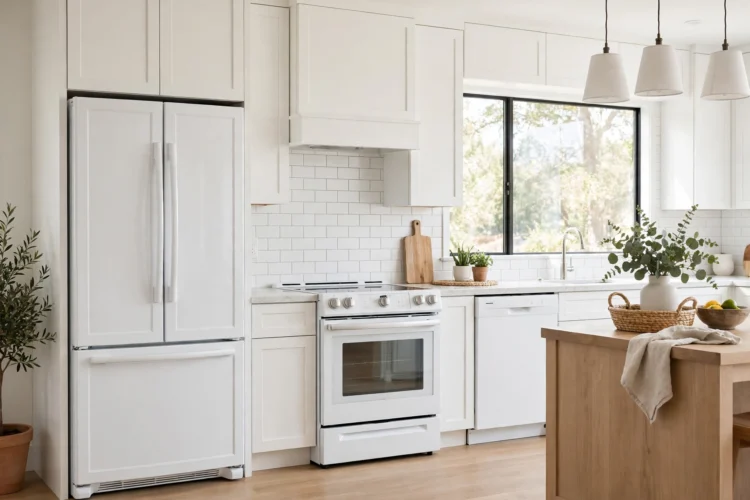
Wood is the fastest way to warm a white kitchen. A butcher block island top, wood stools, a wood cutting board left on the counter, or wood open shelves all add grain and warmth that white alone cannot. Pick one wood tone and repeat it two or three times so it reads as a choice. Pale oak keeps the room bright; walnut adds depth next to white appliances. Leave the wood mostly natural, with a clear finish, so the grain does the work. A room with white appliances, warm wood, and one dark accent color has everything it needs, and nothing left to replace.