Physical Address
304 North Cardinal St.
Dorchester Center, MA 02124
Physical Address
304 North Cardinal St.
Dorchester Center, MA 02124

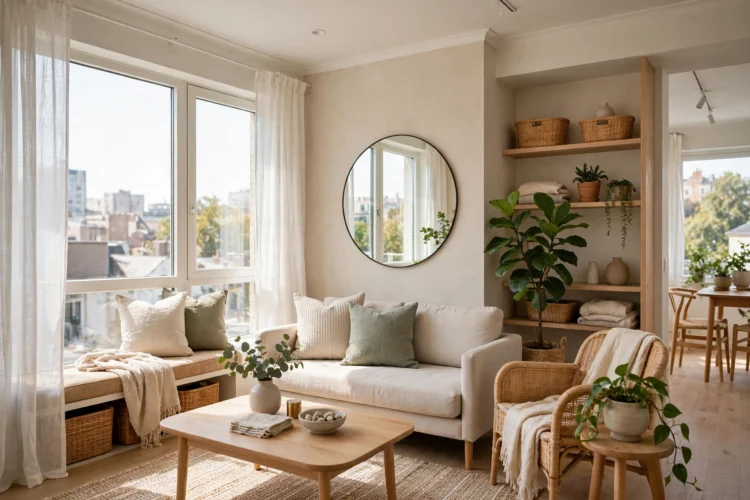
Twelve rental-friendly moves, from leggy furniture to ceiling-height curtains, that make a compact living room breathe.
Small apartment living room ideas work best when they change how the room reads instead of how much stuff it holds. A compact living room can feel open with the right furniture legs, one honest mirror, and a rug that actually fits the floor. This list sticks to moves that renters can undo in an afternoon and owners can keep for years. The goal is simple: make a small living room feel bigger without knocking down a wall. Each idea costs little, needs no contractor, and works in rooms under 200 square feet. Start with the first three and the room will already feel different by tonight.
Furniture that sits on visible legs shows more floor, and more visible floor reads as more room. A sofa on six-inch tapered legs, a chair with slim wooden legs, and a side table on a thin frame all do the same quiet job. Skip the skirted sofa and the blocky media console that meets the floor in a solid slab. When you shop for small living room furniture, flip the piece over in your head and ask how much floor you will still see. Leggy pieces also make vacuuming and robot vacuums easier, which matters in a room you use every day.
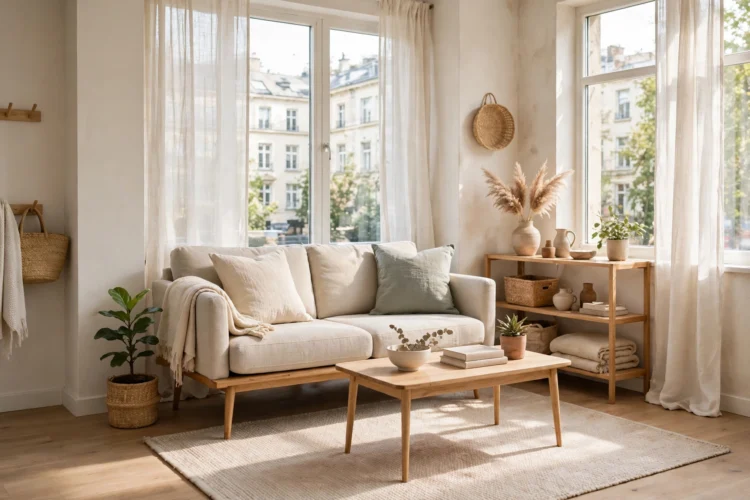
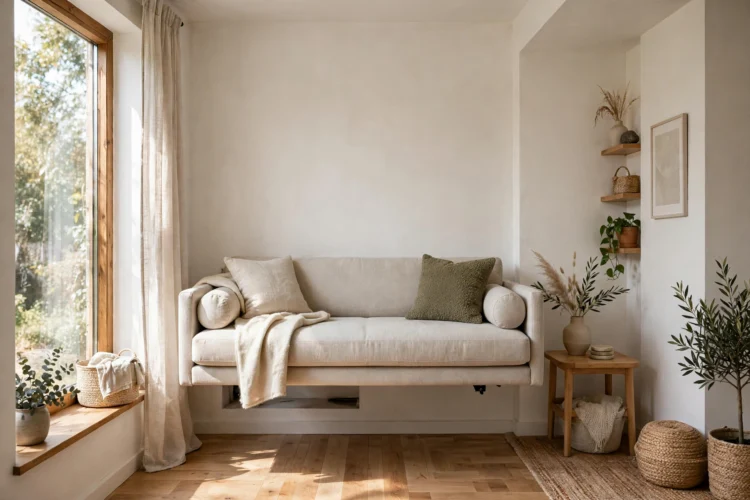
Pushing every piece flat against the wall feels logical in a small room, but it can make the walls close in. Pull the sofa out four to six inches and the room gains a shadow line that reads as depth. That small gap also lets a floor lamp or a tall plant live behind the sofa instead of crowding the corner. If the layout is tight, float only the sofa and keep the rest anchored. A compact living room layout works better when the sofa breathes a little, because the gap breaks the tunnel feeling that long walls create.
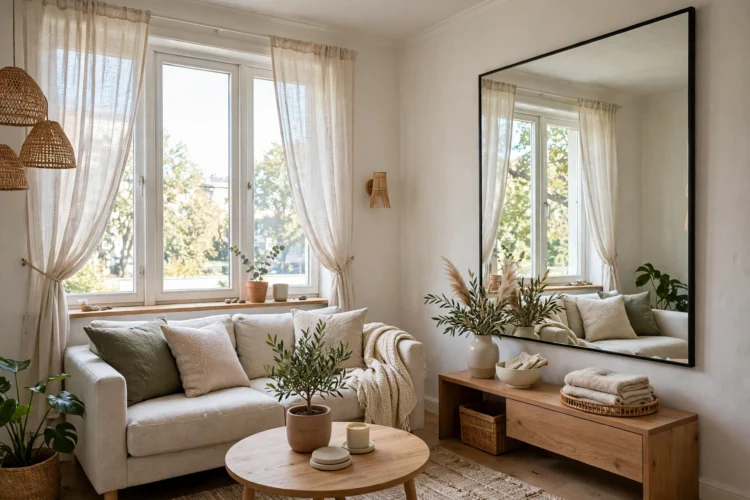
One large mirror doubles the light and the view in a way that five small mirrors never will. Hang it across from a window so it catches daylight, or across from a lamp so it catches the glow at night. Keep the frame thin and simple so the mirror itself does the work. A mirror over the sofa works, but a mirror on the wall you face when you walk in does more, because you see the reflection before you see the room. Skip mirrored furniture, which adds glare without adding depth.
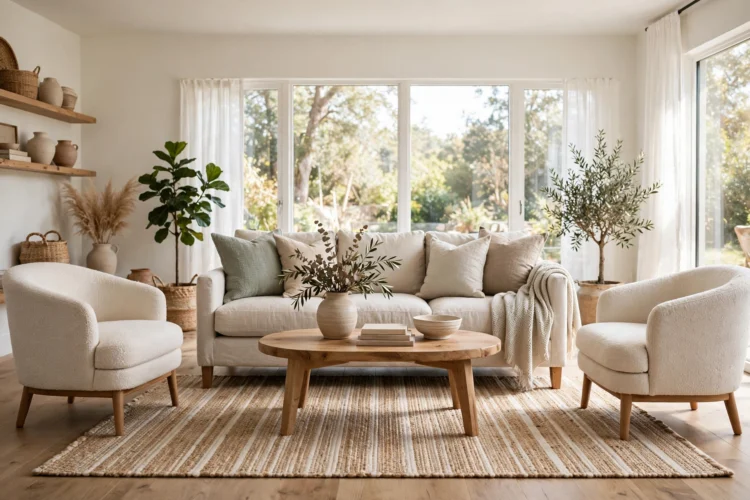
A rug that is too small chops the floor into islands and makes the room feel smaller than it is, which is the same problem a narrow living room layout has when the furniture fights the walls. In most apartments, an 8 by 10 rug fits the main seating group, with the front legs of the sofa and chairs resting on it. A rug that reaches the front legs pulls the furniture into one group and gives the eye a single plane to read. Choose a low pile so doors and drawers clear it. If budget is tight, a flat-weave rug in a plain color beats a small plush rug every time.
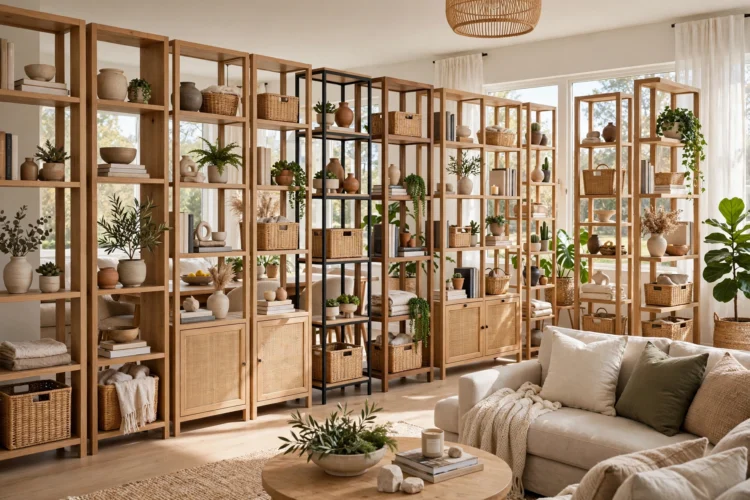
A low bookshelf, about waist height, can split a studio or an open living area without blocking light. Set it behind the sofa with its back to the seating area and you get a boundary plus storage in one piece. Keep the top clear except for one or two objects so the line stays clean. Books go on the lower shelves, and the shelf facing the living room holds the things you reach for daily. This beats a tall divider, which would cut the room in half and kill the light.
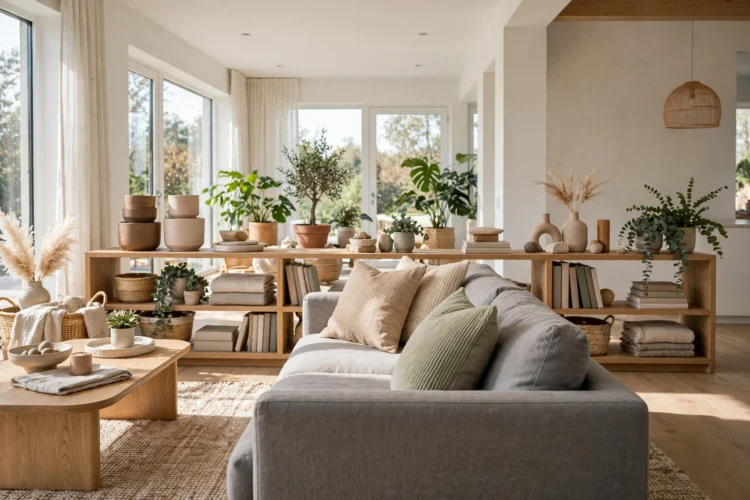
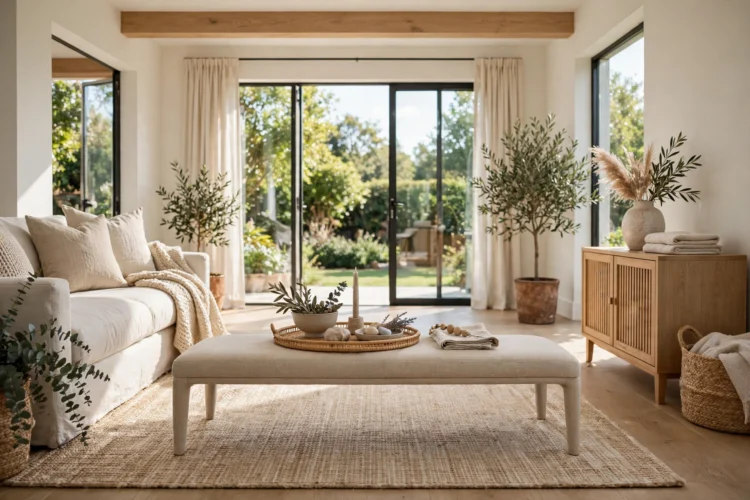
A hard coffee table with sharp corners eats floor space and bruises shins in a small room. A slim ottoman with a tray on top gives you a footrest, a place for a drink, and storage inside, all in a softer shape. Pick one that is narrower than the sofa by at least a foot so people can walk past it. A tray keeps cups steady and comes off in seconds when you want to put your feet up. The layout for a living room without a TV shows how a soft center piece can anchor the seating without a hard table at all.
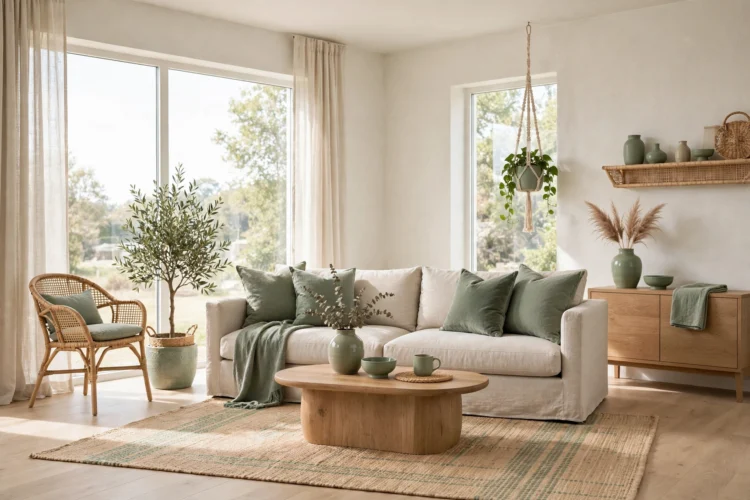
Light walls bounce daylight around the room, and a single repeated accent color keeps the eye moving instead of stopping at every object. Pick one color you already own, maybe the blue of a throw or the green of a plant, and repeat it three times in different spots. Walls, sofa, and rug stay in pale neutrals so the accent has room to breathe. A neutral living room palette is the easiest base for this, because it lets you swap the accent with the seasons without repainting anything.
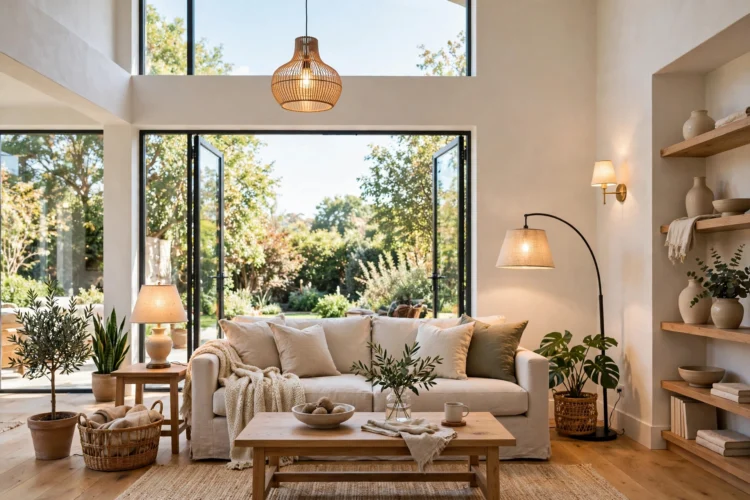
One ceiling light flattens a small room and leaves the corners dark. Add light at three heights and the room gains depth after sunset. A floor lamp beside the sofa covers the tall layer, a table lamp on a shelf or side table covers the middle, and a candle or a small plug-in light covers the low glow. Warm bulbs, around 2700K, keep the room feeling like a home instead of an office. Learning how layered lighting works in a living room pays off here, because the right lamp placement can matter more than the furniture itself.
Floor space is the scarcest thing in a small apartment, so storage should climb the walls. A shelf above the door, a picture ledge near the ceiling, and a tall narrow cabinet in the dead corner hold more than a wide low dresser ever will. Keep daily items at arm height and seasonal items up top. The test is simple: if you can see floor from the door to the far wall without stepping around anything, the room will feel bigger than its square footage suggests.
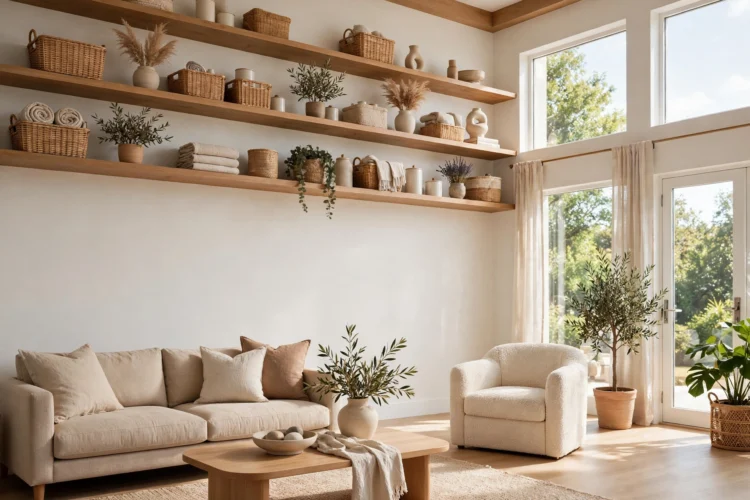
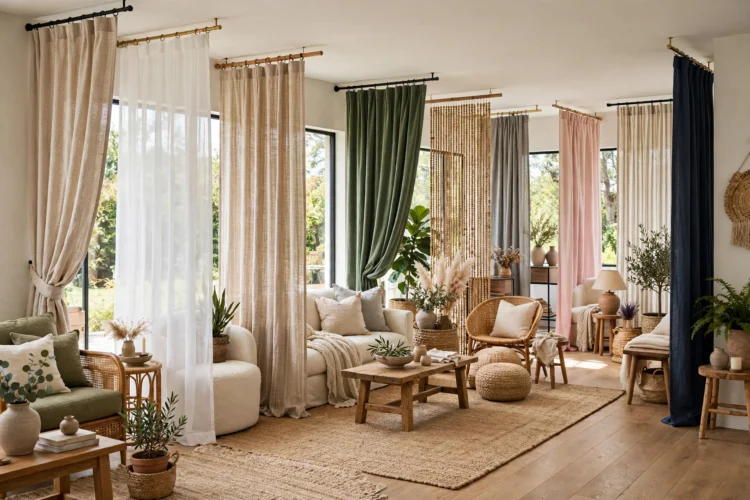
Short curtains cut the wall in half and make the ceiling feel lower. Hang the rod a few inches below the ceiling and let the fabric fall to the floor, and the window suddenly looks taller. Mount the rod wider than the window frame so the panels stack on the wall, not over the glass, and daylight comes in fully. Linen or a linen look hangs well and filters light without blacking the room out. In a rental, a tension rod inside the frame is the fallback, but the ceiling-height trick is worth the two screws.
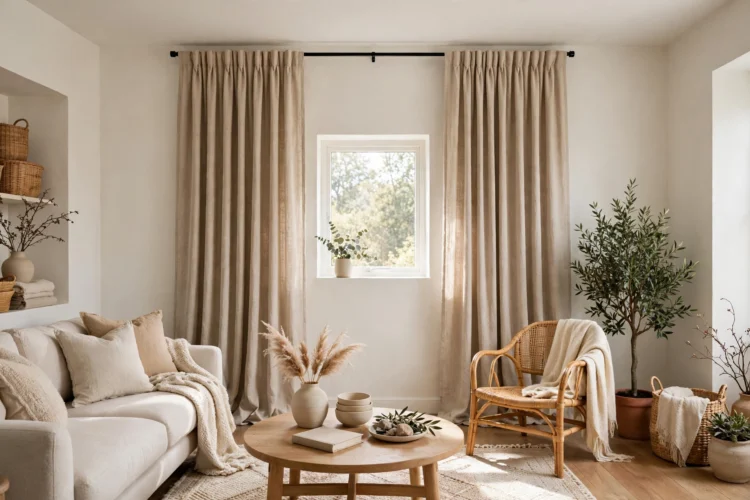
Small rooms do not need small everything. One bold piece, a sculptural chair, a large piece of art, or a patterned rug, gives the eye a place to land and stops the room from looking like a collection of compromises. Keep everything else quiet so the statement piece has no competition. This is the opposite of filling every surface. One strong choice reads as confidence, and the room feels designed instead of assembled from leftovers.
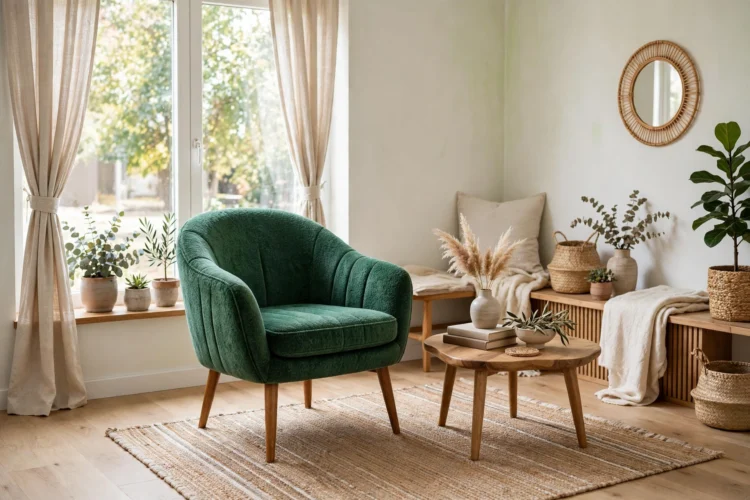
The last idea costs nothing. Remove one item from every surface, put it in a box, and live with the room for a week. If you do not miss the item, it leaves the apartment. Small rooms punish clutter faster than big ones, because every object is within arm’s reach and in the line of sight. A weekly five-minute reset, where everything returns to its shelf or basket, keeps the room at the level these ideas created. Open space is a habit, not a purchase.
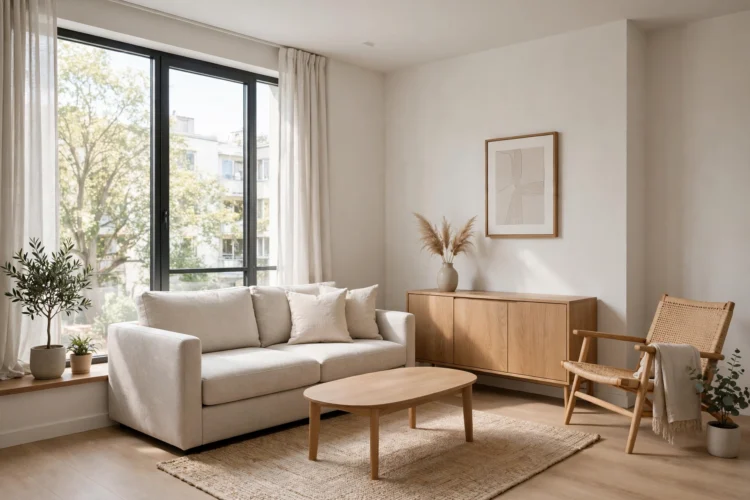
Good apartment living room decor is mostly editing, not buying. Pick three ideas from this list and try them this weekend. Leggy furniture, one big mirror, and curtains hung high will change the room more than a shopping trip ever could. The rest can wait until you see how the room feels with the first three in place.